ADHD and Impostor Syndrome in High Achievers
The ADHD brain produces real inconsistency that masking hides from everyone, including itself.
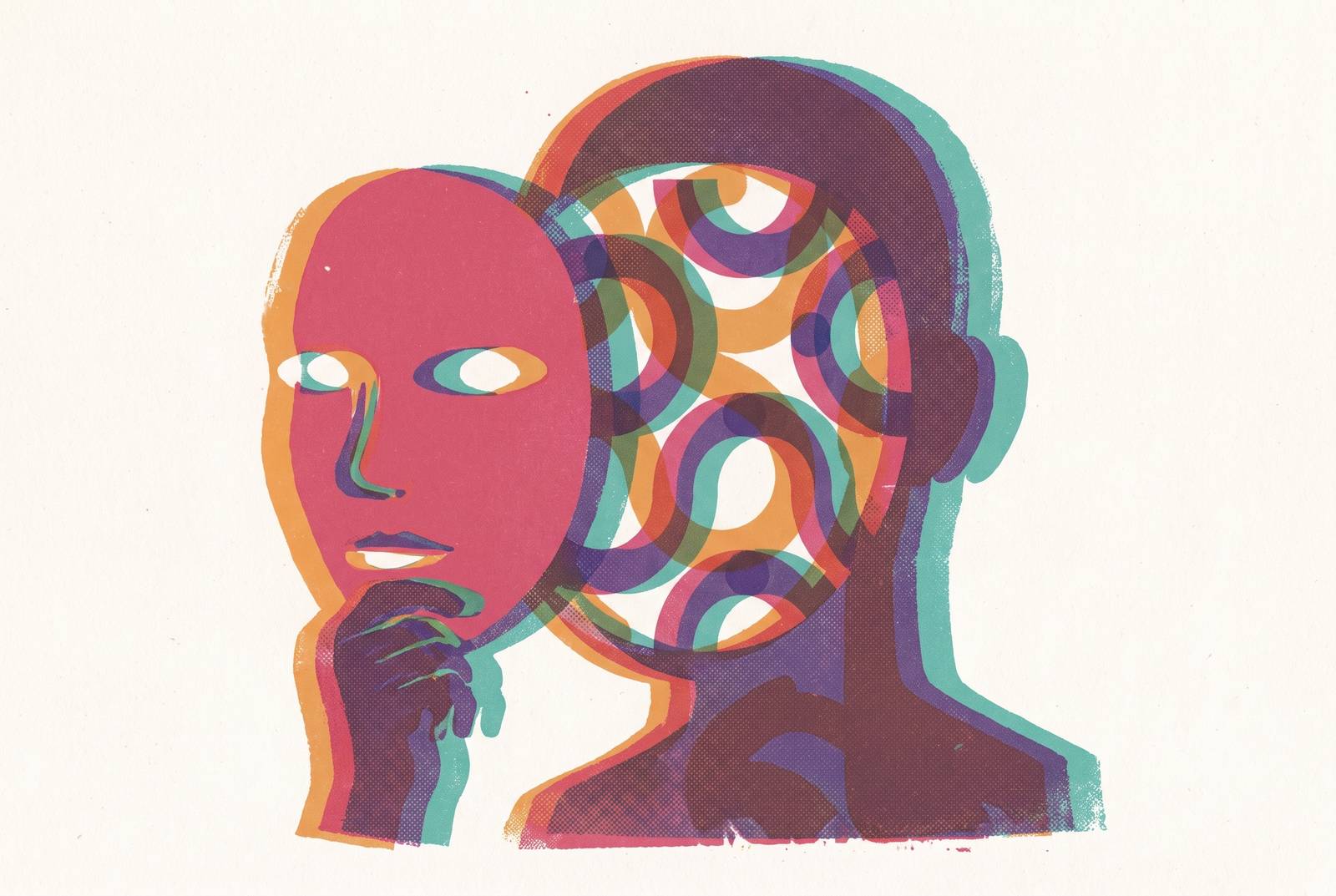
For high achievers with ADHD, feeling like a fraud is rarely a mindset problem to be talked out of. It's a predictable output of how the ADHD brain actually operates: inconsistent performance, compensatory masking, and a broken pipeline between doing the work and getting to feel like it counts.
Why high achievers with ADHD feel like frauds
A certain kind of high-achieving adult describes the same private experience: impressive resume, visibly capable, running on sheer will, quietly certain the next hard problem will finally expose them. They often land on the same sentence: "they think I'm better than I am."ScienceWorks describes that phrase as meaning different things depending on whether you're distorting evidence of competence or accurately reading a real gap between what things cost you versus others.
The term's origin deserves a closer look. Impostor phenomenon, the more clinically accurate name, isn't a diagnosis and never claimed to be. It traces to a 1978 paper by Clance and Imes and has never appeared in the DSM-5-TR. It's a described experience, measured with questionnaires, not a disorder with a checklist of criteria. And the confident numbers floating around about how many people experience it deserve some skepticism. A 2020 systematic review of 62 studies and 14,161 people found reported prevalence from 9% to 82%, driven mostly by which screening instrument each study used. Any single figure quoted without that caveat is telling you more about the tool than the phenomenon.
So why do ADHD and impostor syndrome keep getting lumped together? Because they produce the identical sentence, though the underlying machinery differs. Classical impostor syndrome, as Clance and Imes described it, involves discounting real evidence of competence. The ADHD version works differently, and is this piece's focus. For people with ADHD, feeling like a fraud is often not a distortion of the evidence at all. It's an accurate observation, wearing the wrong explanation like a borrowed coat.
What "high-functioning ADHD" describes and why those people go undiagnosed longest
"High-functioning ADHD" gets thrown around constantly, but it isn't a clinical category anyone can actually diagnose you with. The DSM-5 recognizes three presentations, inattentive, hyperactive-impulsive, and combined, none with a "high-functioning" modifier. It really describes ADHD covered over by compensation, intelligence, or drive, well enough that others can't see it.
There's a specific mechanism behind that cover. Research from Milioni and colleagues, cited in Neural Revolution (2026), found adults with ADHD and IQ above 110 showed measurably fewer executive function deficits than those at standard IQ levels. That doesn't mean their ADHD was milder. Their intellectual horsepower was quietly doing overtime, covering for executive function. The output looks clean, but the internal process is exhausting; that gap between appearance and internal effort is what high-functioning ADHD actually is.
The scale of undiagnosed cases is larger than people assume. CDC data cited in Neural Revolution puts it at 15.5 million U.S. adults with an ADHD diagnosis, over half first diagnosed at 18 or older. Decades can pass before anyone gets an answer. CHADD has noted that especially bright, talented people often don't reveal ADHD-related trouble until demands finally scale past what their coping mechanisms can absorb, and that wall appears at a promotion or a jump into leadership, not at the starting line of a career. Scaffolding that worked for an individual contributor buckles under a manager's job, and burnout often finally pushes someone toward evaluation as the compensatory system runs out of runway.
There's a gender pattern layered on top of all this, too. A clinical sample of 900 newly diagnosed adults, reported in Neural Revolution, found women diagnosed at a mean age of nearly 29 versus 24 for men, despite comparable symptom onset. Social pressure to appear composed seems to buy extra years of undiagnosed masking, at a cost. This population, with the longest gap between internal reality and external appearance, is most susceptible to the ADHD-specific version of feeling like a fraud. The longer that gap runs, the more entrenched the conviction that something fraudulent is going on becomes.
The neurological mechanics that make impostor feelings a predictable output, not a distortion
What's actually breaking down here, mechanically? Executive function. A 2025 systematic review from Frontiers in Neuroscience lists adult ADHD's core features as insufficient inhibitory control, working memory deficits, impaired socioemotional processing, and trouble sustaining attention, all tied to frontal lobe function. ADDA, in materials updated as recently as March 2026, breaks executive function into three components: inhibitory control, working memory, and cognitive flexibility. When all three are compromised at once, getting through a workday feels nothing like what results alone would suggest to an onlooker.
The key mechanism is variability: it produces weeks of extraordinary output followed by stretches that look like failure, which matters more than the deficits themselves. Most competence gaps are steady: someone is either good at a task or they're still learning it. ADHD doesn't work that way. It produces genuine inconsistency: weeks of extraordinary output followed by weeks of being unable to start something the person cares about, the difference quietly made up on a Sunday night. Nobody sees the Sunday.
Even the moments that look like strength often have a less flattering backstory. The creative burst under deadline pressure that colleagues admire is often the ADHD brain finally engaging, because urgency overrode an executive function deficit that had been there all along. The person living it knows exactly what generated that burst. The people admiring it don't.
This is where the two explanations for feeling like a fraud actually split apart, and per ScienceWorks, the split comes down to attribution. The ADHD high achiever isn't discounting real evidence of their own skill, the way the classical impostor phenomenon works. They file a real gap under character instead of neurology: disorganized, unreliable, not disciplined enough. The observation is correct. The label attached to it is where things go wrong.
How masking amplifies the problem over time
Masking is what makes all of this durable rather than a passing phase. Neural Revolution notes that strategies like multiple alarms, elaborate to-do systems, over-preparing for meetings, and redoing finished work generate output indistinguishable from a neurotypical colleague's. That's precisely the problem. The same systems that hide the struggle from coworkers eventually hide it from the person running them, so compensation stops registering as compensation.
Many high achievers with ADHD develop exceptional skills in specific domains, often compensation mechanisms that worked so well they calcified into strengths. But because the achievement required invisible effort nobody witnessed, it tends to feel unearned rather than something to take credit for. Add the constant mental gymnastics of staying organized and looking put-together, invisible to colleagues, and every compliment lands less like recognition and more like confirmation the deception is working.
There's a cruel logic here: the more elaborate the compensatory system, the more "proof" accumulates that they're getting away with something, since they know exactly how artificial that scaffolding is. Nobody else sees the alarms, the redone drafts, the color-coded calendar holding the whole operation together. They just see someone who seems to have it together.
Diagnosis often gets delayed further by misattribution. ADHD in high achievers frequently gets filed under anxiety, perfectionism, or burnout instead, so years get spent treating symptoms without addressing the underlying neurology, leaving the impostor loop intact, as Neural Revolution documents. Dr. Eliza Barach, in Neural Revolution (2026), calls the ADHD brain "powerful, fast, creative and, at times, completely unpredictable". Colleagues clock the power and the creativity. The high achiever is the one managing the unpredictability, alone, in real time.
How diagnosis changes the explanation without dissolving the feeling
A diagnosis is genuinely clarifying, and it would be a mistake to undersell that. It swaps "I'm lazy and fooling everyone" for something closer to the truth: a brain that processes effort, consistency, and task initiation differently. That reframe carries real weight. But it doesn't, on its own, make the feeling of fraudulence disappear. The feelings tend to need their own dedicated attention, separate from whatever practical scaffolding gets built afterward.
That points toward two tracks running in parallel, rather than one problem with one fix. Practical executive function support on one side, self-concept work on the other; skipping either leaves the system half-built. Jen Zobel Bieber, a certified ADHD coach at the Hallowell Center specializing in high-achieving adults with ADHD and featured in the New York Times, Forbes, and The Financial Times, works on reducing ADHD shame and building working systems, together forming what she calls the full picture.
The psychological traits that make someone prone to impostor feelings generally, perfectionism, trait anxiety, shame-proneness, reliance on outside validation, tend to be amplified by years of undiagnosed ADHD. Diagnosis addresses the cause going forward. It doesn't retroactively erase the accumulated effect of two or three decades of shame reinforcing itself. rula.com documents that shame as a recurring feature of adult ADHD life, not an occasional mood, running on its own reinforcing loop separate from what diagnosis clarifies.
What helps: working with the ADHD brain's motivation architecture
The through-line for anything that works is designing systems around how the ADHD brain is wired, rather than leaning on effort or willpower that was never the bottleneck. That's a different project than "try harder."
Start with attribution, because it's the cognitive hinge everything else swings on: learning to correctly place the blame for inconsistency and slow starts on neurology rather than character. From there, practical structure matters. The ADHD brain spends enormous energy holding onto memory, sequencing, and planning internally, so externalizing that load, writing tasks down immediately, using visible cues and clear labels, cuts the overhead draining performance and feeding the impostor loop.
Breaking large goals into smaller milestones directly produces earlier wins that keep motivation going. Overwhelming goals are a primary trigger of ADHD paralysis; sachscenter.com finds that a micro-task approach, "put three items away" instead of "clean the house", generates immediate accomplishment and dopamine momentum. The mechanic that makes a huge goal feel fraudulent to claim credit for is the same one that makes small, specific wins feel legitimately earned.
Perfectionism gets its own countermeasure: define "good enough" before starting the task, write the definition down, and stop once it's met. That single habit interrupts the perfectionism loop that keeps feeding impostor feelings at the source. Body doubling helps similarly: working alongside another person, even virtually, supplies the external urgency needed to start, a technique CHADD calls a legitimate adult strategy, offered virtually by platforms like Focusmate and Flown.
Gamification deserves to be taken seriously rather than dismissed as a gimmick. XP systems, reward loops, and visible progress tracking are scientifically grounded mechanisms that work with the ADHD brain's actual dopamine architecture, not a workaround for people who supposedly can't motivate themselves. And tool design matters more than people give it credit for. If traditional productivity apps never stuck, recallify.ai points to the tool's design as the likely culprit rather than personal failing: forms and sustained text entry create initiation friction that causes ADHD users to abandon them, while voice-first interaction removes much of that friction. The familiar cycle of downloading something new, feeling hopeful, using it briefly, missing a day, feeling guilty, then quitting, is itself an impostor-loop accelerant. A tool built for an ADHD brain should be designed to absorb inconsistent executive function, not punish someone for having it.
Reattributing the gap: from "I'm a fraud" to "my brain works differently"
The central move of this whole piece comes down to attribution, not denial. The gap between effort and outcome persists; nobody's asking anyone to pretend it doesn't. Replacing "I am a fraud" with "I am compensating for a real neurological difference" isn't spin dressed up to feel better. It's the more accurate account of what's actually happening.
Shannyn Schroeder, an executive functions coach writing on Medium in 2024, said ADHD compounds impostor syndrome because the assumption becomes "your brain functions differently, you must not be as good". The actual work is separating "different" from "deficient," and that's a distinction that needs deliberate, repeated practice, not a single insight that solves it permanently. ScienceWorks holds that the diagnosis hinges not on how intensely someone doubts themselves. It's whether they're discounting real evidence of competence, the classical distortion, or attaching a real neurological gap to their character, which is something else entirely. Only one of those two is actually a distortion of the facts.
Reducing shame isn't a soft, feel-good add-on to this process. Shame measurably degrades executive function performance, so a more accurate internal narrative is a practical intervention, not just emotional comfort. This is where consistent small wins matter: each milestone reached, each task finished, each day the system holds becomes a data point, accumulating into a stable internal record of capability. That beats waiting for one enormous achievement to feel like sufficient proof, since no single win resolves an attribution error built from years of smaller ones.
ADHD brains aren't broken. They're different, and the fraudulence so many high achievers with ADHD carry around isn't evidence that they don't belong where they've landed. It's evidence of how hard the brain has been working, for years, without the support system that would have made that work visible.
Sources
- Imposter Syndrome or ADHD? Telling Them Apart | ScienceWorks
- ADHD and Imposter Syndrome. Imposter syndrome is the fear of being… | by Shannyn Schroeder - executive functions coach | Medium
- High-Functioning ADHD in High Achievers: Signs & Support
- Why High Achievers with ADHD Feel Like Imposters | Jen Zobel Bieber
- Frontiers | Executive function and neural oscillations in adults with attention-deficit/hyperactivity disorder: a systematic review
- Executive Function Skills - CHADD
- Impostor Phenomenon in the Nutrition and Dietetics Profession: An Online Cross-Sectional Survey