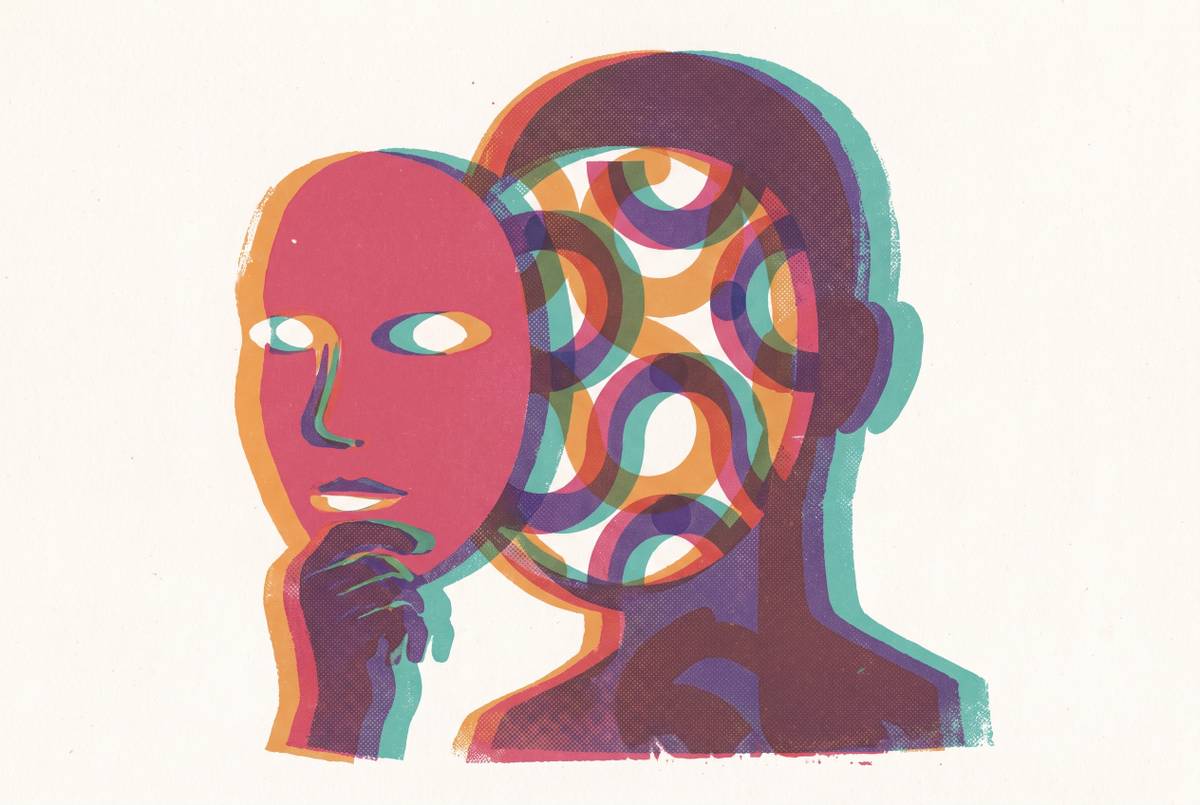
Internalized Laziness Narrative in Adults With ADHD
Most adults with ADHD learned to hate themselves from people misunderstanding their neurology.
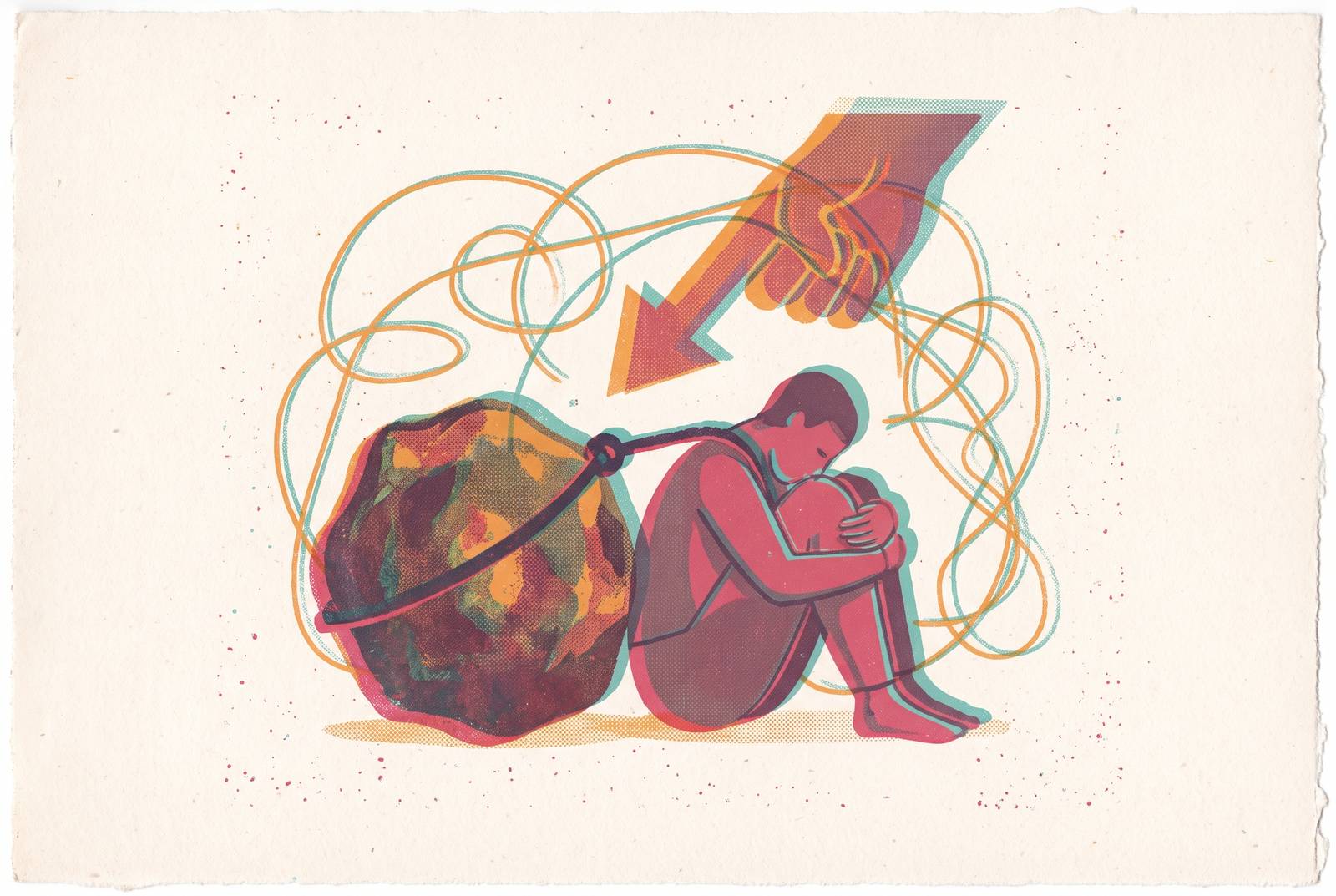
The internalized laziness narrative in adults with ADHD is not a character flaw anyone arrived at on their own. It is the predictable result of a brain with measurable neurological differences being judged, for decades, against standards it was never built to meet. Dismantling that narrative takes more than a productivity hack. It requires a scientific reframe and, harder still, an identity-level reckoning.
Why adults with ADHD internalize the lazy label in the first place
A teacher says it in third grade. A manager says a version of it during a performance review. A partner says it during an argument about dishes left in the sink. By the time an adult with ADHD reaches their thirties, "lazy" has usually been said by enough people, in enough contexts, that it stops sounding like an opinion and starts sounding like a fact.
What makes this especially cruel is that it is often factually backward. Many adults with ADHD spend years working harder than their peers just to land at the same output, and the gap between how much effort goes in and how little seems to come out is real. But the explanation everyone reaches for is moral. Difficult. Too emotional. Irresponsible. Qualitative research from 2025, cited by drlewis.com, describes participants who were told exactly this throughout their lives and who went on to develop anxiety, depression, and in some cases self-harm as a direct consequence of that gap between effort and outcome.
The label does not just sting in the moment. It sticks. Beliefs formed in a fourth-grade classroom calcify, year after year, into a fixed story about who a person fundamentally is. It is not that people with ADHD occasionally feel frustrated by their own performance. It is that an entire self-concept has often been built, brick by brick, out of other people's misdiagnoses of a neurological condition as a character defect. Recognizing that pattern is the first step toward taking the narrative apart.
What is happening in the ADHD brain when a task won't start
So what is actually happening, mechanically, in the moment a person with ADHD stares at a task and simply cannot begin? The honest answer sits in neurochemistry, not willpower. The ADHD brain's dopamine regulation works differently, and dopamine is the chemical messenger that signals reward and drives the brain to initiate action. When a task is unstimulating, that signal does not reliably fire, leaving the brain with no internal push to start. This is not a metaphor for laziness. It is a documented difference in how the reward system is wired.
Executive function is the broader term for the mental skills this system supports: the capacity to hold a plan in mind, resist distraction, and adjust when circumstances shift, including working memory, inhibitory control, and cognitive flexibility. Inhibitory control is described as the hallmark of executive dysfunction in ADHD. Picture it as a brake. In a neurotypical brain, the brake catches most distractions before they take the wheel. In an ADHD brain, the brake is less reliable, so distractions win more often.
There is a term that captures the practical size of this gap: executive age. Individuals with ADHD run, on average, 30 to 40 percent behind their peers in executive age; the executive function skills available to them are developmentally delayed relative to their actual age in years. A 30-year-old professional managing a full-time job, a mortgage, and a family might be operating, executively speaking, with the toolkit of someone considerably younger. That gap does not shrink with adulthood. It matters more because higher education, career responsibility, and family life all demand a more sophisticated executive function precisely at the moment the gap between demand and capacity is most expensive.
That is dopamine dysregulation, full stop, not selective effort or convenient laziness. The passion project delivers its own reward signal continuously; the form delivers nothing until it is finished, which for the ADHD brain might as well be never. Layered on top of this is time blindness, a chronic underestimation of how long tasks actually take, which compounds the sense of failure without there being any failure of intent behind it.
How decades of being measured by neurotypical standards produce shame, not just frustration
Frustration is a reasonable response to a hard situation. Shame is something else entirely: it is a conclusion about who a person fundamentally is. Why do so many adults with ADHD end up at shame rather than frustration? Because the feedback they receive across a lifetime is rarely framed as structural. It is framed as personal.
Master's research completed in 2025 by Megan Nowlan at City University of Seattle described exactly this process in women with late-diagnosed ADHD: shame that accumulates as the internalization of years of external judgment, character blaming, and ostracization for behaving outside neurotypical norms. The same research traced a mechanism directly. Blame and repeated rejection from others did not stay external. They turned inward, becoming isolation and shame, and for a number of the women studied, that pain fed a heightened pull toward substances or risky behavior as a coping response.
That pattern is not confined to a single study. Research by Arslan and Karaçul, published in Psychological Reports in 2026, found that people with higher adverse childhood experiences reported significantly more internal and external shame, more ADHD symptoms, and lower subjective well-being. Internal shame, specifically, functioned as the mechanism connecting early adversity to that lower well-being, meaning shame was not incidental to the story. It was the load-bearing wall.
The same dynamic appears earlier in life, too. Jelinkova and colleagues, in 2024 research cited in a narrative review published in Frontiers on 2026-03-31, found that increased self-stigma was significantly associated with lower self-esteem and poorer mental health in young people with ADHD. That same review makes the point directly: self-stigma reduces help-seeking, lowers adherence to treatment, limits access to support, and delays diagnosis. Shame does not only hurt. It actively blocks the exit.
One more dimension deserves to be named honestly. Diagnostic criteria for ADHD were developed primarily from studies of boys, which meant girls and women were systematically missed for decades. Their shame, as a result, had more time to accumulate, without the validation a diagnosis might have offered earlier. Shame is not a symptom that trails behind ADHD. For many adults, it is the central wound.
Masking: the exhausting performance that makes shame invisible to everyone but the person carrying it
Masking, in the clinical sense, refers to the deliberate effort to conceal or compensate for ADHD-related traits in order to meet social expectations. In plainer terms, it is the daily performance of appearing fine. It is rehearsing small talk to seem present, memorizing scripts for meetings, forcing eye contact that does not come naturally, and doing all of it quietly enough that nobody notices the effort behind it.
Masking is, at its root, a shame response. A person learns, usually early and usually the hard way, that their natural way of operating is not acceptable in the room they are in, so they build a version of themselves that is more tolerable to the people around them. The Frontiers review notes that both public and internalized stigma inhibit people from asking for help and erode self-esteem, and masking is one of the clearest behavioral expressions of that stigma at work.
Even the act of trying to understand oneself carries a cost under these conditions. A CHI 2026 qualitative study led by Rudberg Selin, Unéus, and Knudsen found that self-tracking, something often recommended to neurodivergent people as a tool for self-awareness, imposes substantial interpretive and emotional demands of its own. The same research found that facilitated sharing of experiences with others may help validate emotional responses and support genuine reflection. Masking makes even the private act of noticing one's own patterns exhausting. The person who masks well enough to pass in public may still be unable to safely notice what masking is costing them.
That leads to a paradox worth confronting directly. The better someone masks, the more invisible their struggle becomes to everyone else, which makes it harder for them to access support or accommodation, and easier for the people around them to keep believing the lazy narrative was accurate all along. Masking is a performance that burns the exact energy a person would otherwise spend on the task itself, which is part of why so many adults with ADHD go undiagnosed for decades. They masked well enough to seem functional, and functional enough, apparently, to fall straight through the cracks of a system built to catch obvious struggle rather than quiet exhaustion.
What a diagnosis does to the story you have been telling yourself
A diagnosis does not rewrite anyone's history. The job that was lost still happened. The degree that went unfinished is still unfinished. What a diagnosis changes is the meaning attached to those facts. As drlewis.com put it in content updated July 2, 2026, the job lost was not proof of irresponsibility, and the persistent sense of not living up to one's potential was not a character deficiency. It was an unidentified neurological condition, present the entire time, simply never named.
That reframe can land as genuine relief. The 2025 qualitative research cited by drlewis.com includes a participant who described the diagnosis as finally allowing her to see that traits she had spent a lifetime internalizing as personality flaws were, in fact, manifestations of ADHD. But relief is rarely the whole emotional sequence, and what follows it is grief. The same research found that 86 percent of participants expressed grief for the lives they might have led. Not grief in the abstract. Grief pointed at specific, nameable losses: the degree that was never finished, the career track that stalled out, the relationship that did not survive the years before anyone understood why things kept going wrong.
The emotional order here is not tidy or linear. Relief tends to arrive first, then grief, then something closer to anger, aimed at the teachers who called it laziness, at the clinicians who missed it for years, at diagnostic frameworks built around the wrong template entirely. Identity disruption produces all of that and is the piece least often discussed. A person who has spent decades narrating their own life around a story of moral failure is now being asked to revise that entire narrative from the ground up. It is a demolition and a rebuild, and it deserves to be treated as exactly that much work.
One risk deserves to be named honestly rather than glossed over. It is possible to swing too far the other way and attribute everything, every mistake, every hard year, to ADHD alone. The actual goal is a more accurate, more compassionate, and more nuanced self-understanding, one specific enough to distinguish what the brain did from what a person chose.
Why generic productivity advice fails ADHD adults and reinforces the shame loop
Most productivity systems, the planners and color-coded apps sold as universal fixes, are built on an assumption that does not hold for the ADHD brain: that motivation is a stable resource a person can summon whenever a future reward is worth working toward. For a brain with reliable dopamine responses to delayed goals, that assumption is mostly fair.
For the ADHD brain, a delayed or abstract reward tends to feel flat, almost theoretical, right up until a deadline turns it real. So standard advice like "just prioritize" or "break it into steps" is not wrong exactly, but it misses the actual mechanism at play, because it assumes the missing ingredient is organization when the missing ingredient is dopamine. When the planner doesn't work, the checklist goes unused, and the morning routine collapses, the person with ADHD does not conclude "the system failed me"; they conclude "I failed again," which deepens shame.
This is a serious design flaw. It is why so many ADHDers describe a graveyard of abandoned apps, journals, and systems, each one a small additional piece of evidence for the lazy narrative they are trying to escape. The actual evidence points somewhere else: the tool was never built for how their brain generates action in the first place.
What works: strategies built around how the ADHD brain generates momentum
If dopamine is the missing ingredient, the strategies that work are the ones that manufacture it deliberately, rather than strategies that assume it will appear on schedule.
Micro-task initiation is one of the more concrete examples. Instead of framing the task as "clean the house," which is abstract and endless, the actual first step becomes something like "put three items away," a task small enough to finish in under two minutes. That tiny completion delivers a real sense of accomplishment, which builds momentum toward the next small step. The internal shift moves from "how will I ever finish this?" to something far more answerable: "what is the very first physical thing I can do right now?"
Manufactured urgency works through a related mechanism. ADHD brains respond to time pressure in a way they do not respond to distant deadlines, so setting a 15-minute timer narrows the decision space, cuts down on overthinking, and creates a deadline the brain treats as immediate and real. Changing physical environment matters too: a stale, overused workspace stops generating novelty, and novelty is itself a dopamine trigger, so a café, a library table, or even a different room can re-engage a reward system that has gone flat at the usual desk.
Body doubling rounds out the list. Working alongside another person, whether in the same room or over video with cameras on, creates a form of accountability and focus that requires no conversation at all, and it consistently ranks among the more effective strategies people with ADHD report. None of these approaches are tricks or workarounds for a weak will. They are accommodations, built around documented differences in how the ADHD brain generates the push to act.
Why gamification is a scientifically grounded tool for ADHD brains, not a novelty feature
Gamification gets dismissed sometimes as a gimmick, a way of tricking adults into feeling like children over a to-do list. That dismissal misunderstands what it is actually doing. The ADHD brain runs on a lower baseline of dopamine, so the small, everyday rewards that keep a neurotypical brain motivated, finishing an email, checking a box, barely register at all.
Gamification addresses that gap directly rather than ignoring it. Immediate feedback, small rewards, and visible progress markers supply the kind of real-time dopamine response that an abstract, delayed payoff simply cannot provide. Points awarded for each completed step, a progress bar that visibly advances with every action taken, small visual cues that mark forward motion: together they build a continuous loop of encouragement, rather than asking the brain to hold out for a single distant finish line.
That distinction is the whole point. For an ADHD brain, the finish line by itself rarely provides enough pull. The checkpoints along the way are what generate motivation, and gamification is, at its core, a system of checkpoints. XP counters, streaks, milestone rewards: these are a direct, structural response to a dopamine deficit that makes both starting and sustaining action genuinely hard. Tools that build around these mechanics, including voice-first companions that remove the friction of typing out plans and instead let a person talk through a goal in natural conversation, are applying behavioral science to a real neurological gap. That is a categorically different thing from a to-do list dressed up with a nicer color scheme.
Rebuilding identity after the laziness narrative: what self-acceptance requires
Strategies solve the mechanical problem of getting a task started. They do not, on their own, undo a shame narrative, and drlewis.com content from 2026-03-04 makes this point directly: therapy that addresses the identity and grief dimensions of late diagnosis, not just symptom management, is essential to moving forward with clarity and self-compassion.
Self-acceptance is not the same thing as excuse-making, and conflating the two does a disservice to both ideas. The actual goal is a more accurate self-understanding, one that can hold the real difficulties of the ADHD brain alongside its real strengths, without collapsing into either shame on one side or denial on the other. Those strengths are not consolation prizes handed out to soften the deficits. Intensity, creativity, hyperfocus on work that actually matters to a person, a genuine talent for lateral thinking: these are features of the same neurological profile that also produces the struggles, not compensations bolted on separately.
Doing this work in practice means going back through specific memories with the new information in hand: the project that collapsed, the relationship that ended badly, the job that never worked out. The task is to sort, honestly, what belonged to ADHD and what belonged to a choice made poorly, because blurring that line in either direction produces an inaccurate account of a life. That sorting is slow and not glamorous, but a reframe that holds up depends on doing it, rather than settling for a new coat of paint over the same old shame.
Small, consistent wins do real work here too. The behavioral science behind ADHD-specific tools suggests that daily progress, even progress that looks minor from the outside, gradually builds a new experiential record, one that starts to compete seriously with the old failure narrative that shame has been running on for years. Community matters just as much. The CHI '26 study found that facilitated sharing of experiences may validate emotional responses and support reflection, and being witnessed by others who share the experience interrupts the isolation that shame depends on.
None of this resolves in a single sitting. It is a practice, sustained over time, rather than a reframe achieved once and then filed away, and one that tends to go further with structure and support built specifically around how the ADHD brain actually sustains change, rather than how a neurotypical brain is assumed to. The laziness narrative took decades to build. Taking it apart was never going to be the work of an afternoon, and treating it as anything less would be its own quiet way of shortchanging how much was actually misunderstood in the first place.
Sources
- Childhood Adversity, ADHD Symptoms, Shame, and Well-Being in College Students - Gökmen Arslan, Fikriye Eda Karaçul, 2026
- Experiences of Shame Among Women Diagnosed with ADHD in Adulthood By
- Late-Diagnosed ADHD: Making Sense of Your Life Through a New Lens
- Frontiers | A narrative review of stigma and masking in ADHD: insights from English-language research and the Japanese cultural context
- "Chasing Shadows": Understanding Personal Data Externalization and Self-Tracking for Neurodivergent Individuals