ADHD Burnout as a Consequence of Sustained Masking
Hiding ADHD symptoms depletes the same mental resources the condition already compromises most.
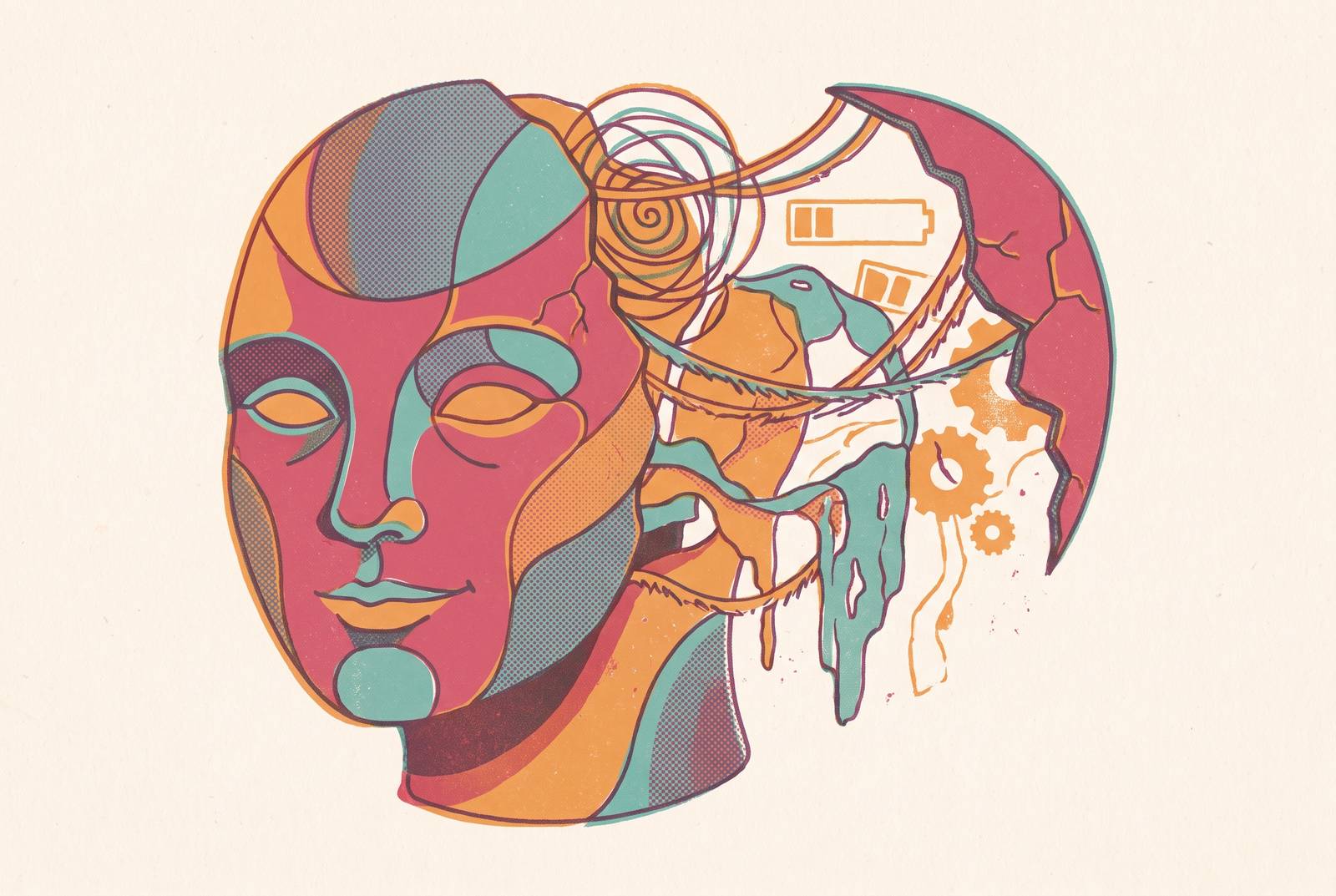
ADHD burnout is the predictable result of spending a finite cognitive resource faster than it can be replenished, and sustained masking is the mechanism that drains it fastest. Executive function is the term for the set of mental processes that let a person plan ahead, hold information in mind while using it, switch between tasks, regulate attention, and stop themselves from acting on every impulse that arises. These processes function closer to a battery than a skill, drawing down across the day and needing rest to recharge.
In the ADHD brain, that battery starts each day at a lower charge, and it recharges more slowly and less completely than it does for a neurotypical brain. Picture a phone that never quite reaches full charge overnight and loses power faster under identical use: the problem is not that the phone is being used incorrectly, it is that the hardware manages power differently. ADHD impairs the very systems responsible for regulating and restoring executive capacity, so a lower starting balance meets a slower recovery rate, and the gap compounds over the course of a day, a week, a year.
None of this is a deficit of willpower. Framing it that way assumes the ADHD brain has the same reserve as any other brain and simply chooses not to use it well. The research on adult ADHD points instead to a structural difference in how cognitive resources get allocated and restored. The right response is not more effort but smarter design around a real constraint. Everything that follows in this piece, the cost of masking, the shape of the depletion loop, the arrival of burnout, depends on taking that constraint seriously rather than treating it as a solvable attitude problem.
What masking requires of an ADHD brain doing it all day
Masking is the practice of hiding ADHD symptoms to blend into a social or professional environment built around neurotypical expectations. The ADDA's overview of the practice describes it as controlling impulses, rehearsing responses, and copying the behaviors of people who do not have ADHD, which makes clear that masking is not a single decision made once but a sustained behavioral performance running underneath ordinary daily activity. Someone who masks might suppress stimming, script conversations before having them, overprepare for routine meetings, check finished work multiple times, arrive far earlier than necessary to avoid any risk of lateness, or stay quiet in group settings rather than risk saying the wrong thing.
Each of those behaviors calls on inhibitory control and self-monitoring, which happen to be exactly the executive functions ADHD compromises most. Masking is not a workaround that sidesteps the ADHD brain's weak points; it routes directly through them. The internal experience often resembles two parallel streams of consciousness running at once, one actually engaged with the conversation or task at hand, the other watching and editing the outward performance in real time, correcting tone, posture, pacing, word choice, before any of it reaches another person.
ADDA frames this as living with two personas, one reserved for private life and one deployed around colleagues, classmates, and anyone who is not a close, trusted contact. Observing the mask takes effort in its own right, separate from the effort of wearing it.
None of this makes masking irrational. For most people who do it, masking began as a reasonable response to real social consequences, bullying, professional penalty, or simple exclusion, and it worked well enough to become habitual. The problem is not that the strategy was foolish. The problem is what it costs to keep running, which is the subject of the section that follows.
How the depletion loop forms: masking spending the reserves ADHD already can't afford
The ADDA's beach ball metaphor captures the physical sensation well: holding a beach ball underwater while swimming is possible for a while, but it takes continuous muscular effort, and the moment that effort lapses, the ball surfaces. Masking works the same way, except the muscle doing the holding is the same one the ADHD brain already struggles to keep in reserve.
Masking draws specifically on inhibitory control, working memory, and self-monitoring, the three executive functions ADHD impairs most severely. That is the structural paradox at the center of this whole piece: the brain is being asked to perform continuously, and at a high level, in precisely the domain where it has the least capacity to spare. A 2025 study by Zaib and colleagues found that continuous self-monitoring among neurodivergent women contributes directly to mental health decline and burnout: the labor of watching and adjusting one's own presentation is a primary, foreground cost, paid out of the same account that funds everything else the person needs to get through a day.
The loop compounds rather than stabilizes. Depleted reserves make unmasked, authentic functioning harder to sustain, which increases the perceived need to mask more carefully, which depletes the reserve further still. There is no built-in exit ramp inside this cycle. The person running it is not failing to rest; the conditions that would allow rest, a workplace, a classroom, a social circle where masking is not required, are often simply absent on any given working day. That absence, not a lack of discipline, is why burnout from masking rarely looks like a single dramatic crash. It tends to arrive as a slow erosion, one that often goes unnoticed until the functioning it was quietly supporting gives out.
Who runs the depletion loop hardest
The speed of this loop is not fixed. It tracks the intensity of social pressure to appear competent, and that pressure is not distributed evenly across people with ADHD. Some environments demand far more constant, far higher-stakes masking than others, and the people inside those environments burn through their reserves faster.
Zaib and colleagues' research on neurodivergent women in software engineering offers a concrete case. These women sit at the intersection of two sets of expectations at once: the general social demand to mask neurological traits, and the specific gendered expectation that professional women present as organized and emotionally regulated. Meeting both simultaneously multiplies the executive load rather than simply adding the two together. The same research documents that this compounded demand produces measurable burnout and attrition in professional settings, and the structural cause behind it is rarely named at the point where someone actually leaves a job or a field.
There is also a quieter mechanism that extends the loop before anyone recognizes it for what it is. ADDA notes that women are diagnosed with ADHD at lower rates than men, in part because compensatory masking behaviors successfully obscure the underlying presentation from the clinicians and teachers who might otherwise catch it. The better the mask works, the longer diagnosis, and the relief that can follow it, gets delayed. One might argue that skill at masking should count as some kind of advantage. It functions instead as a trap: effective concealment removes the very evidence that would justify getting support.
High-achieving professional environments add a further wrinkle through simple survivorship. The people who remain in demanding fields over time are disproportionately the ones who mask most effectively, carrying the heaviest cognitive load while receiving the least institutional recognition that any extra load exists at all.
What burnout from sustained masking looks like when it arrives
Burnout rarely announces itself honestly. It appears as a sudden, unexplained loss of competence rather than as the exhaustion it actually is. Tasks that used to carry their own momentum, the kind that practically finished themselves once started, suddenly do not move at all. Task paralysis deepens past its usual baseline into territory the person has not experienced before, something closer to the engine itself stalling rather than the familiar ADHD difficulty with initiating a task.
Emotional regulation tends to go next, swinging toward volatility or flattening into a kind of numbness, either direction a sign that the machinery used to manage feeling has run out of fuel. Physical symptoms frequently occur alongside the cognitive and emotional ones: persistent fatigue, headaches, the sensation of moving through resistance in ordinary daily tasks. These physical signs are often what finally sends someone to a doctor, framing the problem as a physical ailment rather than what it actually is, a cognitive and executive-function collapse built up over months or years of continuous masking.
Social withdrawal deserves particular attention, because it is often the first visible crack. The social persona, the version of the self built specifically for colleagues, classmates, and acquaintances, requires the most sustained executive effort of any part of the mask, so it tends to be the first function taken offline when reserves run out. ADDA states that masking leads to burnout, and that burnout affects mental health directly. The person who looked composed and on top of everything just weeks earlier finds those exact capacities unavailable, seemingly overnight.
What makes this especially disorienting is that the skills failing are often the ones a person built an identity around. A reliable, organized colleague who suddenly cannot answer email is not becoming a different person. The executive capacity that sustained that identity has simply run out, and what looks like personal failure is resource exhaustion wearing failure's clothes.
Why the same burnout gets misread as laziness, depression, or a personal character problem
Masking's entire function is to make ADHD invisible. When burnout finally arrives, there is no visible history of effort behind it for anyone to point to, including the person experiencing it. Colleagues and family saw competence and follow-through right up until the moment they did not. Because the strain was never visible, the collapse reads as sudden and unjustified to everyone in the room.
Zaib and colleagues' 2025 research describes this pattern clearly in professional settings: the intersection of gender and neurodivergent masking produces real burnout and real attrition, and the structural cause behind it almost never gets named at the point of departure. Without that structural explanation on offer, individuals default to the explanation closest at hand, which is usually some version of personal inadequacy. ADDA lists lower self-esteem and perfectionism among the direct consequences of sustained masking, and that makes sense once the internal critic is understood to be calibrated to the standard of the mask rather than to the reality of an ADHD brain working under a constrained reserve. Depression and anxiety frequently occur alongside masking-driven burnout, making it harder to separate ordinary exhaustion from what looks like a standalone mood disorder.
A shame loop takes hold from there: burnout produces what looks like incompetence, incompetence produces shame, shame drives redoubled efforts to mask even harder, and that redoubled masking drains the reserve faster, deepening the burnout it was meant to cover up. For anyone who went years without a diagnosis, this loop lands on fertile ground. Years spent attributing ordinary ADHD struggles to character rather than neurology leave a person primed to read burnout, when it finally arrives, as confirmation of the worst thing they already suspected about themselves.
Reframing burnout as a predictable physiological outcome, not a measure of personal worth
Once the mechanism traced through the previous sections is taken seriously, burnout stops reading as evidence of weakness and starts reading as the outcome a person should expect from running an unsustainable demand on a finite, already-taxed resource. If masking draws on the same reserves ADHD already depletes, and continuous masking offers no reliable path back to full capacity, burnout is not a risk hovering somewhere in the distance. Given enough time under those conditions, it is close to a mathematical certainty. ADDA's own language on the subject is direct: maintaining the mask can lead to burnout, and that cost is not a side effect of masking done wrong, it is what masking, done consistently, actually costs.
This reframe is not just a gentler way of talking about the same problem. It moves the explanation from individual character, where it has probably lived for years, to a structural mismatch between cognitive demand and cognitive resource, where the explanation actually belongs. But what if that reframe becomes an excuse to stop taking functional failures seriously? It does not work that way. Understanding the cause of a breakdown does not excuse its consequences, missed deadlines still need to be addressed, strained relationships still need repair, but a cause that has been correctly identified can actually be addressed, where a cause that has been misattributed to laziness or bad character cannot.
One honest caveat belongs here. ADHD burnout does not yet have a standardized clinical definition, so this reframe is mechanistically well-supported by the research tying masking to executive depletion and burnout, but it is not yet written into formal diagnostic instruments the way, say, major depressive disorder is. That gap between mechanism and formal clinical vocabulary is simply where the science currently stands, and naming that limit honestly is part of taking the argument seriously rather than overselling it.
What reduces the depletion load
Telling someone in burnout to simply stop masking ignores why they started in the first place. Masking is frequently a rational response to a genuinely hostile or unsupportive environment, and in those environments, unmasking without any change to the surrounding conditions does not relieve pressure. It exposes the person to the exact social or professional consequence the mask was built to prevent.
Safer reduction tends to require support rather than solo effort. One might start that process in a trusted relationship or a low-stakes setting rather than at work on a Monday morning, letting the executive load tied to performance decrease gradually rather than disappear all at once under pressure.
Environmental change matters here at least as much as individual strategy. A workplace or a relationship that lowers the social cost of visibly neurodivergent behavior reduces the demand for masking directly, without asking the individual to absorb all the risk of finding that out the hard way. Addressing the underlying executive function impairment through appropriate treatment narrows the gap that masking exists to cover, so the mask becomes less necessary because the underlying need for it shrank, not because the person found more willpower. What specific, daily choices actually reduce the executive drain enough to make a difference, given a fixed reserve and an environment that cannot be redesigned overnight?