Unmasking ADHD in Friendships and Social Settings
Executive dysfunction and masking exhaust ADHD friendships from the inside out.
The text sat drafted for three days before it got deleted. The birthday came and went, remembered at 11:40 p.m., too late to feel like anything but an apology. This article is about why those moments accumulate so heavily for people with ADHD, and about the specific, underexplored mechanism behind them: masking, the constant effort of performing neurotypical social behavior, and what it costs to keep doing it. The difficulty isn't a character flaw or a failure of caring. It traces back to executive dysfunction, the same neurological reality that affects attention and organization, disrupting the precise cognitive machinery that friendship maintenance requires.
Friendship runs on infrastructure most people never have to think about: remembering to follow up, tracking who said what and when, keeping communication steady enough that someone never has to wonder where they stand. ADHD brains often handle the opening moves of a friendship with real ease. What falters is the unglamorous stretch that comes after, the one that requires consistency, reciprocity, and follow-through without the adrenaline of novelty to power it. Working memory lapses mean a friend's story about a hard week at work gets genuinely forgotten by the following Tuesday, because the neurological filing system that would normally flag it for later recall didn't fire. Time blindness makes "let's grab dinner next week" collapse into missed windows and late arrivals, and small failures like that, repeated, erode trust long before anyone involved understands why.
This pattern appears in childhood and persists into adulthood. Children with ADHD face more peer conflict and build fewer durable friendships than their classmates, and that gap does not close at eighteen. The physical impulsivity visible in a seven-year-old who can't stay in line becomes the verbal interruption of a teenager who can't wait for a pause in conversation. The underlying mechanism, a brain that struggles to generate and hold the internal cues other people rely on automatically, stays constant even as the specific failure looks completely different from one decade to the next.
The double empathy problem: why neurotypical social templates don't fit ADHD brains
None of this difficulty belongs solely to the person with ADHD to fix. Autism researcher Damian Milton identified a mutual misunderstanding between people who process the world in meaningfully different ways, one that runs in both directions. Neurotypical people struggle to accurately read neurodivergent social signals just as often as neurodivergent people struggle to read neurotypical ones. Mutual confusion, not one-sided deficiency, is the starting condition.
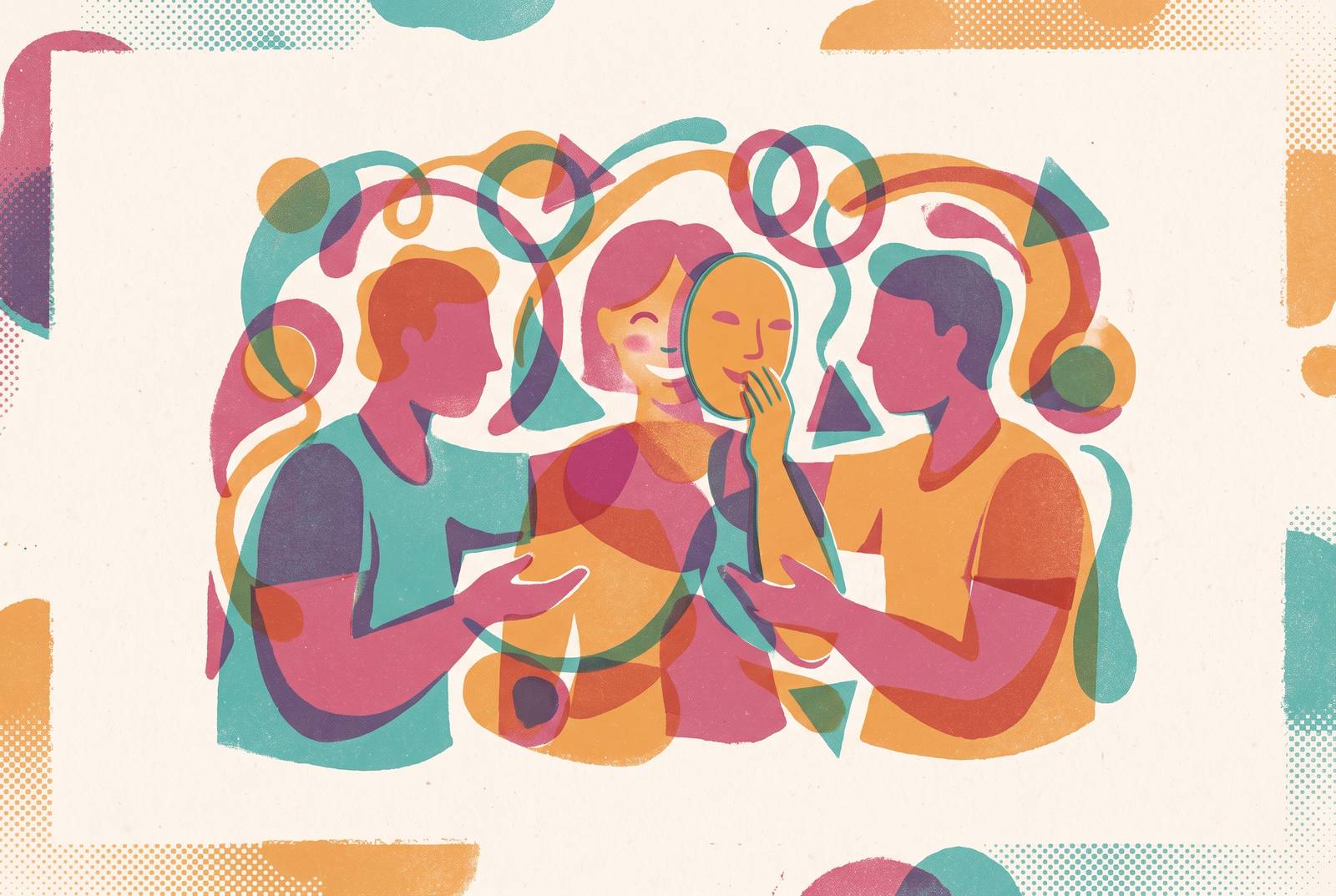
That reframing matters because it moves the question away from "what's wrong with me" and toward "what's wrong with the fit." And in practice, the burden of adjustment has rarely been distributed evenly. The person with ADHD is expected to translate themselves constantly into neurotypical social language, reading unspoken rules, reorganizing their natural rhythm of speech, timing their enthusiasm to match what's socially legible, while very few neurotypical friends are ever asked to learn the reverse.
Research on college students offers a striking data point here: friendships were rated as higher quality specifically when both people had similarly matched levels of ADHD symptoms. That finding is not a coincidence, and it is not something anyone with ADHD needs to apologize for. It suggests something structural: when the gap between two neurotypes narrows, the amount of translation labor required to stay connected narrows with it. The asymmetry of who has to adapt, carried across years and friendships, produces an exhaustion that has nothing to do with how much a person values the people in their life. That exhaustion is the subject of the next section, because it has a name.
What masking costs when the social stakes are constant
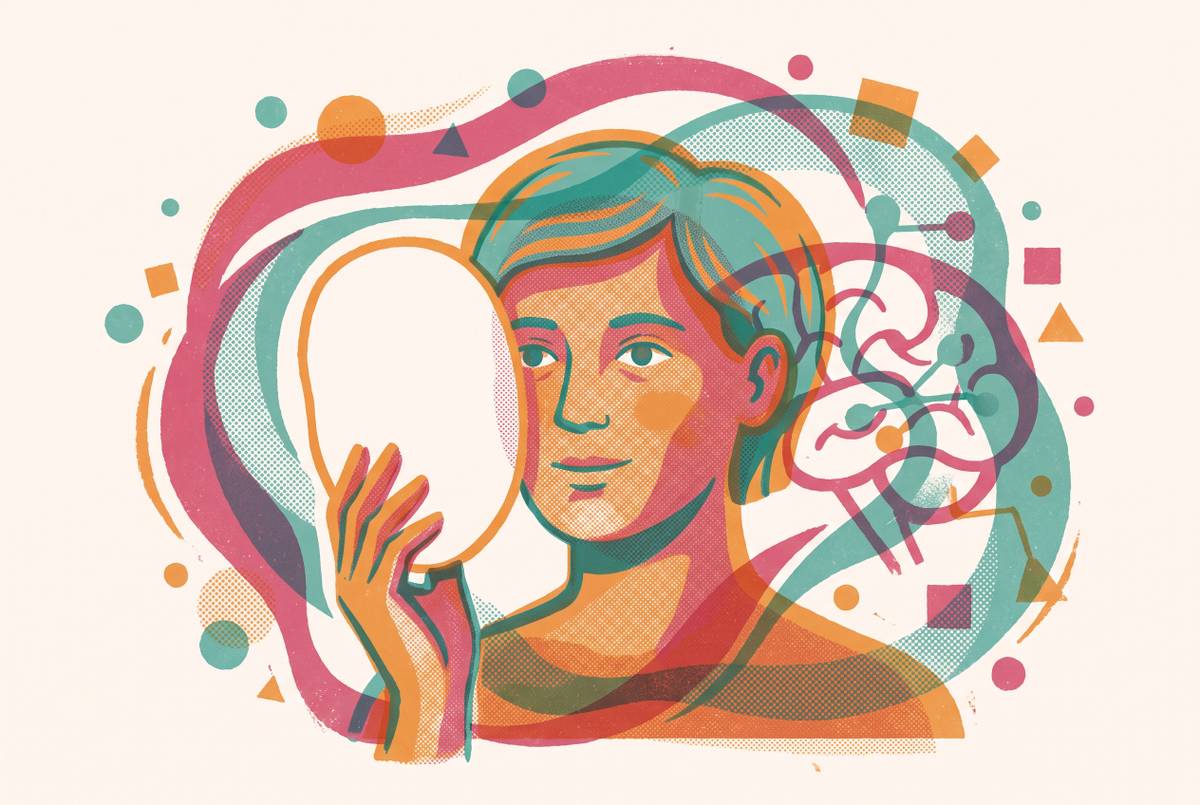
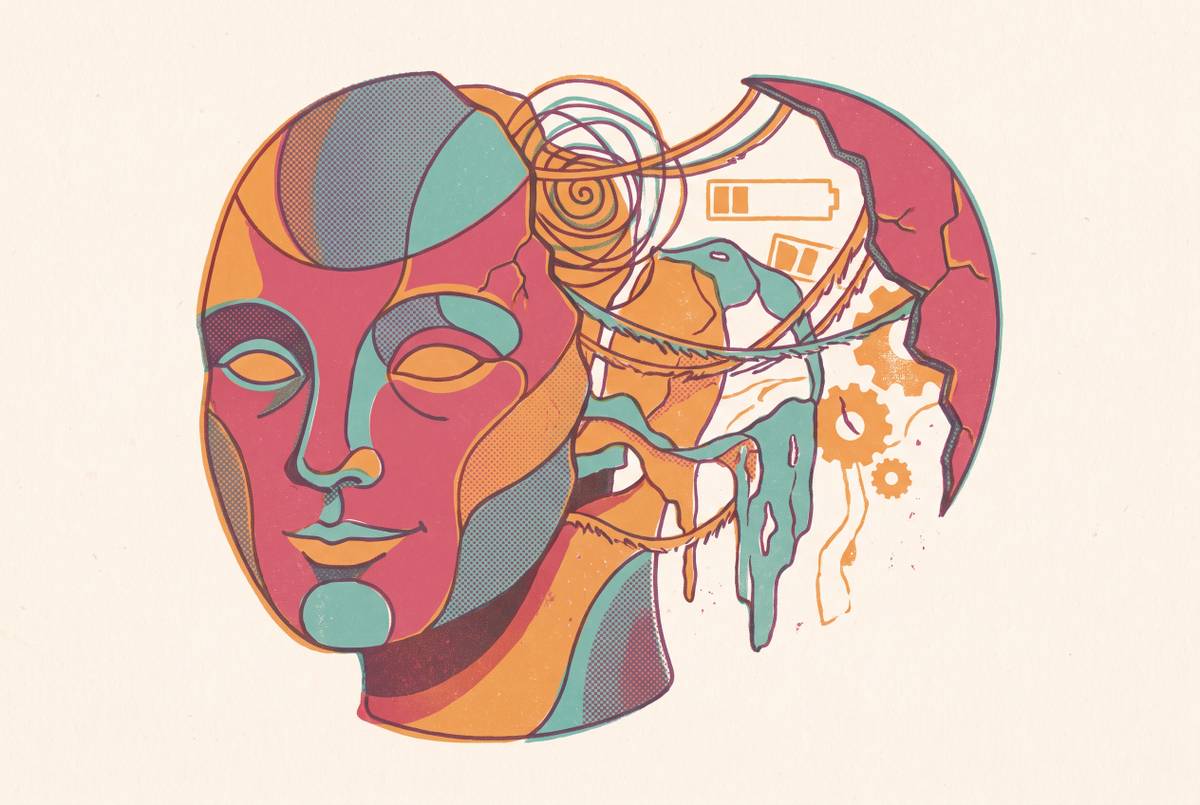
Masking is a cognitively expensive performance that draws on the same limited pool of mental resources ADHD already taxes. Every hour spent masking is an hour of executive function diverted away from the tasks it was already struggling to cover.
In a friendship context, masking takes a specific, granular shape. It looks like suppressing the impulse to interrupt mid-story, holding a sentence in reserve until the other person finishes, even when the thought risks slipping away. It looks like resisting the pull toward a more interesting tangent that just surfaced, because chasing it would derail the conversation the friend actually wants to have. It looks like trying to track birthdays, follow-ups, and promised check-ins without the benefit of an internal cuing system that reliably fires on its own. And it looks like holding energy at a performable level for an entire evening, appearing engaged, present, and relaxed, when the effort of appearing that way is itself the opposite of relaxed.
A study published in Research in Neurodiversity, which interviewed 202 adults in British Columbia diagnosed with ADHD, documented what this performance costs over time. Lead author Marisa Mylett put the finding directly: "Camouflaging or masking strategies may help you get your foot in the door socially, in relationships or at work, but they often leave people feeling exhausted, disconnected from their true selves and less close or connected to others."
A 2026 narrative review in Frontiers in Psychology situates this within a broader stigma loop. The same review flags a limitation in the research itself: there is currently no unified operational definition or validated measurement tool for ADHD masking. Claims about its scope and mechanism have to be read as still developing rather than settled. That caveat doesn't undercut what the qualitative data already shows. It explains why the full scale of the cost is still being mapped.
Many adults with ADHD describe something close to an "ADHD hangover" after interactions that demanded heavy masking: a profound exhaustion the next day that has nothing to do with disliking the people they were with. The energy cost of appearing fine is steep and unpredictable, and it rarely matches what anyone else at the table would expect from what looked, from the outside, like a relaxed evening. That is the paradox sitting at the center of this entire problem. The performance that is supposed to make connection possible is the very thing that prevents the connection from ever becoming real, because the person on the other side of the table is responding to a version of someone that took enormous effort to construct and tells them almost nothing true.
How rejection sensitivity ends the friendships it fears losing
Masking rarely feels optional, and rejection sensitivity is a major reason why. Rejection sensitivity in ADHD is a neurologically rooted intensity, well documented in qualitative research even where it has not been formalized as its own diagnostic category, and it can cause people to withdraw from friendships before any rejection has actually occurred.
The neurological piece of this traces to differences in how the amygdala and prefrontal cortex coordinate in ADHD brains. Masking then becomes the tool used to camouflage those feelings in the moment, which in turn produces dissociation from one's own reactions and gradual withdrawal from the people closest by. Loneliness is the frequent result.
The pattern has a recognizable shape. Rumination follows, then withdrawal, then distance that nobody on the other end asked for or even noticed happening.
What makes this loop so hard to see from the inside is that it is self-sealing. The fear of losing a friendship produces the exact behavior, guardedness, preemptive distancing, quiet disappearance, that ends up ending the friendship. Many adults with ADHD who describe themselves as friendless were never repeatedly rejected. They stopped reaching out before rejection had the chance to happen, and the absence of friends that followed gets experienced as confirmation of the original fear, never as something self-caused. That is the cruelest mechanical feature of the loop: it validates the fear that built it while hiding its own fingerprints completely.
But what if the loop isn't permanent? Naming it is the first interruption. A withdrawal that can be recognized in the moment, as fear rather than as evidence, is a withdrawal that can be paused before it hardens into distance.
Who carries the heaviest masking burden
Masking is not distributed evenly, and the people who carry the heaviest version of it are often the ones whose ADHD went unrecognized longest, a group that includes a disproportionate number of women and girls.
Girls with ADHD frequently start masking intensively by middle school. The strategy looks less like obvious disruption and more like careful observation: watching how peers behave and mirroring it, slipping into perfectionism or people-pleasing as a way of staying socially safe, or withdrawing altogether because the effort of trying has become too exhausting to sustain. None of these presentations look like the hyperactive, externally visible ADHD that most diagnostic checklists were built around, which is part of why so many of these girls were overlooked for years.
That gap in recognition compounds. When diagnosis finally arrives in adulthood, often after decades of unrecognized masking, the identity work involved is not simply learning a new fact about one's brain. Identity work after diagnosis means excavating who a person actually is underneath years of performed neurotypicality, a process complicated by the fact that the mask has often been worn for so long it has become indistinguishable from personality itself, because the mask formed the only version of self most people, including the person wearing it, ever got to see.
Gender adds another layer to that mutual misunderstanding. Women with ADHD are more often socialized from childhood to prioritize social harmony and manage the emotional needs of people around them, and that socialization makes masking feel like a natural extension of expected femininity rather than what it actually is: a neurological adaptation built to survive a mismatch. One might ask why this distinction matters if the behavior looks the same either way. It matters because a behavior read as personality is far harder to question, let alone to set down, than one recognized as adaptation.
The brain and friendships after the mask comes off
Unmasking is a gradual renegotiation, both of identity and of the friendships built during the years the mask was in place, and the losses that sometimes come with it are not evidence that unmasking was a mistake.
In practice, unmasking means letting ADHD traits become visible in real time rather than absorbing them silently and compensating behind the scenes. It means the topic shift gets voiced instead of fought back.
This period is disorienting for a specific reason: friendships built on the masked version of a person do not always survive contact with the unmasked one. That is painful, and it functions as diagnostic information rather than failure. A friendship that cannot hold the unmasked version was likely never built to hold the whole person. None of this is an argument that only neurodivergent people can be genuine friends to someone with ADHD. It is evidence that wherever masking becomes unnecessary, whoever the friend turns out to be, the translation labor named earlier in this piece drops, and something more durable has room to grow in its place.
The energy recovered from reduced masking is not a minor convenience. Freed up, that energy becomes available for the actual substance of friendship: emotional presence, genuine curiosity about another person's life, the follow-through that masking had been quietly cannibalizing all along.
Building friendships that work with an ADHD brain instead of against it
Because executive dysfunction is the root mechanism behind all of this, the most useful strategies work by externalizing structure the ADHD brain cannot reliably generate on its own, rather than by demanding more willpower or a better performance. That single shift in approach, from internal discipline to external scaffolding, is what separates strategies that actually hold up from advice that quietly blames the person for a brain difference they didn't choose.
Treating friendship maintenance as a designed system rather than a felt impulse is the starting principle. Scheduling a check-in like a calendar appointment is a direct compensation for the object permanence gap that makes ADHD friendships fade: the "out of sight, out of mind" dynamic that has nothing to do with affection and everything to do with how reliably a person, an obligation, or a memory stays present in working memory when it isn't directly in front of someone.
The guilt that builds around a long silence deserves its own attention, because it tends to make the problem worse rather than better. The internal note that says "it's been too long to reach out now" is exactly the kind of thought that, left unexamined, feeds the rejection sensitivity loop described earlier: the assumption that silence has already done irreparable damage, followed by withdrawal that does the actual damage the fear predicted. Breaking that loop starts with treating a long gap as a scheduling failure a system can catch next time, not a verdict on the friendship itself.
None of this requires becoming a different kind of person or performing a cure that doesn't exist. It requires building the scaffolding that the brain does not supply by default, understanding that the difficulty was never a measure of how much the friendship mattered, and recognizing, as the double empathy framework insists, that a friendship which works is one where both sides have stopped expecting only one of them to do all the translating.
Sources
- Adhd and Friendships: A Practical Guide to Making and Keeping Friends
- Frontiers
- Social Understanding and Friendships in Children with Attention Deficit/Hyperactivity Disorder or Dyslexia
- Frontiersin
- Full article: Navigating the interplay of ADHD, social norms, and friendships: perspectives from secondary school students with ADHD
- Adults with ADHD may pay high price to mask traits and fit in, SFU study finds
- The lived experience of rejection sensitivity in ADHD - A qualitative exploration
- Rejection Sensitive Dysphoria (RSD): Symptoms & Treatment