ADHD Stimulant Shortage Effects on the Adult Community
Medication access affects work, relationships, and emotional stability for millions of adults.
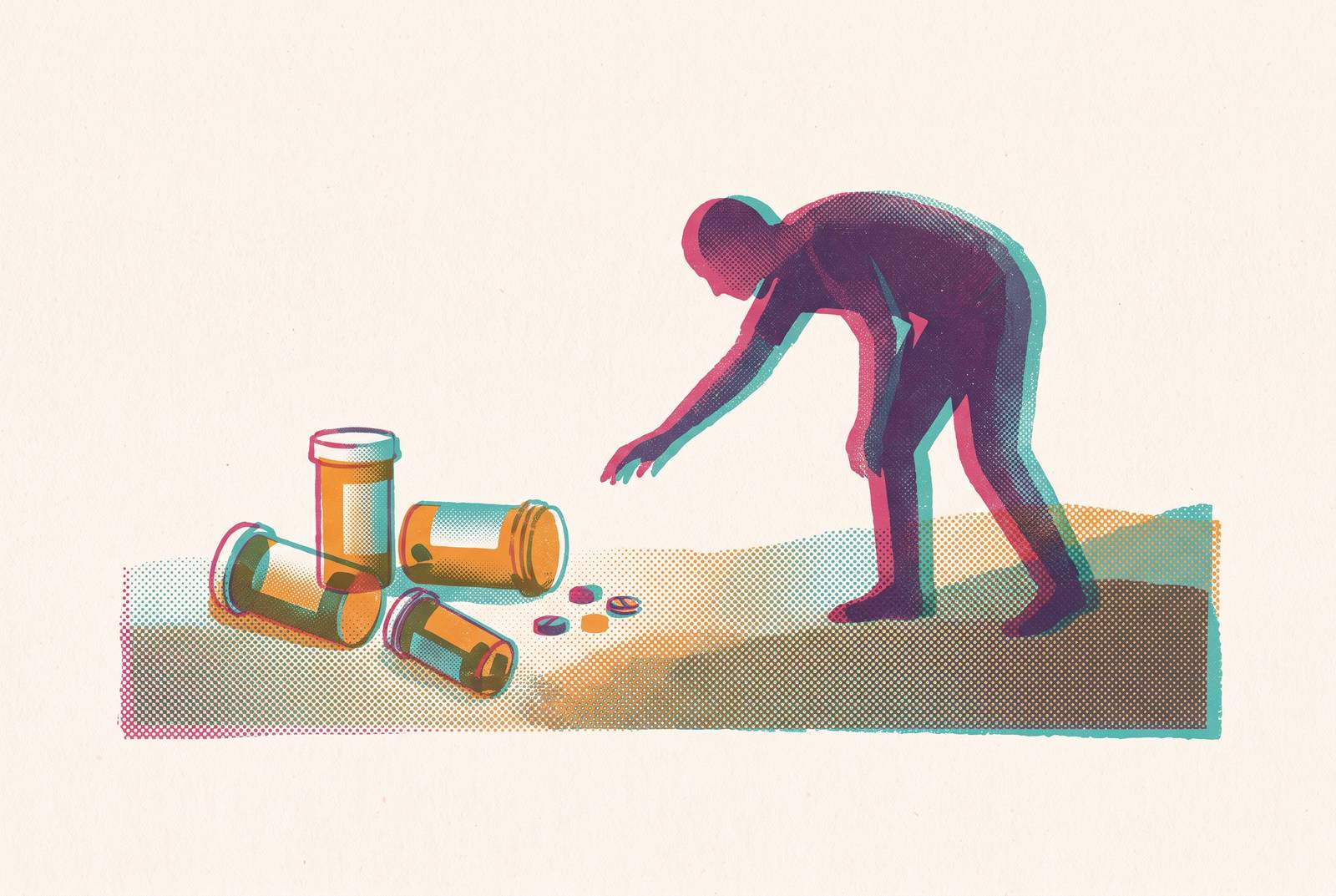
The ADHD stimulant shortage is a recurring disruption to the executive function scaffolding that makes adult work, relationships, and daily routines possible. Its effects cannot be understood as a supply chain inconvenience alone. Understanding what medication access supports, and what happens when that support disappears, is the first step toward navigating the shortage without mistaking a system failure for a personal one.
What the shortage actually is and why it has persisted since 2022
The FDA Drug Shortage Database has listed mixed amphetamine salts, initially the immediate-release formulation, since October 12, 2022, and methylphenidate continuously since July 26, 2023. The shortage has persisted for over three years across multiple manufacturers, formulations, and dosage strengths. That breadth matters because it points beyond a temporary interruption at one producer. The problem lies in how production limits, manufacturing capacity, and prescribing constraints interact.
DEA Aggregate Production Quotas, or APQs, draw on historical consumption and projected demand, but critics argue that the method lags behind rapidly changing prescribing trends. Active pharmaceutical ingredient manufacturing is also concentrated among a small number of producers. Meanwhile, prior-authorization requirements channel prescriptions into particular formulations and dose tiers, leaving patients exposed when those supplies vary. These constraints can make one another worse, so a single fix may not be enough.
The DEA raised the APQ for d-amphetamine in October 2025 and set 2026 quotas above the initially proposed level. The proposed 2026 rule drew over 5,000 public comments, mostly from patients and providers who described trouble getting prescriptions and the effects this had on mental health. Yet manufacturers are not required to produce up to their allocated quotas. Ingredient sourcing, production, quality assurance, and distribution can introduce months-long delays, so a higher ceiling does not immediately mean fuller pharmacy shelves. Supplies are still uneven, especially for higher-dose formulations.
How many adults this affects, and why adults specifically bear the burden
The National Center for Health Statistics Rapid Surveys System estimated that 15.5 million U.S. adults had an ADHD diagnosis in data collected during October–November 2023. Approximately one third took stimulant medication. Among those taking stimulants, a large majority reported difficulty filling their prescription because the medication was unavailable.
ADHD was originally understood as a childhood disorder, but it is now recognized as a lifelong condition. Yet diagnosis in adults still uses criteria drawn from pediatric guidelines, which may miss some executive function deficits and emotional dysregulation. That mismatch helps explain why recognition of adult need has not been matched by systems designed around it. A quota system based largely on past use was ill-equipped to keep up as adult diagnoses and demand grew sharply.
Untreated ADHD can impair the executive functioning and financial stability needed to obtain a formal diagnosis or pursue alternative treatment. When a prescription becomes unavailable, finding another treatment pathway is not simply an administrative task added to an otherwise manageable day. It adds another task that draws on already strained attention, planning, and follow-through.
What executive function actually does for adult daily life, and what ADHD does to it
Executive function is the set of abilities that helps people do what they intend to do. It includes planning, prioritizing, initiating tasks, and sustaining attention, all of which depend heavily on the prefrontal cortex. For adults with ADHD, difficulty in these areas is a central challenge. Knowing that something matters does not necessarily supply the ability to begin it or stay with it. The gap between knowing and doing is where much of the daily impairment sits.
Dopamine helps the prefrontal cortex stay engaged and set priorities. In ADHD, dopamine signaling is less steady, making it harder to persist with tasks that offer little immediate reward. Dr. William Dodson's clinical model describes this as an interest-based nervous system. Interest, novelty, urgency, or challenge can make it easier to engage with a task than knowing it is important. This framework helps explain how hours can pass on a fascinating project while a critical but unengaging deadline remains untouched.
Hart et al.'s 2013 meta-analysis found decreased activation in the right inferior frontal cortex and thalamus in adults with ADHD during inhibition tasks. Children showed distinct deficits in the supplementary motor area and basal ganglia instead. The age difference matters because executive difficulties do not simply disappear as childhood ends, and frontal deficits may become more prominent in adulthood. The study describes a pattern of brain activity.
Real-world self-ratings identify executive dysfunction in the overwhelming majority of adults with ADHD, yet it can remain unrecognized in high-achievers. Emotional dysregulation adds to these difficulties at work and in relationships. Together, these difficulties explain why treatment can function as scaffolding for ordinary responsibilities.
What happens to adult life when stimulant access is interrupted
Interview research published in the Journal of Attention Disorders in 2025 found that the shortage affected occupational performance, emotional regulation, relationships, and social participation. A large majority of participants experienced a return of ADHD symptoms. Adults said they did less well at work, had less stable emotions and problems in their relationships, and pulled back from social activities. The consequences reached across the parts of life that rely on consistent attention and self-regulation.
Research on abrupt stimulant interruption documented a 24-year-old working professional who had previously been stable on medication. Repeated pharmacy stockouts left her without treatment for four weeks. During that lapse, she experienced emotional volatility, difficulty sustaining attention, and declining workplace performance. A prescription can remain medically appropriate while the support it provides disappears from daily life.
The effects of a gap also need not end when medication returns. Emotional dysregulation can damage relationships and workplace standing in ways that are difficult to repair afterward. The burden of the shortage includes consequences that persist after access returns and extend beyond the number of unfilled prescriptions. What happened to a person's life while treatment was unavailable also matters.
Within-individual analyses of the Swedish national registry link medication-on periods to a much lower risk of motor-vehicle crashes, less criminal-justice contact, and fewer substance-use emergency-department visits in both adolescent and adult cohorts. These analyses compare periods within the same people, rather than simply comparing treated and untreated groups. They do not establish what will happen to any particular person during a gap.
Why the DEA's rationale for restrictive quotas is real but insufficient
The strongest argument for restrictive quotas begins with a legitimate concern. ADHD diagnoses and stimulant prescribing have increased sharply over the past decade, while stimulants carry risks of misuse, diversion, and psychological dependence. Help with alertness and concentration is a primary reported motivation for misuse in some populations. Patient advocates also acknowledge these risks. Treating them seriously is compatible with recognizing that prescribed treatment meets a genuine medical need.
It is hard to judge how well the rules balance those risks against the harms of undertreatment. Health systems, clinicians, and policymakers lack clear evidence-based frameworks for resolving every part of that balance, leaving room for both overtreatment and undertreatment. Critics argue that data on past dispensing lag behind growing demand and point to both the lack of evidence that the quota system has reduced diversion and the documented consequences of interrupted treatment. A sound rationale is not, by itself, evidence that a policy works adequately.
The DEA and FDA have acknowledged supply challenges but say they cannot require pharmaceutical companies to produce more or change distribution practices. This puts a limit on how much changing quotas alone can do. It also makes the distinction between controlled and non-controlled treatments practically important. Atomoxetine, viloxazine, guanfacine, and clonidine are not controlled substances and are not subject to DEA production quotas, and their supply has remained stable throughout the shortage.
Hanwella et al.'s 2011 meta-analysis found no significant difference in efficacy between methylphenidate and atomoxetine in the randomized trials it examined. Both medications are effective in reducing core ADHD symptoms. That finding does not make every treatment interchangeable for every adult, nor does it establish equal efficacy for every non-stimulant. But it gives reason to question whether a large gap in access must come with an equally large gap in efficacy. Non-stimulant options therefore belong in a prescriber-led discussion of continuity.
Practical strategies for maintaining function when medication access is unreliable
Maintaining access begins with reducing avoidable uncertainty in the prescribing process. Call the pharmacy before a prescription is sent to ask about stock, rather than relying on repeated pharmacy hopping, which can slow future fills and invite controlled-substance scrutiny. Ask the prescriber whether an equivalent-strength combination, such as two 10 mg tablets instead of one 20 mg, is appropriate. Lower strengths are generally more available, though they remain subject to intermittent regional shortages.
Availability also differs by formulation and date. Sultan's clinical analysis describes brand Adderall XR and immediate-release generics as still in shortage as of October 8, 2026, while brand lisdexamfetamine, Vyvanse, is generally available and generic presentations are spotty. That variation supports a structured conversation about alternatives, including non-stimulant bridging, rather than an assumption that every stimulant is equally constrained. It also explains why a treatment plan and an access plan need to be considered together.
Non-medication strategies cannot replace stimulants, but they can help preserve meaningful function during gaps. For task initiation, micro-chunking gives people a clear place to start on a project that feels daunting. Instead of “write quarterly report,” the first action becomes “open document template,” followed by “draft introduction paragraph.” The purpose is to create an immediate action that asks less of the executive system and provides some forward motion given the size of the work.
Gamified tools address a related problem by attaching immediate feedback to the action. XP, visible progress bars, and achievement unlocks can make progress tangible. Habitica and MainQuest are tools adults with ADHD have adopted for role-playing game-style habit tracking and XP-based accountability. However, novelty can wear off, so lasting engagement depends on a system that evolves with the person's goals.
Low-friction capture is another way to ask less of working memory. Voice input can bypass the freeze prompted by a blank text field and reduce the burden of structuring thoughts while recording them. Structured uses voice input in AI-powered day planning, while Todoist offers natural language entry for task scheduling. For morning routines, the same environment-first approach means reducing friction, supplying useful cues, and anchoring one habit for two to three weeks before adding the next.
The identity cost of the shortage, and why reducing shame matters as much as managing symptoms
Practical adjustments leave an important part of the shortage unresolved. Many adults spent years or decades hearing that their difficulties reflected laziness, carelessness, or a lack of discipline before diagnosis offered a different explanation. Medication then made some of those difficulties manageable. When access disappears, the return of impairment can reactivate the old judgment, even though the underlying explanation has not changed. The loss is therefore not only functional but also a threat to hard-won self-understanding.
The process of seeking treatment can deepen that threat. Repeated “out of stock” responses, prior authorizations, and pharmacy searches create distress while demanding the executive capacities already under strain. Meanwhile, the association of stimulant prescriptions with misuse and diversion can make legitimate patients feel treated as suspects. That stigma discourages some adults from disclosing their situation at work or seeking support from personal networks. Shame can consequently obstruct the very support that might help during a gap.
Understanding impaired performance as neurological is therefore practically important. Adults who can explain their experience to themselves are better positioned to communicate it to employers, partners, and care providers. Building support around the ADHD brain remains possible even when access is unreliable, though it does not remove the need for consistent treatment. A shortage is a failure of the systems meant to support care for the person navigating it with an ADHD brain.
Sources
- Attention-Deficit/Hyperactivity Disorder Diagnosis, Treatment, and Telehealth Use in Adults — National Center for Health Statistics Rapid Surveys System, United States, October–November 2023
- Attention-deficit hyperactivity disorder medication shortage in the United States: a qualitative assessment of Reddit posts
- The misuse of prescription stimulants: between overdiagnosing and malingering