Pattern Recognition and Systems Thinking in ADHD Brains
ADHD brains excel at pattern recognition despite attention struggles.
Pattern recognition and systems thinking in ADHD are not separate from its attention difficulties. Broad scanning, background processing that keeps running, and quick connections between ideas can help a person see something new while also making daily tasks harder. Understanding that shared architecture points toward a practical goal, which is to reduce the costs of ADHD without suppressing the ways of thinking it can support.
Why ADHD brains scan wide: the neural architecture behind the attention difference
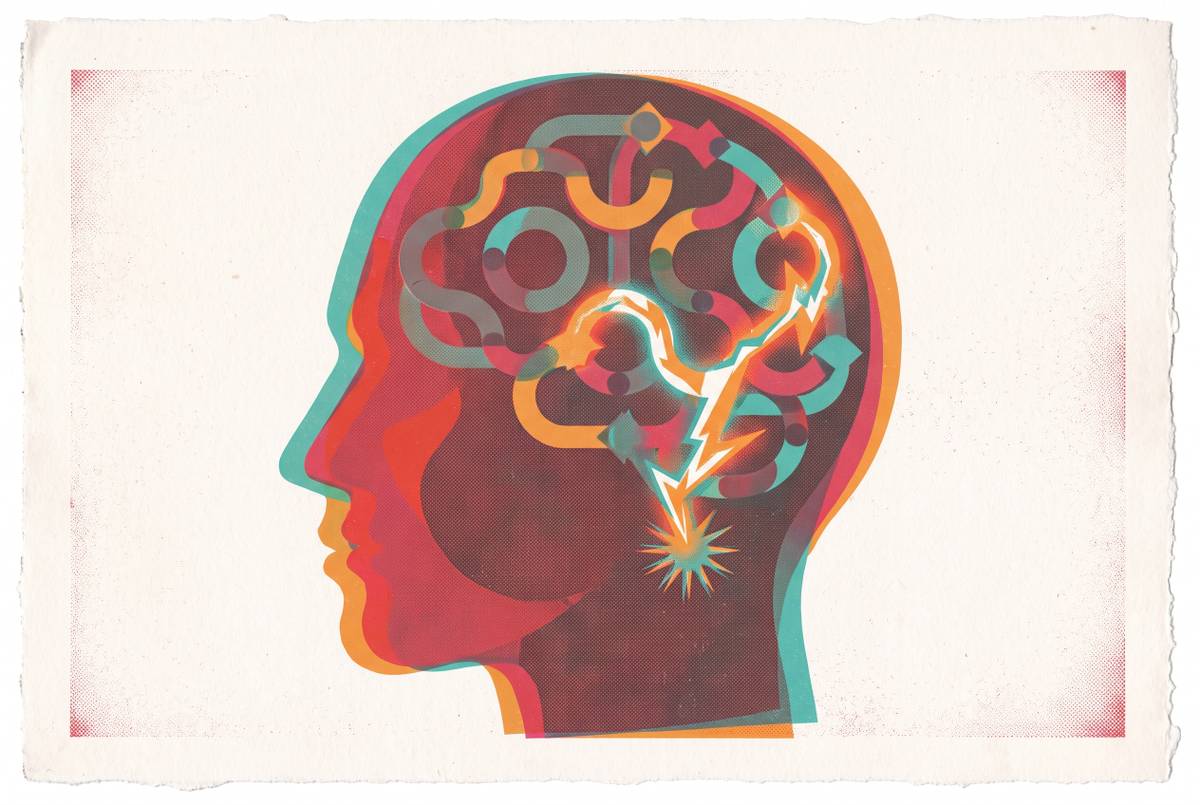
ADHD is better understood as a disorder of dynamic network organization than simply as a chemical imbalance. Resting-state fMRI research shows increased temporal variability across the default mode, cingulo-parietal, and frontoparietal networks. The way brain systems work together changes more over time than an account of underactivity alone would suggest. This distinction matters because attention depends not only on what individual regions do, but also on how networks work together over time.
The biology includes differences in prefrontal, striatal, and cerebellar regions, as well as dysregulation of dopaminergic and noradrenergic pathways. Neuroimaging shows reduced dopamine activity in the caudate nucleus and reward-related regions. These findings place reward anticipation and response within the explanation, but dopamine alone does not explain the whole system. The broader picture includes how attention, inhibition, and working memory are coordinated.
Executive function is a central bottleneck in that coordination. Impairments can include reduced cognitive flexibility, impaired inhibitory control, and compromised working memory. Dysfunctional connectivity between the frontoparietal network and striatum contributes to inefficient working memory, while the cerebellum plays a role in inhibitory control and attention tasks. Against this background, one difference is especially important for understanding associative thought. The default mode network stays more active in ADHD brains than in neurotypical ones.
What a persistently active default mode network actually does
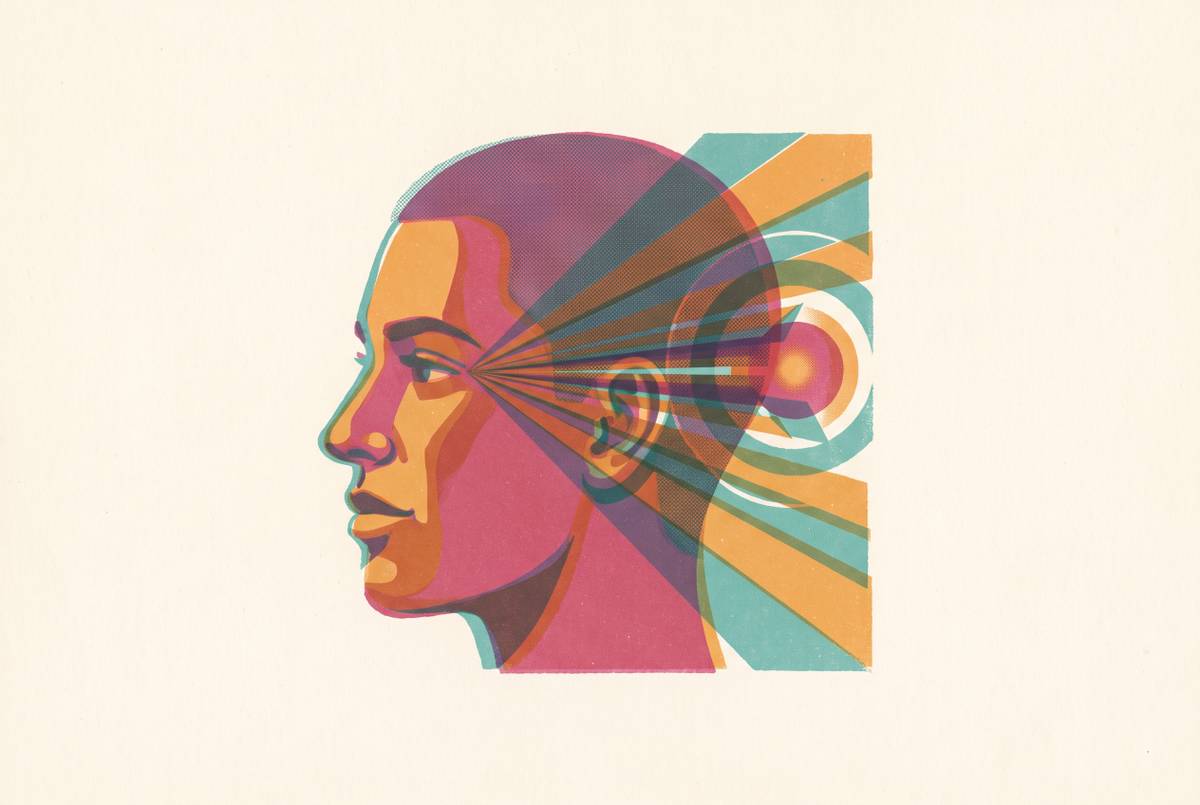
The default mode network, or DMN, is the brain’s background processing system. It normally quiets when attention turns outward toward a task, but in ADHD that quieting can be less complete. The useful mental model of the experience is a scanner that never fully powers down.
Consider the buzzing fluorescent light that pulls attention away from a task. From the task’s perspective, noticing it is a distraction. Yet attention is still open to information beyond what the person is trying to focus on. That openness can also make an irregularity or an unexpected connection available for thought. The distinction between distraction and useful detection depends partly on what the information turns out to mean.
Differences in prefrontal cortex activity and dopamine signaling appear to heighten sensitivity to patterns, irregularities, and novel connections. With less inhibition between conceptual categories, combinations may get through that tighter filtering would keep out. Distractibility and associative reach may be different expressions of the same looser filtering. ADHD attention can also move between hyperfocus and broad scanning, much like going deep into one thing and then drawing many things together.
How that scanning wiring produces cross-domain pattern detection and systems thinking
Pattern recognition means finding how pieces of information relate to each other, while systems thinking keeps track of several variables that affect each other. Broad scanning brings in information from outside the task at hand, and reduced conceptual inhibition lets more of it come together. Together, these tendencies can support connections across domains. The proposed strength is therefore an output of the attention system.
Some research comparing adults with ADHD with neurotypical controls has found higher scores on divergent thinking tasks. These tasks involve generating novel ideas from a single prompt, making them relevant to the claim about associative reach. However, findings across studies are mixed, and some studies find no difference. The evidence supports a possible advantage in particular kinds of thinking. It also leaves open how well performance on a task translates into insight in daily life.
The ENIGMA dataset’s structural covariance analysis found higher cumulative degree distribution in ADHD brains compared with healthy controls. This is a network-level finding consistent with broader connections across regions and less segregation. It provides a structural correlate for the account of broader associative reach. It is not a direct measure of pattern recognition, and it does not establish that an individual will be a strong systems thinker.
In practice, this can mean tracing the links between people and incentives, asking the question behind the question, and building a theory as information comes in. Silent observation, noticing micro-shifts, and extracting signals after a conversation also fit this profile. An editor who finds the thread connecting six unrelated manuscripts shows what cross-domain synthesis can look like. An entrepreneur seeing an unnamed market gap or a DJ anticipating a crowd shift illustrates early detection. These are examples of a capability that people with ADHD may have.
Why the same architecture that enables pattern detection also produces genuine daily difficulty
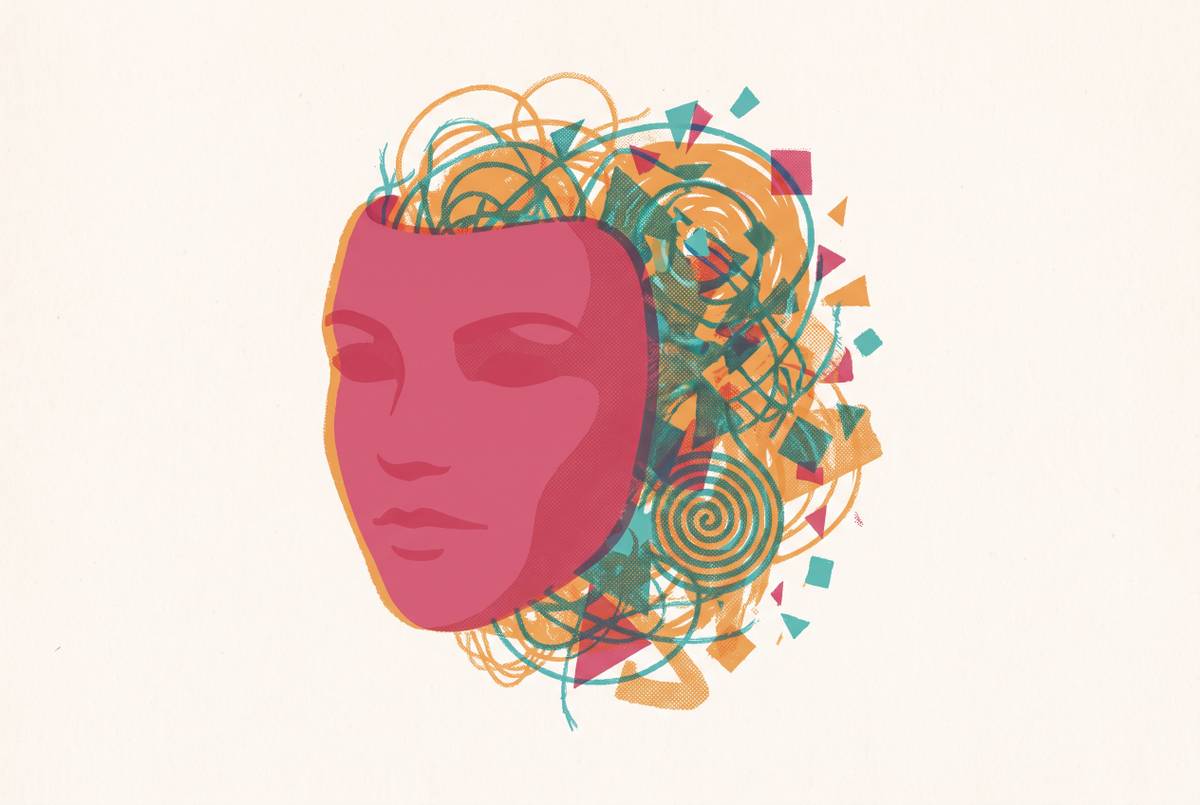
The ability to notice many possible relationships does not make it easy to decide what to do next. Distractibility, time blindness, and chronic overwhelm can coexist with strong pattern recognition. Daily executive dysfunction can mean disorganized time and object management, difficulty sequencing tasks, and persistent procrastination. These difficulties remain consequential even when creativity is present. Understanding their mechanism does not make the lost time or unfinished work less real.
Task paralysis shows the tension particularly clearly. A large, amorphous project presents many possible entry points, but starting requires selecting and acting on one. The same broad scan that reveals the project’s interacting parts can leave the person stuck before the first step. Difficulties with working memory and reduced inhibitory control can make it harder to choose. Seeing the system and moving through it are different demands.
Rowney-Smith, Sutton, Quadt, and Eccles’s 2026 qualitative study in PLOS One found that participants described the expectation of rejection as more dysphoric than rejection itself. The researchers at Brighton and Sussex Medical School reported intense anxiety, shame, and physical sensations including nausea and chest tightness. The three main themes were withdrawal, masking, and what people felt in their bodies. Because this was qualitative research, it describes participants’ experiences rather than establishing how common they are across ADHD. It nevertheless gives the emotional cost a specificity that a strengths-only account would miss.
Self-blame can compound these difficulties when a productivity tool fails and the person treats that failure as evidence of personal inadequacy. That shame can worsen executive dysfunction, creating a feedback loop. Clinical researchers therefore have good reason to object to celebrating ADHD strengths, because doing so can play down impairment. Both sides of the account need to be preserved without making either cancel the other. This architecture is not intrinsically advantageous, and environment is a key variable in how it plays out.
Why environment — not the brain — is the variable that determines whether the wiring helps or hurts
An environment built around broad scanning makes different demands from one built around sustained, linear, inhibitory focus. In the first, noticing relationships outside the immediate task may be useful. In the second, those same shifts of attention may obstruct the required work. The brain has not changed between these situations. What changes is the fit between its attention style and the work’s demands.
This is why a generic productivity framework can be more than an imperfect match. If it calls for constant sequencing, pushing aside unrelated thoughts, and making decisions over and over before work can begin, it asks more of the very functions ADHD disrupts. It may also crowd out the scanning that supports associative thinking. Structure becomes a problem when it requires one cognitive style from everyone. High-performing teams can combine complementary cognitive styles.
Environment does not explain away ADHD, and redesigning work is not an argument that it can be trained away. Tools and working conditions matter because the same person can encounter very different levels of friction across them. This shifts the practical inquiry from whether the brain is good or bad at attention to what a particular setting asks it to do. The question that follows is what an environment designed for wide-scan wiring actually looks like.
What an environment designed for wide-scan wiring looks like in practice
ADHD-compatible tools ask for fewer decisions, use defaults to cut down on configuration, and make capture quick with little to set up first. The aim is to record a thought before the act of recording displaces it. Capture in under three seconds expresses that priority, rather than a reason to build a more complicated filing system. Large goals also need manageable steps so that a project offers an entry point instead of an undifferentiated field of possibilities.
Voice input addresses a related bottleneck. Ideas can come faster than a person can type, and typing asks more of executive function while the person is trying to hold on to the thought. Voice removes some of that transcription burden and lets capture follow the pace of connection-making more closely. Voice applies the same friction principle to the moment an idea appears.
Visible rewards address another part of the problem by making progress immediate and concrete. XP and point systems turn an indistinct sense of advancement into a countable event, externalizing feedback that may otherwise be hard to sustain. Randomized controlled research on gamification includes attention, completion, and enjoyment measures. That gives reason to consider gamification as a way to help with tasks, though it does not show that every points system corrects a dopamine deficit. ADHD users describe Todoist’s karma points as providing “that dopamine kick to keep going”, while Forest uses loss-aversion through a tree that dies if the user checks their phone.
Body doubling means having another person present to help get tasks done, and it is available through Focusmate, Flow Club, and Flown. ADHD communities widely report benefits, but controlled evidence remains mixed and the mechanism is not yet established. Physical activity is another environmental variable, with a 2025 meta-analysis in Frontiers in Psychiatry finding significantly improved working memory in children with ADHD, with a moderate effect size. That finding supports naming activity as a non-pharmacological support.
How understanding the mechanism changes the way ADHDers relate to their own thinking
A mechanistic explanation changes what a difficult moment is taken to mean. Losing a thread, failing to start, or becoming overstimulated need not be interpreted as laziness or insufficient effort. Those experiences can be understood in relation to filtering, working memory, reward, and the demands of the setting. Understanding those experiences in this way makes the response to difficulties more precise than self-criticism.
The distinction matters because adults with ADHD report lower self-esteem than neurotypical peers even when they are high-achieving. Understanding how rapid connection-making and executive difficulty coexist can make that apparent contradiction less confusing. A useful insight does not disprove an impairment, just as an unfinished task does not disprove a capability. Neither needs to become a verdict on the whole person.
Match support to the point of friction. When ideas slip away during capture, use a faster way such as voice. When a project remains amorphous, break it into manageable steps, and when progress feels invisible, make feedback immediate and concrete. Small daily wins can then build up within a structure that asks less of the executive functions ADHD disrupts. The next move is not to suppress wide scanning, but to give it a quick capture route, a workable next step, and a visible signal of progress.