ADHD and Friendship Maintenance Challenges
The ADHD brain struggles with the executive functions adult friendships require.
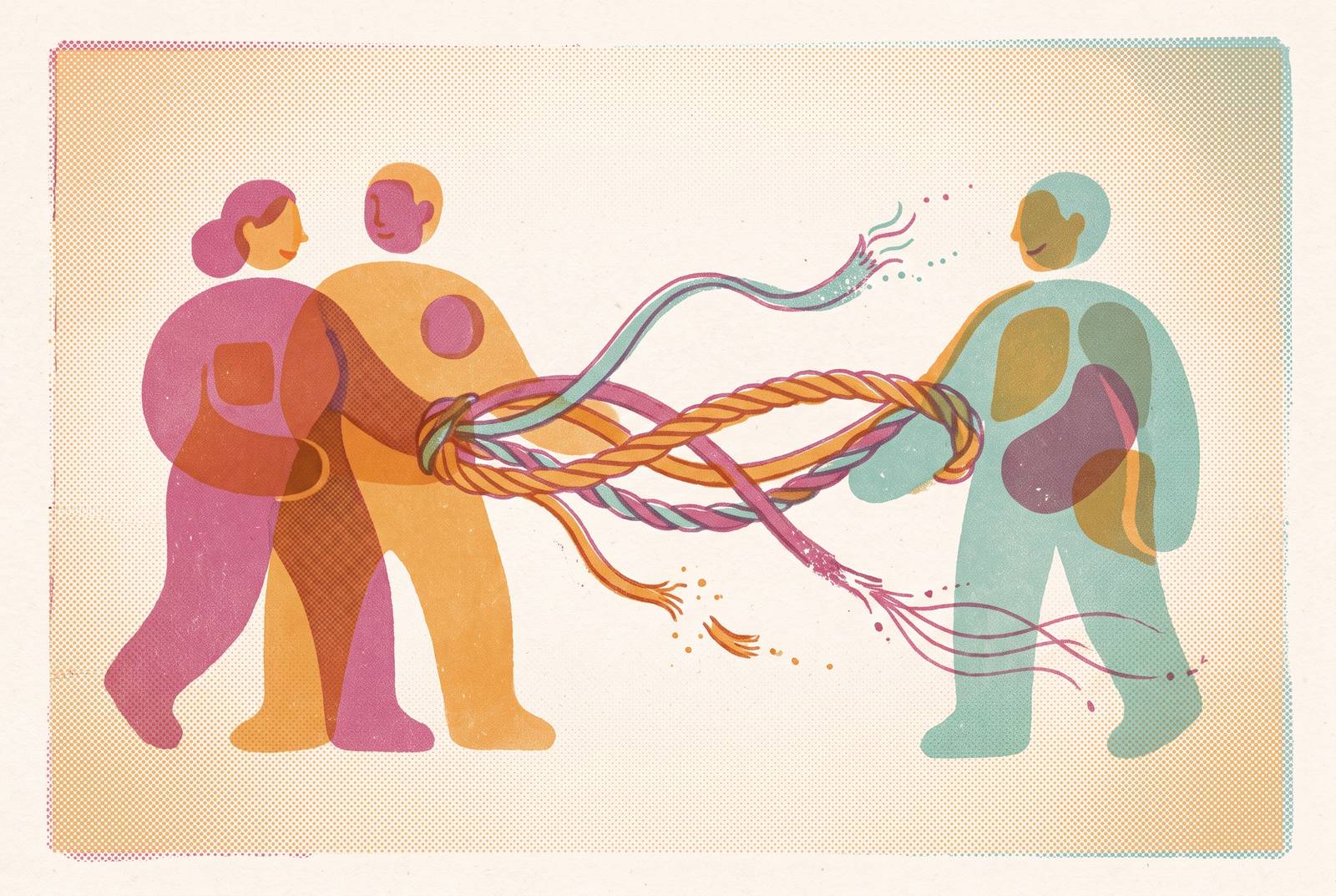
Childhood friendship asks almost nothing of the brain's planning machinery. The same kids sit in the same classroom every day, and proximity does the relational work on its own: no one has to remember to see anyone, because seeing them is just what the day does. Adulthood removes that scaffold. A friendship that once ran on autopilot now survives only if someone initiates it, schedules it, remembers what was said last time, and follows up, over and over, with no bell ringing to force the next encounter. The skills that job requires, working memory, planning, inhibition control, cognitive flexibility, happen to be the exact cluster that ADHD affects most. It is a structural collision: the format adult friendship takes, unplanned and unintentional as it is, lands hardest on the brains least equipped to supply what it demands.
How executive-function deficits map onto the acts friendship requires
Each piece of executive function that ADHD disrupts corresponds to a specific, nameable act that friendship requires, and the failures that follow are predictable rather than random. Working memory supports what might be called social object permanence: the quiet, background sense that a friend still exists and still matters even when they are out of sight. When that function falters, a friend doesn't fade from memory in any absolute sense, but the brain fails to generate the prompt to actually reach out. Dr. Mary Sanford's example of Norah captures this: she sees Sandy's birthday on the calendar, means to call, and the intention gets swallowed by whatever crisis the day throws up next, because nothing forced the intention into action even though Sandy still mattered.
Inhibition control governs something just as basic: the ability to hold back a thought long enough to let someone else finish theirs. Jeff interrupts Casey's ski story to launch into his own Alps plans, missing every signal that Casey has checked out of the conversation. To Casey, that reads as self-absorption. To Jeff's brain, it is impulsivity outrunning awareness, but the friend on the other side of the table has no way to see the difference, and the relationship absorbs the cost regardless of intent.
Cognitive flexibility handles something subtler still: the capacity to adjust smoothly when a plan shifts. Macy's meltdown when the restaurant changes, also from Sanford's account, shows how a sudden change plus emotional dysregulation can destabilize a friendship in a single sharp incident, not through malice but through a brain that cannot pivot as fast as the situation demands. Time blindness adds a fourth failure point: a real neurological struggle to feel time passing produces chronic lateness and missed plans, and friends tend to read that as disrespect.
These are not abstract concerns. Research shows that children and adults with ADHD report fewer friendships and face more social rejection than their neurotypical peers, so these executive-function gaps show up as measurable outcomes, not just private frustration. A 2025 study in Education Sciences looked at children with ADHD or dyslexia, and found that only beliefs, a child's grasp of others' social and mental states, linked working memory to friendship quality. Working memory is close to the main lever in how these friendships turn out.
Friendship's neurological mismatch with the ADHD reward system
Planning deficits explain a good deal of ADHD friendship trouble, but they miss half the picture. The other half runs through the brain's reward system, and it produces a pattern many ADHDers recognize in themselves long before they have language for it: a friendship that opens with real intensity and then quietly fades as the relationship becomes familiar.
ADHD involves disrupted dopaminergic function that shapes both motivation and executive control. This is not simply a matter of having "low dopamine," as the shorthand sometimes suggests. It looks more like a signal-detection problem rooted in receptor variation, one that leaves the ADHD brain needing more novelty to register the same sense of engagement a neurotypical brain gets from less. Friendship, by its nature, is a slow and cumulative project. The payoff, a relationship stable and deep enough to lean on, arrives months or years after the small, repeated effort that built it. The ADHD reward system runs on delay aversion and a strong pull toward immediate payoff over distant payoff, and that pull sits in direct tension with what friendship actually offers.
That tension produces the arc so many ADHDers describe. A new friendship carries high novelty, so it generates a strong dopamine signal and you feel a burst of real, unfaked enthusiasm. As the friendship settles into routine, the novelty drains out just as the executive demands of maintaining it start piling up, and nothing in the reward system is left to drive the effort forward. Many people carry private shame about this, describing it to themselves as "I always lose interest in people" or treating it as proof that they can't sustain care for anyone. But what if that framing has the mechanism backward? The fade is the predictable output of a reward system built around novelty and immediacy, meeting a relationship structure built around patience and delay.
How rejection sensitivity dysphoria compounds the executive-function problem
Executive-function failure accounts for the acts of friendship maintenance that go wrong. Rejection sensitivity dysphoria accounts for something that happens earlier: the pulling back that occurs before any failure has even had the chance to arrive.
Qualitative research on the subject identified three recurring themes: withdrawal, masking, and bodily sensations. Participants described real physical discomfort alongside anxiety and misery, and the masking they used to hide these feelings from others tended to cause dissociation, deepen the withdrawal, and end in loneliness. One finding stands out above the rest: all participants in this research agreed that the expectation of rejection caused more dysphoria than actual rejection did. The anticipation does more damage than the event itself.
That changes what withdrawal actually looks like from the inside. An ADHDer might stop texting a friend because the mere possibility of an unanswered message or a cancelled plan feels unbearable before either has happened, even when they haven't forgotten and aren't too disorganized to follow through. RSD carries no DSM-5 diagnosis of its own, but clinicians see the pattern it names consistently enough that setting it aside leaves a real mechanism unexplained. What makes it dangerous for friendship specifically is how it interacts with the executive-function layer already in place. A brain that already struggles to initiate contact, now also bracing for rejection the moment it tries, faces a barrier that no amount of generic advice about reminders or planners was ever built to address. The two problems don't simply add together. They compound, each one making the other harder to overcome, which raises the stakes of letting either go unaddressed.
What is at stake when ADHD friendship maintenance fails
Friendship, for someone managing ADHD, functions less like a pleasant extra and more like a piece of health infrastructure, and that reframes the stakes of everything described so far. Research on social connection broadly shows that meaningful relationships activate reward centers in the brain, lower stress hormones such as cortisol, and strengthen immune function. None of that is unique to ADHD. What is specific to ADHD is that strong friendships act as a protective factor that helps mitigate the condition's other challenges and supports overall functioning: the relationship between social connection and ADHD management runs in both directions, since friendship helps regulate the ADHD brain, and the ADHD brain's struggles make friendship harder to sustain.
When RSD-driven withdrawal and executive-function failure combine to produce isolation, that isolation does not sit quietly on its own. It feeds anxiety, depression, and the emotional dysregulation that ADHD already produces, and each one feeds the others in turn. You might think this makes the whole situation hopeless, as if you need dozens of close friendships just to stay afloat. The research suggests otherwise. Even one or two supportive, reciprocal friendships make a real difference in mental health and life satisfaction; the threshold for benefit sits lower than it might seem. That is good news for anyone working with limited executive-function bandwidth: the goal isn't a wide social circle, but a small number of relationships with people who understand the neurological difference at play. Quality over quantity is the more sustainable strategy here, because it concentrates limited effort where it will actually be protective rather than spreading it thin across connections that can't absorb the irregularity ADHD introduces.
What makes a compensatory strategy work for ADHDers
Most advice aimed at fixing friendship neglect sounds reasonable on paper: set a reminder, keep a planner, put it on the calendar. Why does this kind of advice so often fail the people who need it most? Because it assumes the user can reliably perform the meta-task of actually using the tool, and that meta-task draws on the same executive function that is already impaired. A scheduling app will cheerfully reschedule a missed task as many times as it's asked to, but rescheduling is not the same as starting, and that gap between "this is on the calendar" and "I am actually doing this right now" is precisely where ADHD defeats the strategy.
That is the strongest and fairest objection to tool-based compensation as a category: if the real obstacle is initiation paralysis combined with working-memory failure, a tool that still requires the user to initiate and remember has not solved anything. It has just moved the failure point one step downstream. A strategy built for ADHD brains has to be designed differently from the start. It needs to eliminate initiation steps. It needs to substitute external structure for the internal prompting that isn't reliably available. And it needs to deliver feedback immediately rather than asking the user to wait for some distant payoff, given what the earlier section on reward mismatch already established about delay aversion. Any strategy that fails one of these three tests is likely to collapse at exactly the moment it's needed most, which is the same moment that generic advice always seems to assume won't happen.
Concrete strategies for maintaining friendships that work with ADHD executive function, not against it
Recurring plans remove the initiation step completely. A standing arrangement, a first-Sunday brunch or a weekly walk, doesn't require either person to remember to suggest it, because the structure itself does the suggesting. That targets the exact bottleneck identified earlier: the gap between intending to reach out and actually doing it disappears when there's nothing left to initiate.
Low-friction capture matters just as much as recurring structure. If logging a social reminder takes more than a few seconds or demands several steps, the thought is gone before you can save it anywhere. If you speak a messy, half-formed reminder out loud and it turns into something structured, with a date attached, the friction stays low enough that you don't lose the idea before it matters.
Externalized social memory replaces the working-memory function that ADHD makes unreliable. Noting what a friend actually cares about, a new job, a child's milestone, something they've been excited about, and setting a prompt to ask them about it later takes a task that depends on social object permanence and turns it into something written down and retrievable. The Hallowell Todaro piece offers a clear illustration: a friend who sent a check-in text the morning of a stressful home repair, a small act, noted ahead of time and then actually carried out, that ended up carrying real relational weight.
Code words and conversation anchors turn an abstract social skill into something you can actually act on. Agreeing in advance with a trusted friend on a signal, a specific word or a look, for moments when a conversation is being dominated or oversharing is happening, gives the ADHD brain an external, immediate cue instead of asking it to detect a subtle social pattern in real time.
Honesty functions as its own strategy. It also builds the kind of mutual understanding that makes a friendship more resilient the next time ADHD's irregularities surface in it, as they will.
Reframing the ADHD friendship narrative: from personal failure to structural mismatch with a workaround
Putting the pieces next to each other reveals that adult friendship demands sustained executive function that childhood friendship never asked you for. ADHD disrupts exactly those functions, working memory, inhibition, cognitive flexibility, time perception, at exactly the points where friendship needs them most. The reward system adds a second layer of mismatch: it pulls attention toward novelty and immediacy, while the relationship's real value only accumulates after a long stretch of unglamorous effort. Rejection sensitivity dysphoria adds a third layer still, intervening before any of the above can even play out, prompting withdrawal on the strength of anticipated pain alone. None of this describes a character defect. It describes four distinct mechanisms, each independently documented, converging on the same set of behaviors that get mistaken, by friends and by ADHDers themselves, for not caring enough.
The strategies that actually hold up, recurring structure, low-friction capture, externalized memory, shared signals, and plain honesty, work because they are built around these mechanisms. None of them ask the ADHD brain to simply try harder at the exact functions that are already compromised. They substitute for those functions instead. Understanding the mechanism doesn't fix everything on its own, but it does something worth having: it replaces "I am bad at friendship" with a far more accurate and far less corrosive account, that of a structural mismatch between a demanding social format and a particular kind of brain, one that has known, workable paths around it.
Sources
- The Friendship Factor: Navigating Social Connections with ADHD
- Navigating Social Inclusion: How Social and Cognitive Factors Relate to Friendship Quality in Children with ADHD, Dysle…
- ADHD and Friendship
- The lived experience of rejection sensitivity in ADHD - A qualitative exploration
- The lived experience of rejection sensitivity in ADHD - A qualitative exploration
- Navigating Social Inclusion: How Social and Cognitive Factors Relate to Friendship Quality in Children with ADHD, Dyslexia, and Neurotypical Development