ADHD and Workplace Conflict With Neurotypical Colleagues
How ADHD brains and neurotypical workplaces create friction neither side intends.
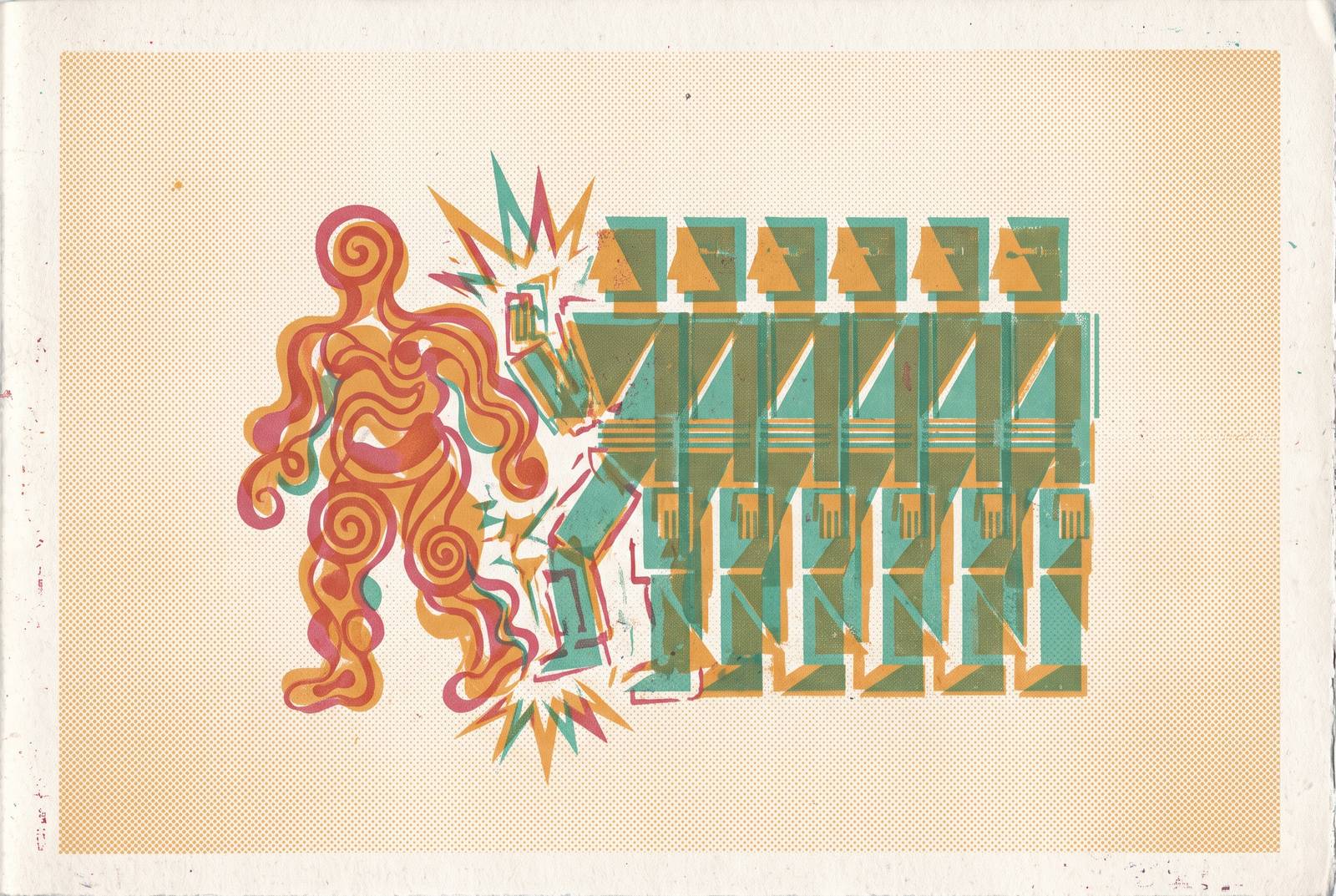
A meeting runs long, and when someone cuts off the project lead mid-sentence to blurt out a half-formed idea, the room reads it as disrespect. That same person missed yesterday's deadline, and a manager quietly files it as a pattern to watch. Both moments likely trace back to the same source: a brain whose executive functions develop on a different timeline than the systems built around it. It is a story not about laziness or bad attitude but about two different operating systems trying to run the same software.
Executive functions are the brain's management layer: working memory, the internal voice that talks a person through a task, the planning ability researchers call reconstitution, and the self-regulation of emotion, motivation, and arousal. Decades of research, including one influential model, trace all of these back to a single core deficit in behavioral inhibition, the capacity to pause before acting. In ADHD, these functions lag because the fronto-cerebral networks that support them develop more slowly, not because a person has chosen to disengage. The dopamine system compounds the problem. The ADHD brain's dopamine signaling doesn't deliver a strong enough reward for low-stimulation tasks, so the paralysis that sets in before a boring report or a routine form is a chemical shortfall, not a failure of willpower. Add to this what can be called invisible access labor: when a workplace doesn't supply the cues, structure, or reminders an ADHD brain needs, the employee has to build that scaffolding internally, over and over, with no one else in the room aware the work is happening. Neurotypical colleagues see the output, or the lack of it. They rarely see the labor spent getting there, and that gap in visibility is where the mislabeling starts.
The specific ADHD traits that generate friction in a neurotypical workplace
Executive function impairment rarely looks like neurology to an outside observer. It looks like someone talking over the team lead, zoning out during instructions, or snapping at feedback that was meant kindly. The science behind each of these behaviors is well documented. The DSM-5-TR lists talking excessively, interrupting, and blurting out answers as hallmark hyperactive-impulsive symptoms, and clinicians trace them to weakened impulse control and self-monitoring, both executive functions. Colleagues watching that behavior unfold in a status meeting rarely reach for "impaired response inhibition." They reach for "rude," "aggressive," or "doesn't respect this team," and that gap between the mechanism and the perception is where the friction actually starts.
Inattentiveness carries its own version of this mismatch. An employee who zones out mid-meeting, misses a verbal instruction, or forgets a commitment made in passing is often trying so hard to track everything at once that they lose the thread. Coworkers rarely interpret it that way. Coworkers read the blank stare or the forgotten task as indifference or disrespect, because the visible behavior carries no label explaining the effort underneath it. Rejection sensitivity adds another layer specific to ADHD: a heightened, sometimes overwhelming emotional reaction to criticism or perceived rejection that can turn a routine piece of manager feedback into something that feels like an attack. These conversations hit hardest when a supervisor is involved, because the power gap raises the stakes.
A basic mismatch in what each brain needs from its environment produces all of these moments. ADHD brains often need variety and change to stay engaged and alert. Many neurotypical colleagues feel the opposite: frequent change reads as instability, and they want a predictable, steady routine to feel secure at work. Neither preference is wrong. They are simply incompatible defaults, and workplace friction grows in the space between them.
ADHD subtype and whether workplace relationships produce conflict or connection
ADHD does not push every relationship toward conflict, and treating it that way flattens a more interesting and more useful picture. A study examining ADHD and workplace social network ties found that the hyperactive-impulsive subtype, ADHD/H, is tied to more friendship ties and more advice ties than neurotypical peers across both samples the researchers studied. Path analyses confirmed the same pattern: ADHD/H related positively to friendship and advice ties in both samples, and to conflict ties specifically within entrepreneurial settings, not universally. The same traits that generate tension in a rigid corporate hierarchy, quick energy, spontaneous idea generation, a willingness to speak before fully filtering, can make someone genuinely sought after for advice and friendship in a setting built around speed and improvisation.
The inattentive subtype, ADHD/I, tells a different story. The research found it was positively related only to friendship ties, with no link to conflict ties at all, a result the researchers themselves flagged as contrary to their own predictions. That distinction matters because it undercuts any flat assumption that ADHD, as a category, drives workplace conflict. One subtype's traits generated friendship without the conflict cost. The other generated both friendship and conflict, but only in a specific kind of environment. Environment, in other words, is doing real work here alongside biology. If a workplace is built for fast iteration and tolerance for noise, an ADHD/H employee's energy can read as an asset rather than a liability, but a slower, hierarchy-bound structure can turn that same energy into a source of recurring tension. Subtype shapes where you start, but context decides how it plays out.
What the friction costs both sides
The costs to ADHD employees are well documented and severe. Higher rates of job termination, chronic patterns of employment instability, underperformance relative to ability, slower career advancement, and elevated absenteeism and presenteeism all appear in the occupational research on adult ADHD, and all trace back to executive function deficits. A field study on ADHD and job burnout found the relationship ran through specific executive function channels: difficulty managing time predicted physical fatigue, while difficulty with self-organization and problem-solving predicted emotional exhaustion and cognitive weariness. A separate study found that executive function struggles with organization and motivation predicted lower income, more boredom at work, and lower satisfaction with both coworkers and supervisors, but not a higher rate of formal written warnings. These are not short-term setbacks. They accumulate across a career, narrowing options year over year in ways that a single performance review rarely captures.
Neurotypical colleagues absorb real costs too, and the argument here is not that they are blameless bystanders. Conflict ties drain attention and wear down team cohesion, and the same research on workplace social networks found elevated conflict rates in entrepreneurial settings specifically tied to the ADHD/H subtype. But what if the question isn't just who causes the most friction, but who gets blamed for it? Almost without exception, you see the structural framing of workplace tension put the burden of explanation on the ADHD employee. The person who missed the deadline gets labeled unreliable. The team that gave no advance warning of a shifting priority rarely gets labeled. Disclosure makes the asymmetry sharper still. Neurodivergence is a fast-growing reason employees request workplace accommodations, documented in rising EEOC charge data over the past two decades, yet asking for that support stays risky: employees fear retaliation, and managers often signal discomfort when the request lands on their desk. The people with the clearest case for structural support are frequently the ones least able to ask for it without professional cost. Rebalancing that cost starts with naming it honestly. The next two sections turn to that.
Strategies ADHDers can use to navigate neurotypical workplace norms without masking their whole identity
Generic productivity systems were not built with the ADHD brain, and that mismatch explains why they so often fail. A popular task-management methodology, standard Pomodoro timers, and rigid fixed schedules all assume a baseline of stable attention, steady time awareness, and intact organizational skill, the very capacities executive dysfunction weakens. Applying those systems unmodified to an ADHD brain is not a neutral experiment. It tends to backfire, reinforcing the sense that the person, not the tool, is broken.
Some of the behaviors that generate conflict can be managed directly. Naming a pattern briefly to a trusted colleague, something as simple as flagging a tendency to jump in mid-conversation, can reframe a moment of impulsivity before it hardens into a reputation. Setting context like this costs little, but it can save months of being misjudged quietly. Task initiation is a separate problem and calls for a different fix. Virtual body-doubling, working alongside another person online through platforms built for that purpose, gives external presence and a light sense of accountability that can break through the paralysis of starting a task alone. The evidence base for body-doubling is still thin, though it has become one of the most widely used informal strategies in ADHD communities, and it asks for no disclosure of diagnosis to use. Breaking a task down into smaller steps solves a related but distinct problem: an AI tool built for this purpose, Goblin Tools' Magic ToDo, takes an overwhelming task and splits it into small, concrete steps, with a "spiciness" slider to make the steps smaller still when needed, targeting the exact planning deficit that turns a deadline into a missed one. A modified version of Pomodoro, using shorter sprints than the standard 25 minutes, lowers the barrier to starting and offers small, fast hits of completion, which suits an ADHD reward system better than a long, undifferentiated block of work.
Capturing a thought before it disappears matters just as much as any of these systems. If writing something down takes more than a few seconds and more than one decision about where it goes, the thought usually loses the race to forgetting. You need voice memos, home-screen widgets, and a single catch-all inbox for stray ideas right when attention is most fragile, so that is when they work. These aren't productivity hacks in the self-optimization sense. They function as accessibility tools, the same way a ramp isn't a convenience for someone using a wheelchair. Movement belongs in this list too, and it deserves to be treated as seriously as any other tool. Moving before, during, and between work sessions raises dopamine and norepinephrine, the same two neurochemicals most tied to ADHD attention deficits, making a walk before a hard task a legitimate cognitive strategy and a form of real work.
Reducing the structural friction neurotypical colleagues and managers create
Most advice on workplace conflict puts the entire burden of adaptation on the neurodivergent employee, as if the system itself were neutral and only one side needed to bend. The neurological mismatch framing this piece has been building says otherwise: a workplace designed around neurotypical defaults in attention, time, and communication is doing at least half the work of creating this friction, and the people running those workplaces can change their half of it. You have to recognize invisible access labor first, but that's only a start. The extra, unseen mental effort it takes to translate a neurotypical system into something an ADHD brain can actually use is constant and tiring, and a manager who names that cost openly builds a working relationship on different footing than one who simply notes that an employee "seems scattered" and leaves it there.
Small structural changes carry outsized weight, because they remove load instead of asking for more willpower from a system already taxed. A short written summary after a verbal meeting removes the working-memory burden that causes missed deadlines. Opening flexible windows for deep work instead of demanding sustained focus inside fixed hours works with natural variation in attention. If you give advance notice before a routine or a priority shifts, you cut the context-switching cost that otherwise lands almost entirely on the ADHD employee, who has to rebuild an entire mental model of the day on short notice. On disclosure, the documented fear of retaliation and the discomfort many managers visibly show when an accommodation request arrives both push employees to wait to ask for help until a problem has already escalated. If a manager signals openness before anyone has to ask, a struggling employee is more likely to raise a hand early. None of this asks managers to treat every behavior as acceptable without discussion. It asks them to read the behavior correctly first. An employee who interrupts is not trying to dominate the room. One who misses a deadline is not being dismissive of the team. One who reacts strongly to feedback is not unstable. Each is a specific neurological pattern with a specific mechanism behind it, and treating that pattern as a character flaw breeds the resentment that keeps conflict alive long after the original moment has passed.
Chronic misattribution and the compounding of shame
Years of being told that a struggle is really about effort, attitude, or character do more than sting in the moment. That kind of chronic misattribution wears down the very executive functions a person needs most to manage workplace demands, so the shame response becomes an active part of the productivity problem instead of sitting outside it. Shame consumes working memory and emotional regulation, the same resources already under strain, so the more a person hears that the problem is character, the less capacity they have left to address the underlying mismatch.
You can see this clearly when a generic productivity system fails, as these systems reliably do for ADHD brains built around different rhythms of attention and reward. One might argue the response to a failed system should be a search for a better-fitting one. In practice, the far more common response is self-blame: the employee concludes that the tool wasn't wrong for their brain, but that they were too undisciplined to make it work, and that belief gets folded into an existing identity narrative rather than treated as useful information about a bad fit.
Understanding the friction as neurological rather than personal is a more accurate description of what is actually happening, and accuracy here does real work: a person who understands that a missed deadline traces back to executive dysfunction, not indifference, keeps more of the problem-solving capacity that shame would otherwise consume. That shift in attribution is itself a kind of intervention, one that costs nothing to implement and that every section of this piece, from the neurological mechanism in the opening to the structural changes managers can make, has been quietly pointing toward all along.
Sources
- Neurodiversity and workplace relationships: The impact of ADHD on social network ties - ScienceDirect
- Neurodiversity at Work: Challenges and Opportunities for Human Resource Management - Volpone - 2026 - Human Resource Management - Wiley Online Library
- Work Performance Challenges and Needs of Adults with ADHD: Exploring Lived Experiences - PMC
- Addressing attention-deficit/hyperactivity disorder in the workplace - PubMed
- Erratum: Attentive-executive functioning and compensatory strategies in adult ADHD: A retrospective case series study