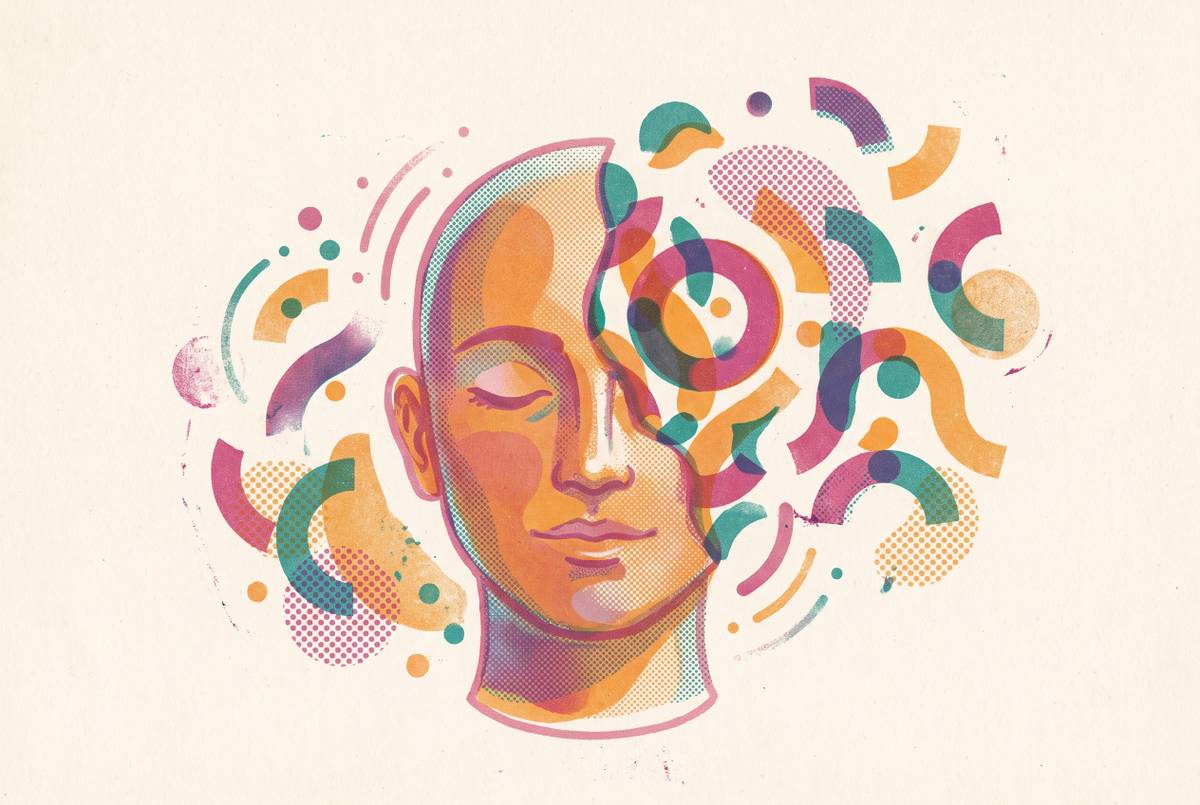
Grief After Adult ADHD Diagnosis
Adults diagnosed with ADHD grieve the lives they might have lived differently.
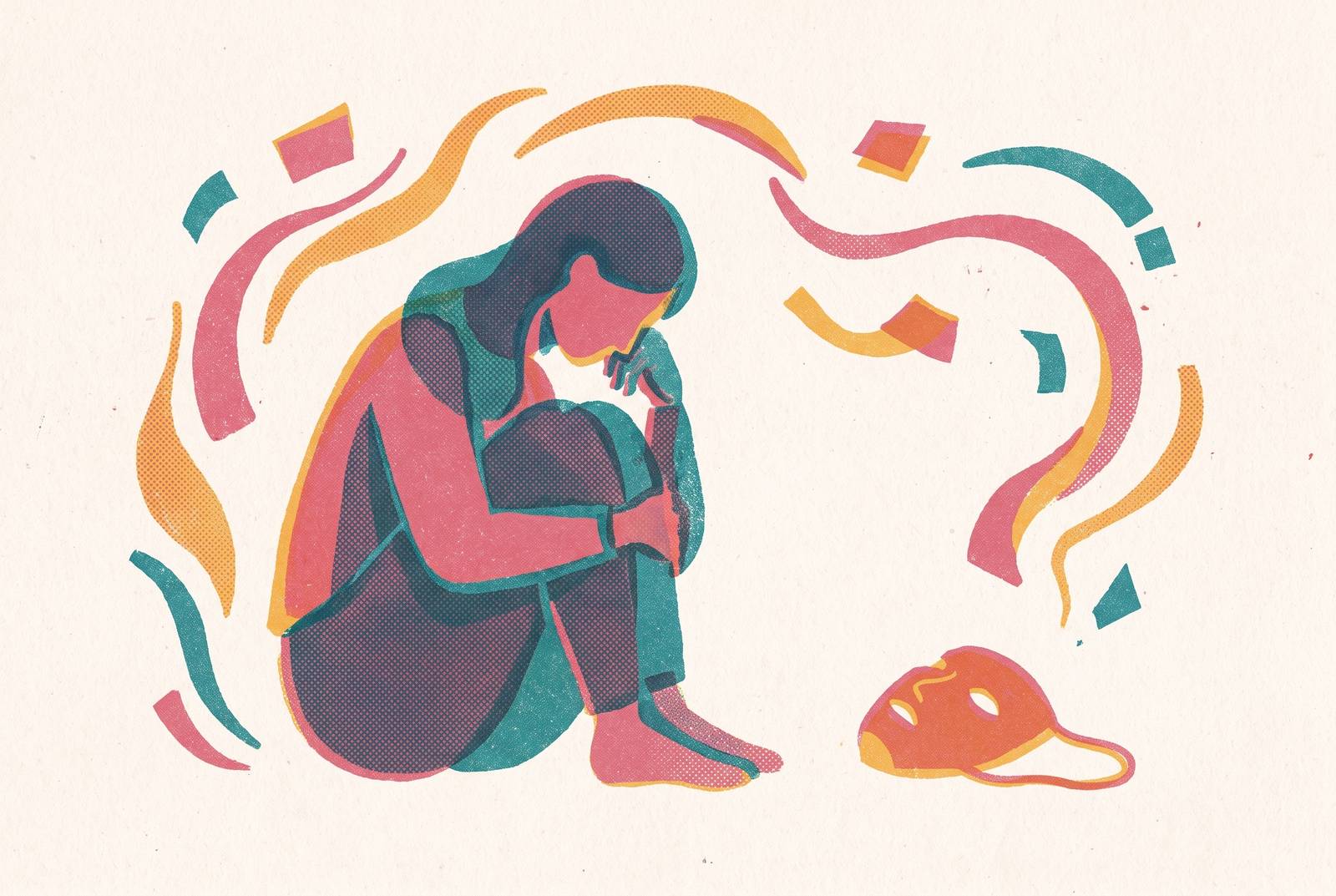
Why the relief that arrives first doesn't last
Diagnosed at 34, or 41, or 52, the word people reach for most, describing the first 48 hours, is relief. Dr. Maria A. Rogers, writing in Psychology Today, frames the diagnosis as a reframing tool: exhaustion, mental overload, the sense of always running two steps behind get reclassified as neurological facts instead of character defects. A brain that processes attention, time, and reward differently than the one the person assumed they had.
Drlewis.com describes this reframing in participants' own terms: the diagnosis offers a way to see so-called personality flaws, the disorganization, the emotional intensity, the constant sense of falling short, as ADHD manifestations instead of proof of some deeper failing. That relief deserves its own space before anyone complicates it.
Complication arrives fast, though. Within days or weeks, the relief gives way to something heavier: a grief that appears once the initial reframing wears off. Scienceworkshealth.com, in a piece reviewed in September 2026, described a sadness with a specific shape, aimed backward at the years spent trying harder than everyone else without knowing why it cost so much more. The same explanation that vindicates a person also indicts the delay. ADHD accounting for the missed deadlines, the strained friendships, and the college transcript full of incompletes means knowing sooner would likely have changed something concrete and countable.
Most people expect the relief to hold. Gratitude for the answer and grief over what the answer reveals aren't sequential emotions where one resolves before the next begins. They coexist, often in the same afternoon. So what exactly is being grieved? That's the question the rest of this piece works through.
What the grief is about: the specific losses underneath it
Grief after an ADHD diagnosis doesn't float in the abstract. It attaches to things, specific and countable. In a 2025 qualitative study, 86% of participants said they grieved for the lives they felt they could have led had they known sooner, a figure that suggests this reaction is closer to a norm than an outlier reaction some people have.
The losses cluster into a short list of categories, and each one has a paper trail. Relationships strained or ended by symptoms nobody had a name for at the time. Years spent in therapy or on medication for anxiety and depression that were, in retrospect, downstream symptoms of an undiagnosed root cause. Opportunities missed or undermined in ways that feel, retroactively, both specific and countable. Decades of internalized shame quietly built an identity around the deficit itself, and that is harder to itemize than the visible facts.
Accounts collected by ADDitude describe a parade of embarrassing or shameful memories running through the lens of the diagnosis, alongside overwhelming forgiveness for the younger self and grief for the opportunities that slipped by. Forgiveness and grief arrive together often enough in these accounts to count as a pattern rather than a coincidence.
Clinically, scienceworkshealth.com frames this as adjustment to a psychosocial transition, a formal way of saying the working account of yourself has to be rewritten, and a rewrite of that scale doesn't come free. A 2026 systematic review of 21 qualitative studies, also cited by scienceworkshealth.com, found that diagnosis functions as a pivotal identity event that triggers biographical reflection, one researchers described as validating and destabilizing at the same time. Two words that don't usually sit next to each other, and yet here they belong exactly there.
Anger as a distinct layer, not just grief in disguise
Grief gets most of the attention in this conversation, and that's a mistake. Anger doesn't behave the way people expect it to, and treating it as a footnote to grief misses what's actually happening.
In the drlewis.com study, one participant described the two weeks following her diagnosis as containing the most intense anger of her entire life, arriving before the grief had time to settle in. That ordering matters. Anger here isn't grief's aftershock. Sometimes it's the front door.
And the anger has targets, specific ones, which is part of what makes it feel so charged. Teachers who called a distractible kid lazy or difficult. Parents who noticed something was off and never pursued an evaluation. Clinicians who spent years treating anxiety or depression without ever screening for ADHD, leaving the underlying condition untreated for years. A structural failure produced those individual ones: diagnostic criteria built largely on studies of hyperactive boys shaped who clinicians were trained to look for, and who they consistently missed, women especially.
Braun Tueller, a PA-C at University of Utah Health, offers a useful caution: anger is often the easiest default expression for negative emotion, and it can function as a displacement of grief rather than a primary response in its own right. No decade already lived gets undone by being angry about it, even when the anger feels productive and isn't actually moving anything.
Psychology Today documents a case, referred to as Evelyn's story, in which she went back through old elementary school report cards after her diagnosis. What started as laughter at the old comments ("doesn't focus," "talks too much") turned into silent tears by the end of the stack. Anger and grief arrive in the same sitting, sometimes the same breath. Anger pointed outward at systems and anger turned inward as self-blame can feel identical in the moment. They aren't the same thing, though, and collapsing them into one feeling is where a lot of people get stuck.
Why the "five stages of grief" framing doesn't fit this experience
Reaching for Kübler-Ross's five stages, denial, anger, bargaining, depression, acceptance, makes intuitive sense. It's the cultural default for grief of any kind, and some ADHD-specific resources, including a five-stage model applied directly to diagnosis by The ADHD Centre. It's tidy. It's familiar. More recent research also indicates it's the wrong model for this particular kind of loss.
Scienceworkshealth.com, drawing on grief theory research, notes that staged models fit this experience poorly. What happens instead looks less like a staircase and more like a tide. The Dual Process Model, developed within broader bereavement research, describes people oscillating between confronting a loss directly and setting it aside to get through the day. That oscillation, not steady progress toward a finish line, is what functioning through grief actually looks like day to day.
Meaning-making frameworks fill in the rest of the picture. The real work is reconstructing a self-narrative that can hold the diagnosis without collapsing under its weight, which runs slower, messier, and a lot less linear than a staged model promises. It's reconstructing a self-narrative that can hold the diagnosis without collapsing under its weight, which runs slower, messier, and a lot less linear than a staged model promises.
Practically, this means grief resurfacing six months after diagnosis reflects how the process runs, not backsliding. Scienceworkshealth.com names one specific misconception directly: the belief that grief should resolve quickly because the diagnosis was, on balance, good news. That belief creates its own pressure, a sense of failing at grief on top of everything else, and it doesn't match how psychosocial adjustment of this scale actually behaves.
How this grief surfaces in an ordinary week, not in dramatic moments
This grief rarely appears as a breakdown. It arrives sideways, in the middle of something unrelated, which is part of what makes it so disorienting to the person experiencing it.
Scrolling through old emails and landing on a performance review from four jobs ago, reading it now with different eyes. Watching a child fidget through homework and recognizing, with a jolt, what that felt like from the inside. Finishing a task efficiently with the right support finally in place, and thinking this could have been done the whole time, if someone had just explained how the brain in question actually worked. A relative saying "you've always been like this," a line that used to sting a little and now carries a completely different weight.
For adults who are also parents, Psychology Today notes that diagnosis tends to reopen questions about family life altogether: what kind of parent this has been, and how an undiagnosed neurodivergent brain already shaped the household without anyone naming it. Diagnosis rarely stays contained to one person's inner life.
Masking complicates this further. Many late-diagnosed adults, women in particular, spent years building an internal system for appearing capable while quietly managing chaos that the system concealed underneath. The diagnosis names that system for the first time, and it forces a reckoning with how much energy it took just to keep it running. Realizing that all at once is exhausting in a way that's hard to explain to anyone who hasn't gone through it.
The pain isn't the only thing that appears, though. Sometimes it's an unexpected softness toward the younger version of the self, a kind of forgiveness that feels disorienting to someone who has spent decades as their own harshest critic. Relief doesn't always feel like relief on first contact. That disorientation, more than dramatic distress, tends to be the actual signal that something is shifting.
The identity question that sits underneath all of it
Identity is the bigger structural problem tied to the grief, the anger, and the ordinary triggers described above. According to drlewis.com, this may be the least-discussed consequence of late diagnosis, even though it might be the most significant one. Spend 30 or 40 years telling yourself a story about who you are, and that story needs a full rewrite once a diagnosis lands.
Call it epistemic rather than purely emotional. That's a more precise way of saying the evidence itself was wrong, or at least badly incomplete. Traits that felt like fixed character, disorganized, unreliable, "too much," turn out to have been symptoms the whole time. Achievements that once felt hard-won start to feel ambiguous: resilience, or compensation for a deficit that never should have gone unaddressed? Failures that once felt entirely personal now have a structural explanation, which is relieving and disorienting in the same instant.
Drlewis.com describes participants who held beliefs formed in childhood, about being broken or fundamentally not good enough, beliefs that calcified over decades into something resembling fact. Diagnosis disrupts that calcification. Good news, mostly, but disruption still hurts on the way through.
Overcorrection is the real risk here, and it deserves more weight than it usually gets. The same study flags the danger of retroactively explaining every past failure, mood, or personality quirk through the lens of ADHD, which produces its own distortion: a new story just as oversimplified as the old one. Nuance matters on both sides of the diagnosis, not just the side that feels vindicating.
Psychology Today, drawing on commentary from Perry and Winfrey, frames the real shift as moving from "What is wrong with me?" to "What do I need to understand about myself?" That's not a small semantic tweak. It changes how someone reads their own history, and it changes what they do next, which is exactly where the next section picks up.
What helps, and what to be cautious of
Therapy comes up more consistently than anything else in this research, and the outcomes reported differ by the type used rather than by the fact of attending. Generic talk therapy helps some people. It's not the same tool as a clinician who specifically understands the emotional terrain of late ADHD diagnosis, the grief, the identity reconstruction, and the internalized shame built up over decades, so choosing one requires being deliberate about that distinction. Drlewis.com points specifically to this kind of specialization as the differentiator.
Tueller's guidance from University of Utah Health adds a practical layer: the best outcomes for ADHD pair medication with behavioral or therapeutic support, rather than leaning on any single approach alone. Therapy gives the anger and grief a structured place to land instead of leaking sideways into relationships or work. The behavioral side of ADHD doesn't disappear the moment a diagnosis gets confirmed, either. It still needs daily, practical management, separate entirely from the emotional processing.
Time helps too, though only so much, and this is where a lot of well-meaning advice goes wrong. Tueller notes that time reduces the intensity of the pain, but active processing moves things along faster than waiting it out passively. Community matters here as well: hearing that 86% of women in one study reported this same grief functions almost like treatment in itself, because normalization strips away the shame of feeling this way about what was supposed to be good news.
Grief is harder to metabolize when daily life stays chaotic, and that's a functional piece people tend to skip past in favor of the more emotional advice. Breaking big, paralyzing tasks into small steps that are actually easy to start reduces the daily friction that keeps someone stuck inside fresh evidence of the diagnosis instead of moving through it. Tools built around voice input or low-friction task entry can lower the activation energy for people whose executive function is already stretched thin by emotional processing on top of everything else. Structured routines and milestone-based goals give external scaffolding for exactly the moments when internal regulation runs on empty, and gamified progress built on small, frequent reward loops tends to sustain engagement for ADHD brains that need that dopamine feedback to stay consistent. That matters most precisely when motivation is at its lowest.
Setting a fixed timeline for resolution is the mistake to avoid here, and it's the one people default to almost by reflex because deadlines feel like control. The oscillating pattern described earlier means grief will resurface, and that resurgence is not regression, no matter how much it feels like one in the moment. Over-attributing every past struggle to ADHD risks building a new distortion on top of the old one. And clinicians need to actively distinguish this grief from depression, because the two can look similar from the outside but require different responses, scienceworkshealth.com states.
Moving forward without skipping the grief, what that looks like
Psychology Today makes an unglamorous but important point: an ADHD diagnosis in adulthood doesn't eliminate the challenges or simplify the daily grind of living with it. What it offers instead is a new narrative, one that credits effort over pure outcomes, replaces blame with actual understanding, and leaves room for self-compassion that wasn't available before.
Integration, not resolution, is the realistic goal. The losses had lasting financial and personal consequences, and the grief was an appropriate response to them, not an overreaction to good news. What changes over time is the relationship to that story. The story's basic facts stay put.
The Dual Process Model offers a workable frame for daily life: some days mean sitting with the loss directly, other days mean setting it aside and moving forward anyway, and both count as part of a healthy pattern rather than evidence of failing at one. Self-compassion is functionally necessary for the identity work described earlier, since the shift from "what is wrong with me" to "what do I need" changes actual behavior over time, not just internal mood. It's functionally necessary for the identity work described earlier, since the shift from "what is wrong with me" to "what do I need" changes actual behavior over time, not just internal mood.
Small, consistent wins do real work too. The same mechanism that builds daily habits for ADHD brains, the small completed task, the visible streak, the milestone actually hit, also rebuilds self-trust one piece at a time. Each one stands as quiet counterevidence against years of internalized shame.
The diagnosis marks the start of a more accurate story. The grief belongs inside that story, not outside it as some kind of detour from the good news. It's part of what the good news actually costs.
Sources
- The Emotional Aftermath of an Adult ADHD Diagnosis
- Navigating Life After an Adult ADHD Diagnosis
- Late-Diagnosed ADHD: Making Sense of Your Life Through a New Lens
- Grief After a Late ADHD Diagnosis: What Helps
- Relief, Grief, and More Raw Reactions to an Adult ADHD Diagnosis
- From ADHD Diagnosis to Meaning: Does Grief Theory Enhance Our Understanding of Narrative Reconstruction?
- 5 Stages of the ADHD Grief Cycle After Diagnosis