Why ADHD Task Paralysis Is Not Laziness or Procrastination
Executive dysfunction freezes the brain's ignition system, not the person's willpower or motivation.
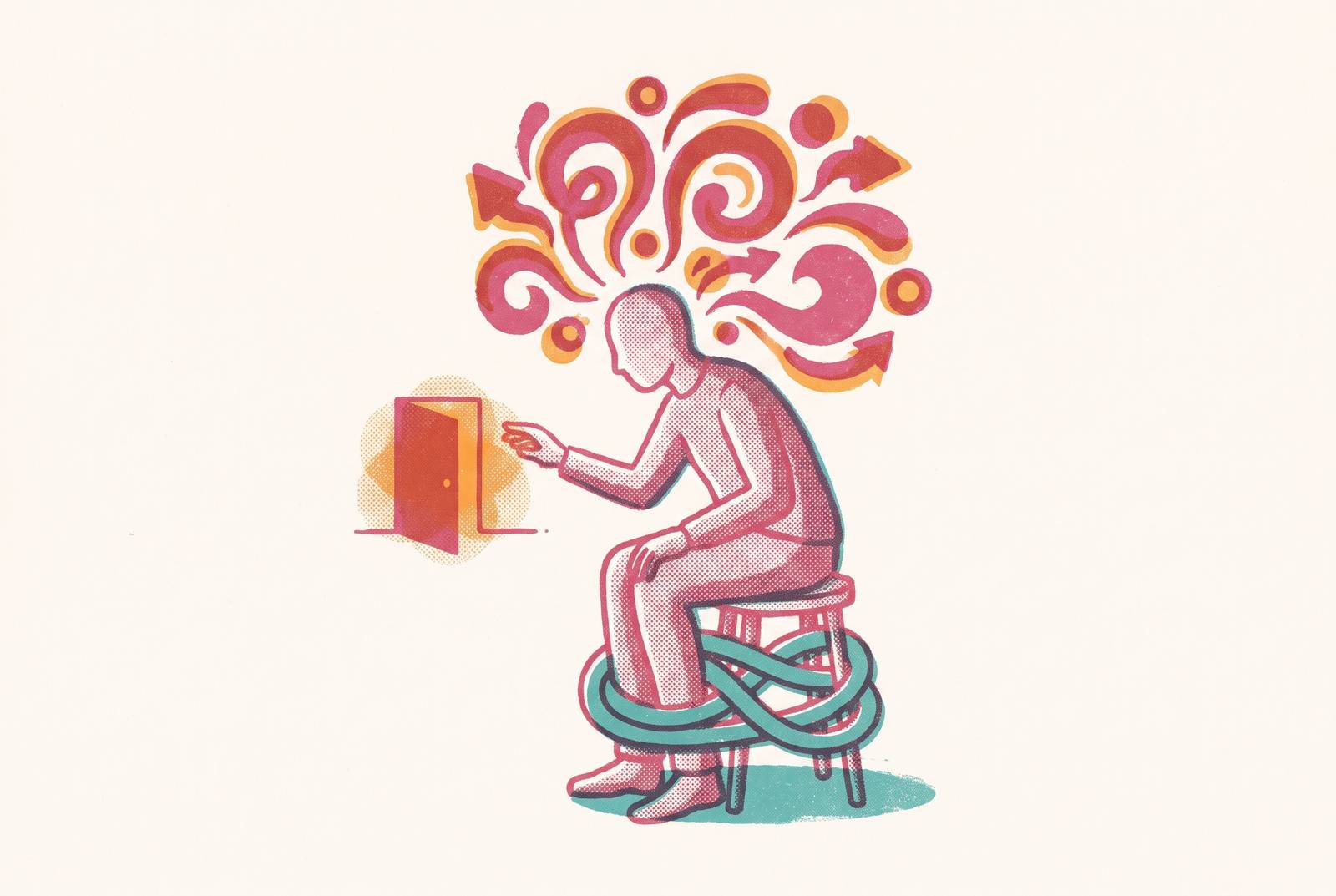
ADHD task paralysis is difficulty turning intention into action. Understanding its links to executive function and dopamine signaling explains why shame can deepen the freeze and why smaller entry points can help. For task paralysis and executive dysfunction, an ADHD-compatible app should reduce decisions, reveal a concrete next step, and offer immediate, non-punishing feedback.
What ADHD task paralysis actually is — and what it is not
The tab has been open for two hours. The email is drafted but unsent, or the form has gone untouched for three weeks despite repeated attempts to begin. The person knows what needs doing and may have both the time and the capability to do it. Yet action does not follow intention. “Task paralysis” names that gap, including the frustration of being unable to explain why something apparently manageable feels inaccessible.
The term is an informal description. It describes overlapping experiences of executive dysfunction rather than one discrete neurological event with a universal cause. Task initiation paralysis means being unable to begin a particular task despite intending to do it. Choice paralysis means being unable to choose between tasks that compete for attention, while transition paralysis means being unable to stop the current activity and move to the next. These distinctions locate the obstruction without turning it into a personality trait.
What, then, separates this experience from simply not caring? The person can still fully want to act and know what will happen if they do nothing. That is the central contradiction the label captures. Someone can be distressed by an unfinished task while appearing inactive to everyone else, so visible output alone gives an incomplete account of what is happening.
Why task paralysis is not the same thing as procrastination
Procrastination typically involves some degree of choosing delay, often by substituting a more enjoyable activity. Starting feels possible but unwanted, and rationalization helps make postponement tolerable. Paralysis describes a different experience of agency. The person wants to start but cannot translate that wish into action, sometimes with brain fog, fatigue, muscle tension, or physical heaviness.
Urgency helps clarify the distinction, although it is not a diagnostic test. A deadline can interrupt procrastination by making action feel sufficiently pressing. In paralysis, however, the same pressure may amplify anxiety and further disrupt the executive control needed to begin. More pressure does not necessarily produce more movement. The contrast concerns how action becomes available.
The car-ignition analogy makes this concrete. An engine may work once running while its ignition circuit fails to fire. Turning the key harder does not repair that circuit, just as “just start” does not explain how to cross an inaccessible starting threshold. The analogy is limited, but it directs attention away from willingness and toward initiation.
The neuroscience behind why the ADHD brain freezes at task initiation
The prefrontal cortex supports planning, working memory, sequencing, and task initiation. Those functions connect knowing what should happen with organizing and beginning the actions that make it happen. In ADHD, that connection is not consistently reliable. A detailed explanation of a task therefore does not establish that the person can readily initiate it, because understanding and execution are not interchangeable capacities.
Dopamine signaling is one important part of this picture. Within reward circuits, dopamine helps mark an action as worth activating for now. Dysregulated signaling can make boring, routine, or low-novelty tasks difficult to begin even when their consequences are clear. Importance alone may not supply the activation signal. This helps explain why the same person can struggle with a simple email yet get deeply caught up in a new project.
That contrast does not mean dopamine is a single-molecule explanation for every freeze episode. Reward processing is part of a set of systems that work together, including executive control and emotional regulation. The relevant circuitry extends beyond the prefrontal cortex to the basal ganglia, thalamus, and amygdala.
Working memory adds another source of difficulty. An instruction such as “sort out the insurance thing” conceals several decisions and steps inside one vague phrase. If the person cannot hold and sequence those steps, the task remains an undifferentiated demand. Where exactly does the hand or cursor go first? The difficulty answering that question helps explain why “open the document” can be a more usable instruction than “write the report.”
How shame makes the freeze worse — and why the "try harder" response is counterproductive
Each stalled hour seems to support the conclusion that the person is lazy, careless, or insufficiently committed. But self-criticism adds more emotional weight to a system that is already struggling to organize action. Anxiety and heightened negative emotion can further impair executive function, so the attempted correction aggravates the difficulty it is meant to solve.
This loop has a particular force in ADHD because emotional dysregulation can be part of the condition itself. Anxiety may be more intense and harder to regulate, allowing shame to persist beyond the original task. The freeze becomes emotionally charged as well as cognitively difficult. The person is no longer facing only an email or a form, but also what failing to complete it supposedly says about their character.
Trying repeatedly to focus or initiate may be mentally exhausting even when it produces nothing another person can see. That mismatch compounds self-blame because exhaustion appears unjustified without an output. Yet lack of visible progress does not establish lack of effort, and treating the two as equivalent misreads the experience.
The practical implication is to identify executive dysfunction without turning it into self-indictment. It removes an added source of threat and emotional overload, creating better conditions for an initiation strategy to work. Understanding the mechanism cannot guarantee an immediate start, but it changes what the person is trying to solve.
Why generic productivity advice fails people with ADHD specifically
Mainstream productivity systems often begin after the point where paralysis occurs. They help someone write down priorities, set deadlines, and track what is done, assuming that knowing what matters can lead to action. That assumption leaves an important gap for ADHD. A well-organized account of what should happen does not necessarily provide the activation needed to make it happen.
Maintaining the system can introduce a second problem. Manual entry, categorization, and daily review require working memory, initiation, and sustained attention to low-reward activities. The tool therefore demands the capacities it is supposed to support. When upkeep becomes another unfinished task, its long lists can generate guilt and overwhelm, feeding the same shame-freeze loop as the original work.
Time perception can widen this mismatch. ADHD time blindness is often described as a now/not-now divide, in which a distant deadline has little motivational presence until it becomes an emergency. A date on a calendar does not automatically bridge that divide. If the resulting urgency then amplifies anxiety, a planning system can accurately display the deadline while still failing to help someone begin.
Conventional tools are useful when their demands fit the user's initiation and attention needs. A system needs to make the next action easier to enter, beyond organizing work elegantly. Advice to wait until feeling ready misses that distinction, because readiness may not arrive spontaneously for a low-reward task.
What actually works — strategies designed around the ADHD initiation system
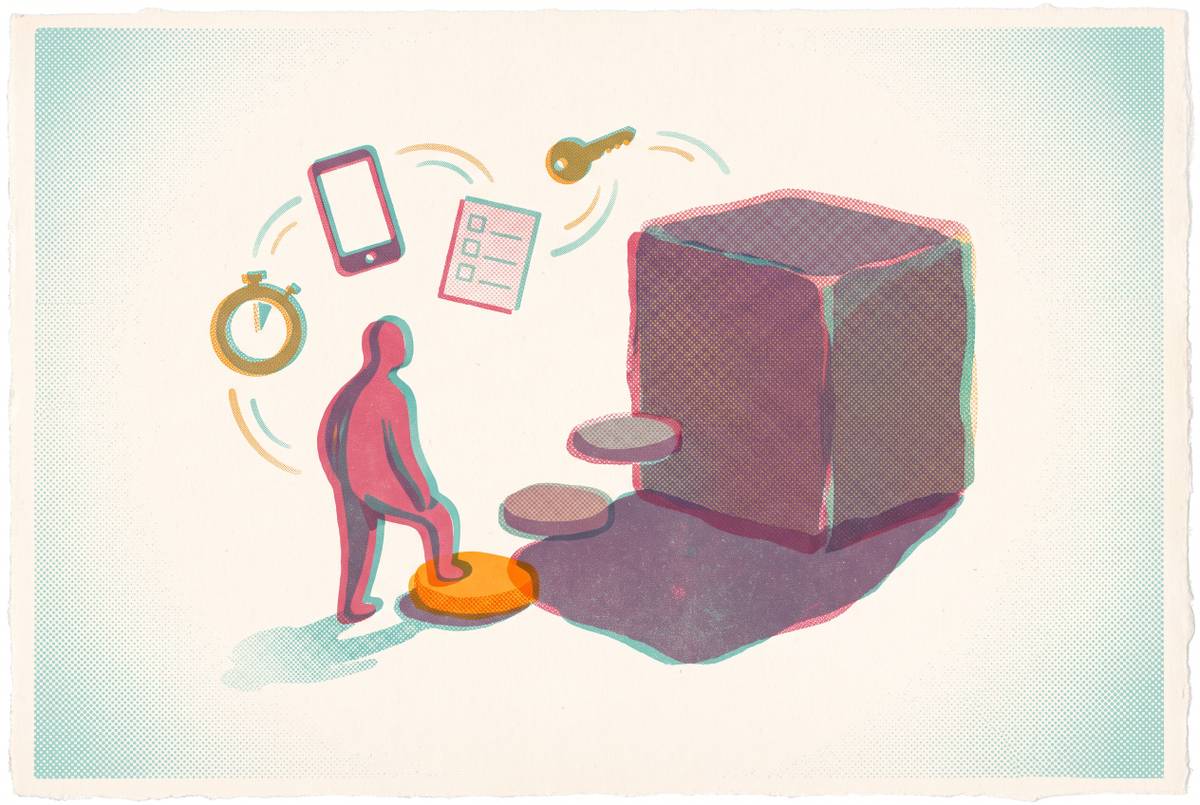
The practical response is to lower the initiation threshold and add external structure. A smaller entry point reduces what must be organized and activated at once. “Put one dish in the sink” asks less of the system than “clean the kitchen,” just as opening a document asks less than writing a report. The first action is deliberately modest. Progress can then feel rewarding before the whole task is done, though an easy start can still lead to a finish that takes effort.
Externalizing the sequence addresses a different bottleneck. Writing down three concrete actions, such as opening the laptop, opening the folder, and reading the last email, moves sequencing work out of working memory. The written sequence makes the next step visible and removes the need to reconstruct it repeatedly. Implementation intentions add a specified time and place to that action, reducing the planning left to do at the moment of starting.
Dopamine priming aims to make activation more accessible before work begins. Movement, a favorite song, sunlight, or two minutes of something fun may help get reward and motivation pathways going. The order is the important departure from conventional advice. Pleasure is not withheld until completion when the immediate problem is generating enough activation to begin. A short timer race, a different place to work, or a playlist for the task can also add the challenge or novelty that the task lacks.
Urgency requires more care because pressure can also deepen paralysis. A self-imposed deadline with a witness provides an external activation cue, but its usefulness depends on whether it helps initiate action without amplifying anxiety. Body doubling gives another kind of outside support by having someone else there, in person or virtually. Its proposed mechanism is external regulation and accountability.
The evidence for body doubling remains limited. It is widely used and strongly endorsed by many users, but the supplied sources reported no clinical trials as of publication. One small controlled study found no statistically significant difference between working with body-doubling and working solo. Ara et al.'s 2025 preprint reported that participants felt they did better in a laboratory VR setting, which is promising but leaves open how well it works more broadly. Environmental design can help alongside this by taking away points where a decision is needed and setting up the space so there are fewer choices to make before starting.
What app helps when ADHD task paralysis makes starting feel impossible?
An ADHD-compatible app should address the obstruction. For choice paralysis, automatic organization and a next micro-step that the user can see address the difficulty more directly than lots of manual categorization. When someone struggles to capture tasks, voice-first or single-tap input cuts the work needed to get a task into the system. These are different use cases. A product can be easy to record information in while still leaving the user to untangle an overwhelming goal.
Goal decomposition addresses that second problem. Breaking a large goal into small, specific milestones gives the initiation system a concrete entry point. The useful comparison is between an app that preserves “write the report” and one that helps expose “open the document.” A longer feature list does not establish a better fit. Fit depends on how much sequencing and decision-making the software leaves with the user.
Visible checkpoints or an XP value attached to each sub-step can make progress rewarding before final completion. This suggests that gamification can do more than decorate an app, because feedback that comes right away fits the reward-processing difficulty described earlier. However, a neurologically plausible design is not proof that every gamified app improves paralysis. Features and demonstrated effectiveness are different claims.
Maintenance also depends on what happens after inconsistent use. Reminders that come at the right time without punishing the user help them return, while a system that resets progress or shames missed days can bring back the failure-blame cycle. For this reason, low-friction capture, automatic organization, small next steps, immediate feedback, and forgiving reminders are more informative selection criteria than an ADHD label alone. The available material supports those criteria, with insufficient evidence for a defensible ranking of named products.
When to treat paralysis as a signal that professional support is warranted
Having trouble starting now and then does not, on its own, show that there is a clinical problem. The appropriate response depends on how persistently paralysis disrupts daily life. Repeated late fees, stalled career progress, an unmanageable home, or strained relationships indicate more than an inconvenient productivity snag. At that level, professional support is warranted alongside self-management tactics.
Medication is a legitimate first-line treatment option when ADHD-related impairment warrants it, under professional guidance. Stimulant and non-stimulant treatments can address the neurochemical systems involved in executive function and initiation, although their mechanisms differ. Treatment can make behavioral strategies more usable, while ADHD-adapted CBT and coaching address planning difficulties and the shame narratives built around repeated failures to start.
Hopelessness, dread, or worthlessness that persists beyond individual freeze episodes is a reason to seek support for more than task initiation. The aim is to respond to the actual level of impairment without interpreting a difficulty in regulating action as a verdict on the person experiencing it.