Decision Paralysis in ADHD and How to Design Around It
How to design systems that sidestep decision paralysis in ADHD.
Decision paralysis in ADHD is an executive dysfunction pattern, and designing around it means reducing choices and making the first action clear before the freeze arrives. An app can help when it reduces initiation demands. Habitica uses role-playing rewards to help with daily routines, while task freeze calls for tools that make capture easy, clear first steps, and immediate feedback.
Why decision paralysis in ADHD is not a mindset problem
Knowing what needs doing and being able to begin it are different functions. Executive function links what a person plans to do with what they do through working memory, prioritization, and initiation. In ADHD, that connection can break down even when the task is important and the person wants to complete it. The freeze is not a chosen refusal. The DSM-5 does not list decision paralysis as a standalone diagnosis, but clinicians recognize it as a manifestation of executive dysfunction.
The neurological basis involves the prefrontal cortex, striatum, and anterior cingulate cortex, which participate in executive control, reward processing, and impulse regulation. Dopamine signaling helps explain why task importance does not reliably translate into engagement. Differences in that signaling, linked to variants of the DRD4 receptor and DAT1 transporter, can make initiating and sustaining low-reward tasks difficult. Interest can change the conditions for engagement. The same person may freeze over a routine email yet spend hours absorbed in a new project.
Stress can further impair prefrontal function, adding strain to the system already struggling to organize action. Oroian, Nechita & Szalontay (2025) in European Psychiatry found that a large majority of adults with ADHD reported frequent decision-making difficulties, with a substantial share experiencing paralysis at least weekly. If the bottleneck is structural, willpower-based advice leaves it intact, while structural design addresses the demands that produce it.
The three distinct forms paralysis takes — and why each needs a different fix
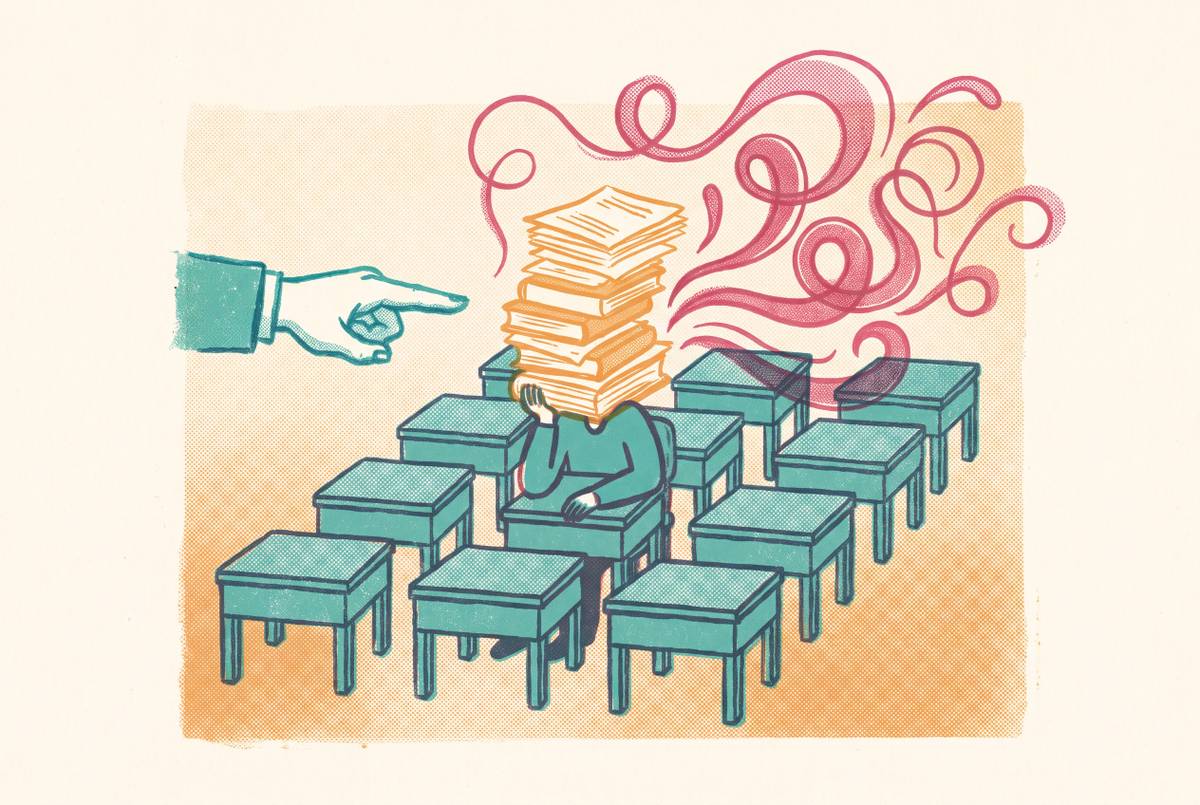
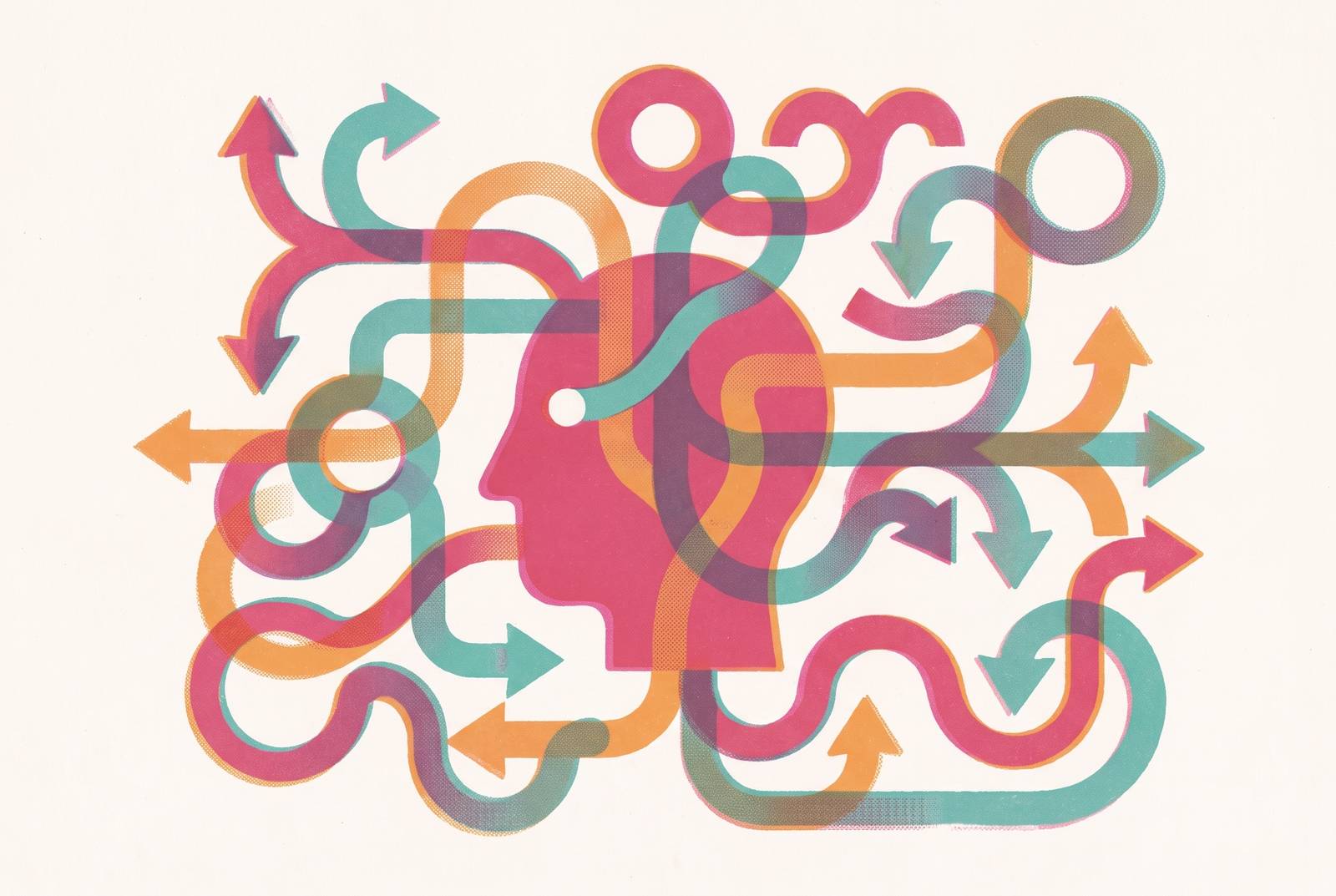
Mental paralysis begins when competing inputs overwhelm processing capacity. An overflowing task board makes this recognizable. Every item calls for attention, but the person cannot settle on one to start. Internally, the experience may be a racing mind rather than an empty one, because working memory is struggling to hold competing possibilities while evaluating them. The bottleneck is not an absence of thought but too much to process at once.
With choice paralysis, the difficulty lies in comparing the options, beyond how many there are. The streaming service scroll illustrates the difference. The options are still there, yet choosing gets harder because weighing them against each other leaves no clear favorite. Barry Schwartz's Paradox of Choice describes how more options can increase anxiety and reduce satisfaction, a dynamic that can compound ADHD-related evaluation difficulties. The same study found that a large majority reported indecision delaying major life choices, with more than half reporting missed personal and professional opportunities.
Task paralysis can persist after the choice is settled. The document is open, the cursor is blinking, and the person knows which work needs attention. Yet the first action still does not happen. Most people with ADHD experience all three forms at different times, though one may dominate, so recognizing the form identifies whether the design target is input load, comparison, or the transition into action.
What makes a decision hard to enter — the cognitive load factors that compound the freeze
An instruction such as “work on the project” looks simple because it is short, but it conceals several decisions. The person must determine where to begin before doing any substantive work. That is a decision about making a decision. An open-ended prompt therefore adds cognitive load at precisely the point when initiation is already difficult. Both the amount of work and the interpretation the environment demands before work can start contribute to cognitive load.
Ambiguous first steps add a different burden because they provide no clear boundary for completion. Without knowing what finishes the first micro-action, the person has little concrete evidence of progress to reinforce continued effort. Nested project boards can multiply this uncertainty. Long static checklists and hierarchical structures expose many decision points simultaneously, leaving the user to prioritize, interpret, and act within the same view. A system can hold every detail needed for the work and still leave the person unsure where to start.
An app that asks for tags, categories, or priorities before saving a thought makes the user organize it before writing it down. For someone already overloaded, entering the task becomes another task with its own unresolved choices. These conditions help explain why a more elaborate productivity setup can worsen the freeze without any change in the person's motivation.
The design-first principle — removing the decision before the freeze arrives
The design-first response moves decisions out of the moment when action must begin. The evening before, the week's setup, and the tool's configuration become places to settle choices that would otherwise compete with initiation. The reader's practical task is therefore to remove demands from the frozen moment rather than build a stronger argument for working through it. This changes what a useful plan contains.
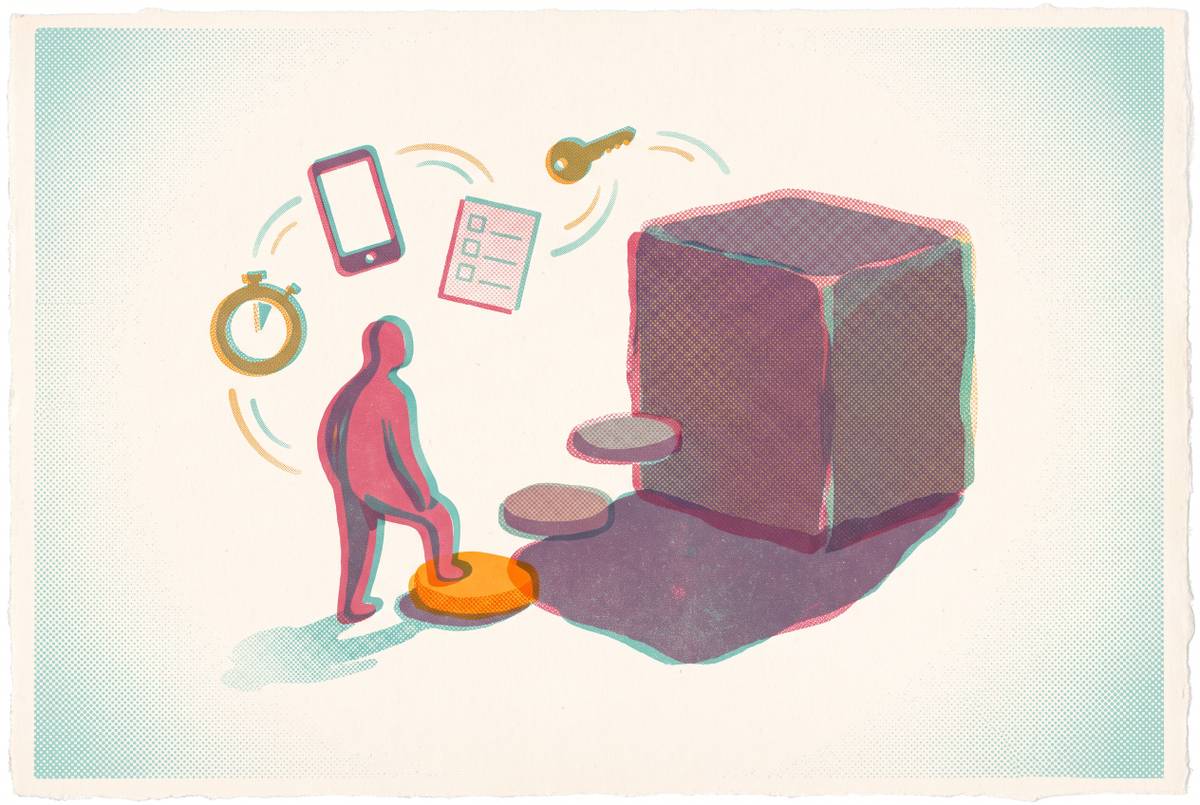
A task name identifies the work, while a pre-specified first action identifies the entrance. “Open the file, go to section 3, reread the last paragraph” replaces the unresolved instruction to work on the project. The starting decision has already been made. Because continuing can be easier than initiating, the 2-Minute Rule combined with task chunking reduces the opening commitment to a small, concrete action. What disappears is the need to invent a starting point while attempting to start.
The same principle applies when comparison is the obstacle. Reducing a choice to two real options removes the demand to search an open field before evaluating anything. The constraint does useful cognitive work. A pre-set meal plan, capsule wardrobe, or pre-written decision menu for recurring work situations extends that reduction across repeated choices. These structures do not require each daily decision to become easier through practice, because they remove much of the repeated deliberation.
When mornings bring depleted executive function, making morning decisions the previous evening allows the waking person to execute a prepared plan. Circadian regulation challenges make this more than a preference for preparation. For decisions that cannot be made ahead of time, a timer limits how long the person spends weighing the options. The finite window supports a “good enough” choice within a reasonable period, rather than leaving the person searching indefinitely for the perfect one.
Designing the entry point — how to begin when you cannot start a task
Once the first action is defined, a warm start bridges intention and engagement. For practical use, the first thirty seconds can contain a transition. Opening the tab, setting a five-minute timer, or saying the next action aloud makes it clear where to start. Full engagement does not have to come first. The micro-step lowers the initiation threshold, while naming the action reduces the need to keep reconstructing it in working memory.
Body doubling supplies another external condition for beginning. A person can work in the presence of someone else, either physically or through a video call, without needing that person to supervise or participate. External accountability can lower the initiation threshold when a privately held intention does not translate into action.
The initial time commitment can be designed as well. A standard Pomodoro interval is too long for many ADHD users at the point of entry, while a short work sprint makes the commitment feel finite. The task as a whole may still be just as large. What changes is the amount of sustained effort the person must agree to before discovering whether engagement is possible. A five-minute start therefore addresses a different problem from a full work schedule.
Reward timing completes this entry-point design. Pairing a disliked task with a specific podcast brings stimulation inside the activity. For someone whose mornings are especially vulnerable to freezing, these moves can sit within the morning routine itself, which ends only once the first task has gently begun. The transition into work then has a defined place rather than depending on a fresh decision after the routine ends.
How gamification encodes the design-first approach into daily momentum
A warm start helps a person begin once, but to keep going day after day, they need a way to begin that works again and again. Gamification brings the same approach to routines by making progress easy to see and rewarding it right away. Importance alone may not sustain engagement in ADHD. Points, levels, and instant feedback give the person external reward signals, so motivation comes from those signals instead of a vague sense of how the work will help in the future.
Habitica uses role-playing game rewards for habit tracking. It is better suited to building daily routines, including morning habits, consistent check-ins, and exercise, than to managing complex work tasks. That distinction shapes the app choice. Someone who responds to visual progress, gentle accountability, and play may find that format useful, while someone immobilized by an ambiguous project still needs the project's first action clarified. A reward structure and an entry point solve related but different problems.
XP rewards, milestone tracking, and structured habit scaffolding help when the system defines the next small win each day. The immediate target is already legible. This connects routine design with task-entry design, since both reduce what executive function must supply in the moment. Small daily wins can then help change habits for good without relying on one big burst of motivation.
Building a decision-light environment that holds up over time
An environment that works over time brings these supports together without adding more planning work. The design priority is reducing unnecessary choice points, rather than treating discipline or consistency as character traits to strengthen. Habits still have a place in that structure. For ADHD, however, a routine is more usable when it specifies what happens next.
The recommended build sequence is one habit at a time, allowing two to three weeks for each before adding another. An anchor might be morning light, a first-task trigger, or a voice check-in. Changing the whole system at once adds its own overload. The environment grows through manageable additions rather than requiring the person to organize an entirely new life at once.
Tools fit this architecture when they capture first and organize later. Raw thoughts can be recorded without simultaneous categorization, tagging, or priority-setting, with structure added when executive function is available. Voice input can reduce that simultaneous demand further. The useful comparison is therefore not which app offers the most organizational features, but which asks for the least organization at the vulnerable point of entry. An ADHD tool earns its place by removing a demand the person otherwise has to meet unaided.
Finally, noting when freezes occur and how long they last turns recurring difficulty into feedback about the setup. Patterns can reveal which conditions need to change in the next version of the environment. A freeze becomes information. This leaves room for adjustment without treating every difficult day as proof that the whole system has failed. Structural design is achievable because it can be built one choice point at a time, around the brain that is actually there, while the environment assumes a different one.