ADHD and Crisis Performance Advantages
How ADHD brains excel under pressure through neurological design.
An ADHD brain that stalls on routine work can snap into sharp, decisive focus the moment a real crisis hits. That reversal is not a character flaw turning into a lucky streak. It traces back to a specific, well-documented neurological architecture, and understanding that architecture changes how an ADHDer might come to see their own mind.
Struggling with routine, thriving in crisis
That reversal is a structural feature of how the ADHD brain decides what deserves its attention in the first place, not a quirk of personality or a failure of discipline.
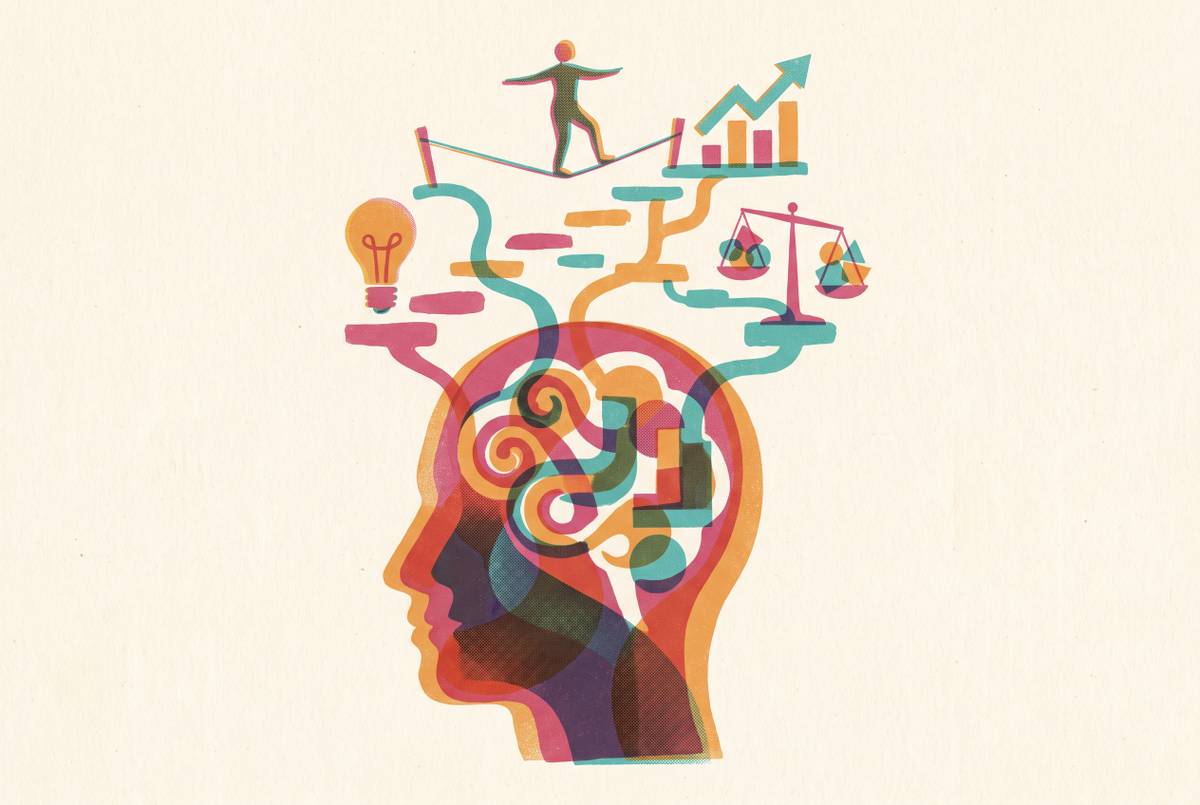
ADHD involves disrupted function across a set of connected brain regions: the dorsolateral prefrontal cortex, the anterior cingulate cortex, the amygdala, and the ventral striatum. Together these areas form a network that handles executive control, emotional regulation, and what researchers call motivational salience, the brain's running calculation of what matters enough to act on right now. When that network runs differently, the result is a brain that does not activate for a task simply because the task is important on paper. It activates for tasks that carry interest, novelty, urgency, or outside pressure. Importance alone rarely moves the needle.
fMRI studies find reduced activation in the ventral striatum during reward anticipation in people with ADHD: the brain's core motivation circuitry responds weakly when a reward is small, uncertain, or far off. A deadline with no immediate consequence does not either. Routine work, almost by definition, offers none of the conditions the ADHD brain needs to engage. A crisis, by contrast, delivers several of them at once: urgency, novelty, real stakes, and consequences that land immediately. That combination is rare in daily life, and its rarity explains why crisis performance can feel so different from everyday performance in the same person.
How urgency sharpens the ADHD brain
When urgency pairs with consequences that are real and close at hand, it ranks among the most dependable dopamine triggers available to the ADHD brain. Where a quiet task fails to generate enough internal signal to start, a loud one succeeds almost automatically, and the engagement and decisiveness that follow can look, from the outside, like someone becoming a different person under pressure.
The ADD Resource Center describes the adrenaline surge of an actual crisis as something that sharpens the senses, lifts energy, and improves cognitive function directly in ADHD brains. Conditions that would freeze a neurotypical brain with stress can instead switch an ADHD brain on. For some brains it does. For others, it supplies exactly the missing ingredient.
First-person accounts gathered by ADDitude put flesh on this pattern. Readers describe coordinating hurricane supplies and getting family members and contingency plans in order, managing emergency rescue missions, and leading fast organizational responses in the early days of the pandemic, all recalling a jump from a near-standstill into full capability the moment the stakes became real. One account in particular captures the shape of the whole phenomenon: "Being activated by a sense of urgency and my capacity to hyperfocus served me well." The same person who thrived during that acute stretch also said she struggled badly once the emergency passed and ordinary, low-stimulation weeks returned, and that pairing of strength in crisis and weakness right after appears often enough in these accounts to look like a pattern.
What ties the two sections together is this: the same trait that causes someone to put off a quarterly report until the last possible hour is the trait that makes that same person exceptional when a server goes down and a hundred people are waiting on a fix. It is one brain, responding to two very different environmental inputs.
The default mode network's role in ADHD crisis creativity
Urgency alone does not account for everything that happens during a crisis. A second mechanism works alongside it, and it concerns the quality of the solutions an ADHD brain produces under pressure, not just how fast it springs into motion.
In a neurotypical brain, the default mode network, the circuitry responsible for mind-wandering and loose associative thinking, gets suppressed when a person settles into a focused task. In an ADHD brain, that suppression is weaker, so more off-task thoughts keep surfacing even during concentrated work. Normally this gets labeled a distraction problem, and in a lot of routine contexts, it is one. The same loosened suppression also carries a documented upside: several studies cited by Lifestack report higher divergent thinking scores among people with ADHD compared to neurotypical controls, a stronger ability to generate many possible solutions than to lock onto the first workable one.
The claim is not that ADHD makes someone generically smarter or a better thinker across every situation. The claim is narrower and more useful: when established protocols have failed, or when a situation has no established protocol to begin with, the ability to throw out many different angles fast is worth more than the ability to execute one plan with precision. That is exactly the kind of moment a crisis produces. The ADD Resource Center frames it directly: once the usual protocol breaks down, divergent thinking lets a person generate several new approaches quickly and weigh the risks and benefits of each with a flexible mindset. The same mental habit that pulls focus away from a routine meeting is the one that, in a true emergency, produces more live options than a more narrowly focused colleague might reach.
Hyperfocus: why crisis triggers it reliably
A third mechanism works alongside both of the ones already described, and it may be the most powerful of the three. Hyperfocus is prolonged, intense concentration on a task that holds genuine interest, and researchers still consider it under-studied relative to how often it shows up, even though it has documented effects on productivity, especially in flexible and creative kinds of work.
Hyperfocus does not arrive on command. It gets triggered by specific conditions: novelty, genuine interest, urgency, a real challenge, and personal meaning. A crisis tends to supply several of these conditions at the same time, since it is by nature urgent and novel, and the stakes involved usually give the situation personal meaning almost automatically. That overlap is why hyperfocus functions so poorly as a general-purpose productivity strategy and so consistently in a genuine emergency. A person cannot simply decide to hyperfocus on a spreadsheet. The environment is doing the triggering, not willpower, and a spreadsheet rarely offers the conditions an emergency offers for free.
This point deserves an honest caveat before it gets treated as a strength in the sections that follow. Because hyperfocus is reactive rather than directable, it can lock onto something unhelpful with the same intensity it brings to something useful, and a person cannot simply summon it when a deadline approaches with no real urgency behind it. ADDitude readers describe hyperfocus letting them take in large amounts of information quickly, pick out the variables that actually matter, and hold their attention on critical work through extended stretches of high pressure. That capacity holds up under pressure. It is also conditional, tied tightly to the circumstances that call it up rather than something a person carries with them at will.
The limits of crisis performance
None of this adds up to a free advantage. The same mechanisms that produce exceptional performance during acute pressure tend to extract a cost once the pressure lifts, and leaving that out would make the whole argument sound more flattering than honest.
Hyperfocus cannot be summoned at will. It responds to the environment rather than to intention, and a crisis that ends takes its trigger with it. The same ADDitude reader who performed strongly during the acute phase of the pandemic described the weeks that followed as a genuine struggle: the urgency that had switched her brain on was gone, replaced by the low-stimulation routine of ordinary life, and the brain that handled the emergency so well did not carry that same sharpness into the quiet stretch afterward.
There is also a risk built into the strength-based framing itself. Once "you perform well in a crisis" turns into an expectation, "you're supposed to thrive under pressure," it stops functioning as a description and becomes pressure of its own, adding shame. Not every ADHDer experiences this crisis advantage the same way or to the same degree, and treating it as a universal trait risks making someone feel broken for not matching a pattern that was only ever a tendency. Lifestack's reading of research out of UCL makes the boundary precise: ADHD strengths are context-dependent, surfacing when someone has genuine interest in the task, works in an environment that tolerates a flexible approach, and has enough structure around them to actually execute. Those conditions do not hold everywhere, and the advantage does not travel automatically into contexts that lack them.
That raises a fair question. If the advantage is real but only appears under specific conditions, what does a person do with that information when no actual emergency is on the horizon?
Environments where ADHD crisis performance shows up most often
The crisis advantage is not evenly distributed across every job or setting. It concentrates in environments where urgency, novelty, and consequence are regular features rather than rare exceptions, so certain fields draw and reward people with ADHD more consistently than others.
The ADD Resource Center points to emergency services, IT incident response, project management, event planning, journalism, and several areas of medicine as settings where unpredictability and time pressure are part of the job description. Lifestack's list overlaps but extends further, adding crisis response work, emergency medicine, startup environments, competitive sports, and live performance, all contexts where the surrounding environment supplies the urgency and novelty that an ADHD brain needs without anyone having to manufacture it.
One case stands out for how specific the documentation is: research on software developers with ADHD identifies live production incidents, the moment something breaks in front of real users, as a context where traits that slow a person down during routine coding sprints become genuine assets. The acute problem-solving demand of an active outage mirrors the same structure as any other crisis: unclear cause, real stakes, no time to deliberate at length. A related pattern appears in work that depends on reading people under pressure, sales negotiations, clinical encounters, situations where a lower filtering threshold, often a liability in a quiet office, picks up signals a more filtered attention might miss.
None of this suggests that ADHDers should go looking for chaos or restrict their careers to high-stakes fields. It suggests that the advantage described in the previous sections is not evenly available everywhere, and that certain environments happen to supply its preconditions more reliably than others by their basic design.
Recognizing this as a cognitive asset
Naming the mechanism changes what a person can do with the experience. When crisis performance is understood as the predictable output of a specific neurological setup rather than a fluke that happened to land well once, it becomes something you can actually own.
A 2025 study out of UCL found that people with ADHD who identified their personal strengths and put them to use reported better quality of life, stronger self-efficacy, and fewer mental health symptoms. The reframe is not just a comforting story someone tells after the fact. It carries a measurable effect on wellbeing. Separate research from the University of Bath, King's College London, and Radboud University found that adults with ADHD recognized and applied their own strengths in daily life just as often as neurotypical participants did, pushing back directly against the deficit-only narrative many ADHDers carry about themselves after years of being told what is wrong.
That distinction between "I got lucky that day" and "my brain is built to respond this way under these conditions" is not a small one. One version treats a strong performance as an accident unlikely to repeat. The other treats it as a known pattern a person can expect, prepare for, and plan around. The caution from the earlier section about shame still applies here. This is not an invitation to treat ADHD as a hidden superpower, a framing the research itself warns against, since it sets up new pressure to perform on demand. The more accurate and more useful claim is narrower: the mechanism is specific, and understanding it turns a confusing memory into a legible fact about how a particular brain works.
Building conditions that make the crisis advantage available more deliberately
If urgency, novelty, stakes, and immediate consequence are the actual triggers behind crisis performance, then at least part of that advantage can be built into ordinary days ahead of the next real emergency. A self-imposed deadline tends to do little on its own, but pairing it with real outside accountability, telling someone else what will get done and by when, or committing to it in public, gives it a social cost that starts to resemble the consequence a genuine crisis carries. Focusmate's body-doubling approach works on this exact logic: stating an intention to another person before a work session creates a small social commitment, and the session itself imports a trace of outside accountability into what would otherwise be a low-stakes solo task, offering a workable stand-in for the pressure a real crisis would supply.
Breaking a large, distant goal into smaller milestones changes its shape in a similar way, since a single overwhelming project with no deadline in sight becomes a series of smaller checkpoints, each one closer in time and each one giving immediate feedback on whether it worked. That structure echoes the short, fast reward loops a crisis naturally provides, just at a smaller and safer scale. Gamification runs on the same underlying principle: a 2025 study published in Frontiers in Education found that an eight-week gamified intervention significantly improved attention and academic performance in children with ADHD compared to a non-gamified program, with points, experience levels, and instant feedback standing in for the dopamine hit that urgency would otherwise have to supply.
Lowering the friction at the starting line matters just as much as building in urgency once a task is underway. Voice-first task capture removes the extra executive-function step of organizing a thought before it can even be written down, since speaking is faster than typing and sidesteps the freeze that often happens right at the moment of starting. Tools built around this idea put the principle into practice directly: Goblin Tools' Magic ToDo breaks a task down automatically once it is entered, and Todoist's Ramble feature converts spoken input into structured tasks, both lowering the cost of simply getting started on something that carries no built-in urgency of its own. None of these tools recreate an actual emergency, and none should be mistaken for one. What they offer is a way to borrow a few of the same conditions, urgency, immediate feedback, low friction at the point of entry, that make a real crisis so unusually easy for an ADHD brain to meet.
Sources
- (PDF) Hyperfocus in ADHD: A Misunderstood Cognitive Phenomenon
- Why Your ADHD Brain is a Crisis Management Superpower
- A Socio-Technical Grounded Theory on the Effect of Cognitive Dysfunctions in the Performance of Software Developers with ADHD and Autism
- Cognitive-affective flexibility in adult ADHD: Links to emotion reactivity and hyperfocus - ScienceDirect
- Evaluating Dopamine Reward Pathway in ADHD Clinical ...
- Why ADHD Leaders Stay Calm in a Crisis (and the Catch)