Gamified Habit and Goal Tracking Apps for Adults With ADHD
Why gamified apps work better than to-do lists for ADHD brains.
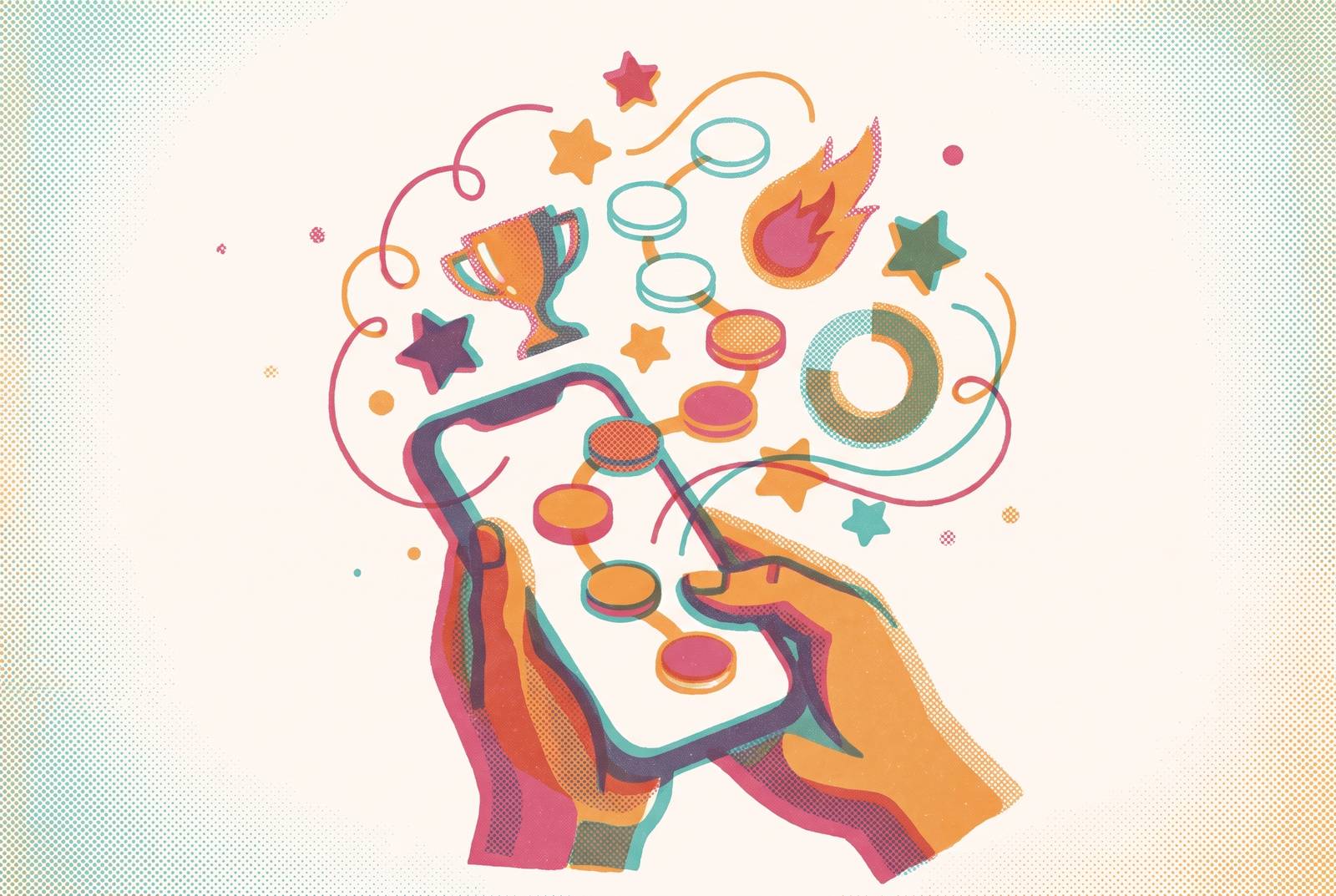
Gamified habit and goal tracking apps for adults with ADHD can make progress easier by supplying immediate rewards, manageable milestones, and feedback that ordinary to-do lists often lack. Their value is not simply entertainment, but a closer fit between the tool and the user’s reward and initiation needs. The strongest system combines those mechanics with low-friction capture and accountability across tools.
Why conventional productivity tools fail ADHD adults at a neurological level
“Just try harder” treats inconsistent task completion as a shortage of effort. The neurological account points to a different problem. Conventional planners rely on planning, task sequencing, working memory, and reward anticipation, all functions involving the prefrontal cortex and striatum. These are among the circuits affected in ADHD.
An integrative neurocognitive model published in Frontiers in Psychiatry in July 2026 describes how disturbances in fronto-striatal and fronto-limbic networks may impair metacognitive monitoring and top-down cognitive control, with emotion regulation also central to its account. Barkley’s response inhibition model adds an important sequencing distinction. Impaired inhibition comes first, and the difficulties with executive functions come after it. A planner organizes the downstream work without necessarily addressing what prevents someone from beginning it.
Why can the same person struggle to open a task list yet focus for hours on a game? The contrast need not imply inconsistent character. Games provide salient reasons to act now, while planners often depend on the anticipated satisfaction of a distant result. The practical implication is a design constraint. When a tool supplies no reward signal of its own, reliable engagement may remain difficult.
What gamification actually does inside the reward circuit
Gamification brings a consequence closer to the action that earns it. XP, rewards, and milestones make completion visible now rather than asking a distant goal to provide all the motivation. The tool gives clear feedback where an ordinary list might show only another unfinished task.
This makes gamification more than a decorative layer, but how strong is the evidence? An April 2025 review in BMC Psychiatry looked at 26 systematic reviews that covered tens of thousands of patients and found low-to-moderate quality evidence that digital interventions improve individual ADHD symptoms, including inattention and impulsivity. That supports cautious interest in digital support. It does not establish that every gamified app improves symptoms, or that a particular reward mechanic has a proven clinical effect.
Novelty is the biggest practical reason to doubt that people will keep using an app. A new app can feel compelling partly because it is new, and that appeal can fade within weeks to months. For someone prone to losing interest as activities become familiar, elaborate rewards do not remove this risk. Rotation between tools can be a deliberate strategy. The system as a whole can still help when one app no longer holds the user’s interest.
What to look for in a gamified habit app before choosing one
A feature’s practical value depends on whether it addresses a barrier. Immediate, granular feedback should arrive when a task is completed. Entering a task should take few decisions, with options such as voice input, one-tap logging, or natural-language parsing. Milestones should turn overwhelming goals into sequenced micro-steps.
A broken streak should not create a penalty spiral that makes returning harder, while shared sessions or party quests can provide accountability when urgency is absent. Customization also has a functional role. A 2026 study in Neurology International found three executive function profiles: globally reduced executive functioning, verbal–mnestic executive vulnerability, and selective executive control deficit. With those differences, the same mix of rewards, reminders, and social features may not work for everyone.
Which six apps address ADHD reward and initiation needs?
Habitica is available on iOS, Android, and the web, with a free core and a paid monthly subscription. It belongs in the comparison for readers evaluating gamified habit tracking. However, the purchasing question is more specific than whether an app offers a game-like experience. How well it fits depends on when it gives rewards, how much work logging takes, and how it handles missed tasks under the criteria above.
Finch is available on iOS and Android, with a paid monthly or annual Finch Plus tier. It is another option to evaluate for habit support. Neither subscription structure nor presentation alone establishes ADHD compatibility. For a reader whose main obstacle is returning after a lapse, the decisive comparison is how comfortably the tool permits re-engagement, rather than how much activity it encourages during the first enthusiastic week.
Forest targets a different barrier through a loss-aversion mechanic for focus sessions. Its pricing differs across platforms. On iOS it is a paid one-time purchase, while Android offers a free version with ads and an available Pro upgrade. Its fit depends partly on the user’s response to loss aversion. A mechanic that helps sustain a session is not automatically the right choice for someone whose larger obstacle is shame about unfinished work.
Todoist is available on iOS, Android, and the web, with a free tier and paid plans. Its natural-language parsing converts an instruction such as “call dentist Tuesday at 3pm” into a scheduled task with a reminder. That targets capture rather than reward engagement alone. It is a useful fit for users who need to record and schedule an intention without navigating multiple menus before the thought disappears.
Goblin Tools addresses initiation through task decomposition within a broader suite designed for neurodivergent users. Its Magic ToDo feature breaks tasks down. This is a different intervention from rewarding completion, because it changes the size and clarity of the action awaiting the user. When a vague goal produces paralysis, smaller steps address the obstacle before a reward system has anything to reinforce.
Focusmate uses body doubling to help people start and stay focused. Another person’s presence supplies an external accountability cue when internal urgency is difficult to generate. It therefore belongs in this comparison without being interchangeable with an XP-based tracker. Together, these six options serve different functions by addressing different barriers.
How voice input and low-friction capture function as neurological accommodations
The gap between having a thought and recording it can be where a task disappears. Working memory has to hold on to what the user plans to do while they open an app, find the right place, and enter the details. That interval is not neutral for someone with ADHD. A useful idea can be lost before any planning or motivation problem even becomes relevant.
Voice input asks less of the user in that time. BlabbyAI is designed to turn speech into text in any app immediately, while Todoist’s parsing reduces the steps involved in scheduling a task. The accommodation is the shortened route from thought to saved information. As with a ramp, accessibility comes from changing the route rather than demanding greater effort from the person using it.
Body doubling also changes the setting to help the user take action. With Focusmate, another person’s presence gives the user an external urgency cue. The user does not have to generate the entire initiation signal internally. The wider market for assistive technology and ADHD apps is growing fast, and AI-driven personalization is helping shape tools that adapt to how people use them. That growth alone does not show that the tools work, but tools that adapt to users fit the case for accommodation.
Why morning routines specifically break down for ADHD adults, and what actually helps
Standard morning advice often asks people to start the day with decisions, impulse resistance, sequencing, and sustained attention. Yet there may be little external urgency when the morning starts. Unstructured time then creates conditions for waiting mode or task paralysis, while time blindness makes the interval before departure difficult to judge.
Deciding on a consistent launch sequence the night before removes choices from the morning, conserving executive effort through automaticity. Intentional reward priming addresses a different part of the same problem. A favorite coffee, a specific playlist, or sunlight can provide a deliberate opening reward that redirects stimulation-seeking away from scrolling. The purpose is to make the start more immediately engaging.
The 5-Minute Rule reduces the commitment required to begin. Agreeing to only five minutes targets the initiation barrier rather than assuming the whole task must feel manageable in advance. Habit stacking complements this by attaching a new behavior to an existing automatic one, reducing the need for a fresh initiation signal. A gamified daily task can then reward the first completed step with XP. Together, these approaches give the morning a cue, a small action, and a near-term consequence.
How shame about productivity failure blocks engagement with the very tools that could help
After giving up on system after system, trying another app can feel like signing up to fail again. The obstacle is not necessarily a lack of information. A person may already know the available tools but expect the next attempt to confirm something painful about themselves. That expectation deserves recognition before any discussion of features or subscriptions.
A 2026 scoping review in Clinical Psychologist found that adults with ADHD consistently showed higher levels of deep-rooted beliefs about being defective, shameful, or a failure to achieve. The authors linked these beliefs to persistent childhood criticism. The distinction between guilt and shame helps explain the stakes. Guilt is a judgment about something a person did wrong, while shame is a judgment about who they are. Repeated difficulty in an unsuitable environment can turn a solvable design problem into an identity claim.
That distinction changes how app mechanics should be judged. Streak penalties, public rankings, and messages that frame inactivity as failure can reinforce the very beliefs that obstruct returning. A non-punishing design leaves room to resume after engagement fades. Switching apps can likewise be understood as an adaptive response to novelty decay, rather than another entry in a record of personal inconsistency.
How to build a sustainable system using multiple tools rather than searching for one perfect app
Support should be assembled around the largest barriers. An initiation problem may call for task decomposition through Goblin Tools or body doubling through Focusmate. A focus-session problem may respond to Forest’s loss-aversion mechanic or to shared accountability. Low-friction capture serves another role entirely. These functions can complement each other because they intervene at different points between having an intention and finishing an action.
Rotation should be part of that system’s design. When one tool loses its appeal, switching can preserve engagement with the goal rather than forcing continued use of an interface that no longer helps. The distinction is between the purpose and its current implementation. Different executive profiles also call for different mixes of tools, so a system that helps one person may look different from what works for someone else.
Low-friction capture can record overnight ideas, a gamified daily task can reward the first action, and a minimum viable habit stack can reduce repeated initiation demands. Small rewards then help people repeat the behavior without having to rely on willpower for every step. Success means the environment makes the next useful action easier to start and worth returning to.