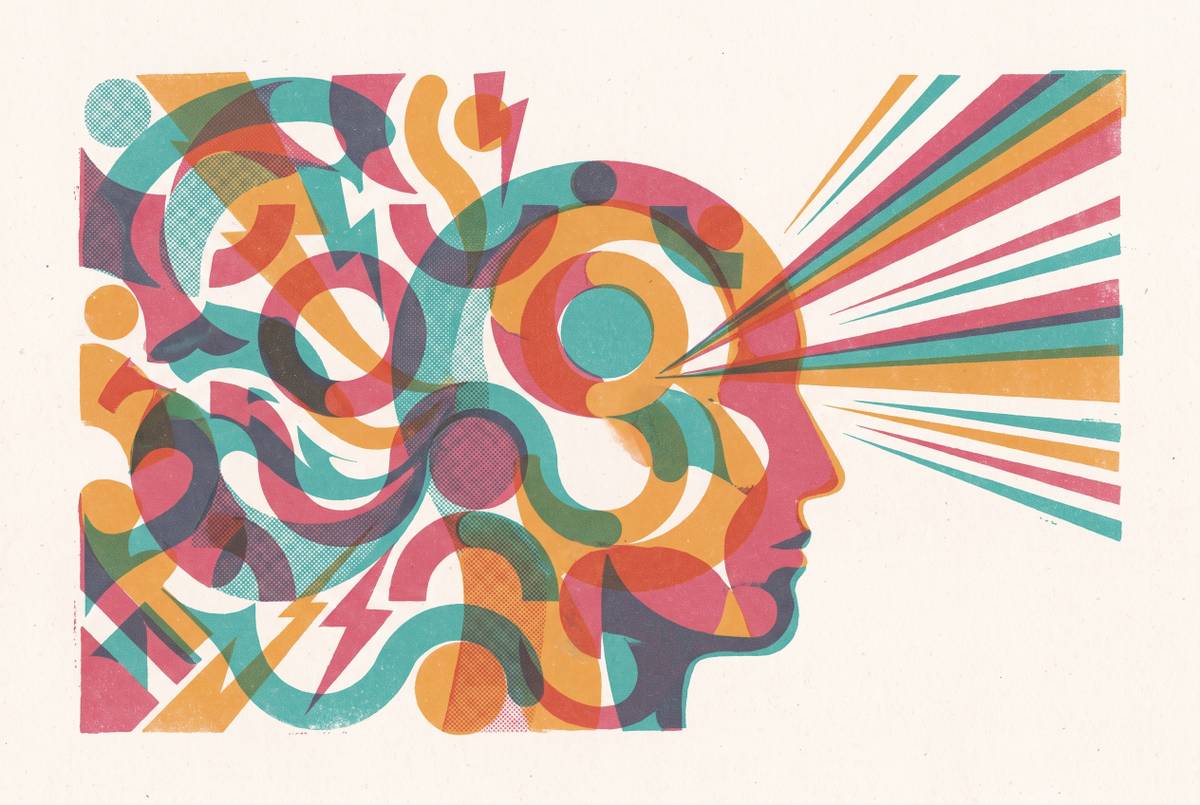
Hyperfocus as a Genuine Cognitive Capability
ADHD hyperfocus is not a glitch but a predictable feature of how the brain regulates energy.
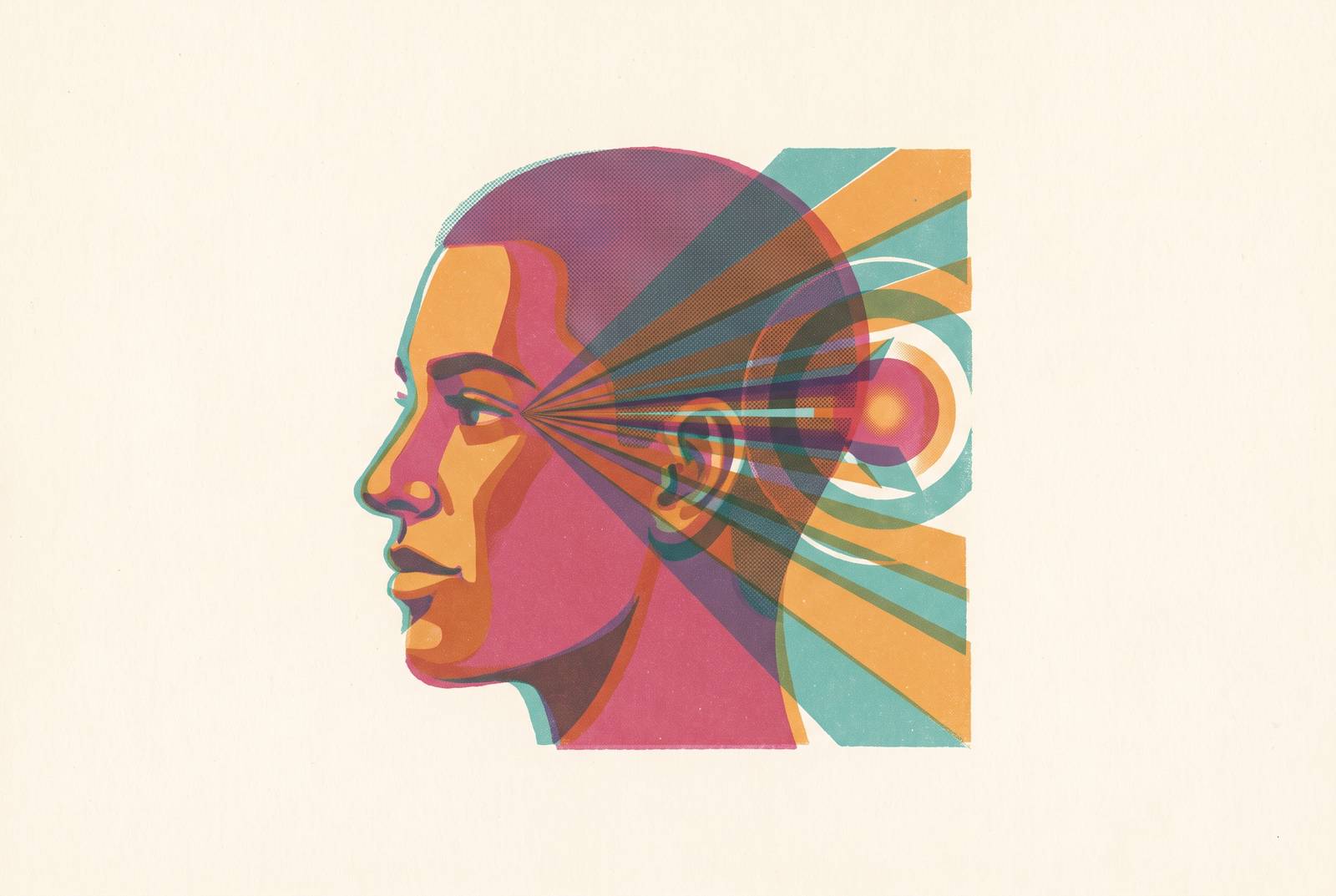
The person who cannot begin a two-line email will spend six hours building a scale model or writing code, and never notice the room has darkened. This is the contradiction that makes hyperfocus look like a glitch rather than a feature of the ADHD brain. The same individual, on the same day, demonstrates both profound inattention and total absorption.
Hyperfocus is widely treated as an anomaly, either a lucky accident or evidence that ADHD "can't be that bad." Both readings miss what is actually happening neurobiologically. The paradox framing does real harm: it feeds the suspicion that ADHD involves a deficit of willpower rather than of biological capacity, reinforcing shame rather than understanding.
The argument this piece develops is that hyperfocus is not a contradiction of ADHD. It is a predictable output of the same neural architecture that produces inattention, just under different energetic conditions. Resolving that apparent contradiction requires starting with what ADHD actually is at the level of brain circuitry.
What ADHD actually is at the level of brain circuitry
ADHD may be conceptualized as a disorder of hierarchical self-regulation, rather than simply as an attention deficit. Disturbances in neural circuitry cascade through metacognitive and emotional regulatory systems to produce the characteristic symptoms. The circuits implicated are fronto-striatal and fronto-limbic networks, including the dorsolateral prefrontal cortex, anterior cingulate cortex, amygdala, and ventral striatum, which govern cognitive control, reward processing, and emotional evaluation, per Amiri et al. in Frontiers in Psychiatry.
These are not obscure regions of the brain. The dorsolateral prefrontal cortex handles planning and the holding of goals in mind. The anterior cingulate cortex monitors conflict and directs cognitive resources. The amygdala evaluates emotional significance, while the ventral striatum anticipates reward. Together they form the machinery that decides what deserves attention and sustains that attention over time.
In ADHD, reduced prefrontal regulation of limbic structures, particularly the amygdala and ventral striatum, elevates emotional reactivity and impulsive responses. Affect is therefore not a side feature of ADHD but a core one. Emotional storms are not noise around the edges of the disorder. They are built into its neurobiology.
Executive function impairments are heterogeneous, not a single uniform failure. Reduced cognitive flexibility, impaired inhibitory control, and compromised working memory are distinct and variably present across individuals. One person may struggle to shift between tasks while another cannot suppress an impulse long enough to think it through. This heterogeneity matters for hyperfocus. Because executive function is not uniformly absent, there are conditions under which ADHD brains allocate sustained cognitive resources. The argument turns on identifying what those conditions are.
The energy model: why performance in ADHD is contingent, not broken
A 2026 theoretical framework from neurobiologist Mohammad Dawood Rahimi at Freie Universität Berlin proposes that ADHD brains do not lack the machinery for attention. Rather, the neural energy required to fuel high-demand cognitive networks is unstable, per Freie Universität Berlin. Rahimi calls this model Energy Deficit Hyperactivity Disorder (EDHD), and he is careful to specify that it is a theoretical framework, not a clinical diagnostic tool. It was published in Neuroscience & Biobehavioral Reviews, Vol. 184 (2026).
The core mechanism is straightforward. Stimulating tasks momentarily optimize the brain's energy allocation. Mundane tasks deplete limited metabolic reserves without providing the arousal feedback needed to sustain supply. Performance capacity is therefore contingent on the energetic context of the task. A brain that stalls on expense reports may operate at full capacity on a complex debugging problem, not because one task is harder and the other easier, but because one supplies the neurochemical conditions that fuel cognitive effort and the other drains them.
Mitochondrial function and related metabolism play central roles. High-demand areas responsible for planning and self-regulation do not get sustained energy reliably. Rahimi's framework synthesizes findings from neuroscience, mitochondrial biology, and computer modeling, among other domains including ATP dynamics, neuroimmune signaling, oscillatory regulation, circadian modulation, and dopaminergic function.
But what if the restlessness and impulsiveness so often treated as behavioral failures are themselves part of the regulatory system? Rahimi's model reframes them as compensatory strategies to stimulate arousal and stabilize energy. Fidgeting, moving, interrupting: these are not failures of self-control but biological adaptations an under-energized brain deploys to raise its own supply. The same logic applies to metabolic recovery. Sleep, strategic breaks, and biological cycles determine how much cognitive energy is available. Without regeneration, even simple tasks become overwhelming.
The destigmatizing implication Rahimi draws explicitly is that the question shifts from behavioral willpower to biological capacity. More than 15 million people in the US meet the diagnostic criteria of ADHD. For each of them, the model replaces a moral narrative about laziness with a metabolic narrative about resource constraints. The same brain that stalls on a boring task is not defective. It is operating under a resource constraint that stimulating conditions can relieve.
What hyperfocus actually is, and what the research shows drives it
Hyperfocus, as examined in research on hyperfocus as a cognitive phenomenon, is prolonged, intense concentration on tasks of high interest. It is not a random occurrence but a state the ADHD nervous system enters under specific conditions. Those conditions are now coming into view.
A 2026 study in the Journal of Affective Disorders Reports by Samson, Rochat, Perroud, and Debbané found that emotion reactivity fully mediates the relationship between cognitive-affective flexibility and dispositional hyperfocus in adults with ADHD, per Samson et al. in Journal of Affective Disorders Reports. That is a precise finding with substantial implications. Emotion reactivity is not merely associated with hyperfocus. It is the mechanism through which flexibility affects it. The more strongly a person's nervous system responds to emotional stimuli, the more readily they fall into prolonged, intense absorption.
The experimental detail sharpens the picture. Adults with ADHD demonstrated significantly slower switching from cognitive to affective stimuli compared to controls. Within the ADHD group, however, faster switching away from affective content was associated with higher emotion reactivity. In other words, the people who most readily disengaged from emotional material were the ones whose nervous systems reacted to it most intensely. Why exactly does this happen? Hyperfocus may function as an avoidance-based emotion regulatory behavior. The intense absorption in a task serves to suppress emotionally aversive internal states. Hyperfocus therefore has an affective function, not just a cognitive one. It is not only about what captures attention. It is about what the brain is trying to escape.
The finding that ADHD symptoms correlated positively with emotion reactivity and dispositional hyperfocus even in the control group suggests these are dimensional traits rather than categorically separate phenomena. Hyperfocus is not a binary that distinguishes ADHD from normality. It sits on a spectrum that extends into the general population.
The flow-state parallel is instructive. Deep task immersion involves suppression of self-referential thinking and emergence of sustained focus through a dynamic between the default mode network and task-positive networks. ADHD brains may enter this state in stimulating tasks precisely because of their network dynamics, not despite them. The integration is clear: hyperfocus is underpinned by both affective mechanisms, with emotion reactivity driving absorption, and energetic mechanisms, with stimulation optimizing metabolic allocation. These are not competing explanations but complementary layers of the same phenomenon.
The real trade-off: hyperfocus as a capability with costs that can be managed
Hyperfocus is a genuine cognitive capability, but it comes with real costs. Missed deadlines, neglected relationships, lost time, a body that has not moved or eaten for hours: these are not edge cases but common experiences. Adults with ADHD are three times more likely to quit their job impulsively. The same absorption that produces exceptional work can also produce exceptional neglect.
The affective mechanism cuts both ways. The same drive that produces productive hyperfocus, using intense task absorption to regulate uncomfortable emotional states, can also pull attention toward stimulating but low-priority activities at the expense of important ones. A person avoiding the anxiety of an unfinished report may find themselves six hours into reorganizing a photo library. The mechanism is identical. Only the object differs.
One might argue that the costs prove hyperfocus is pathological. But the more precise reading is that they prove something else entirely. Professionals with ADHD who possess the ability to hyperfocus when working independently face disruption when workplace environments introduce fragmented, asynchronous communication. The environmental mismatch is a key driver of whether the capability is expressed productively, per Pimenova et al. at University of Michigan.
The costs of hyperfocus are not evidence that it is dysfunctional. They are evidence that it requires environmental and structural conditions to be directed productively rather than left to fire on whatever is most stimulating at any given moment. This reframe shifts the question from "how do we fix this" to "how do we create conditions under which it activates on the right things."
How environment determines whether hyperfocus is productive or consuming
Because hyperfocus is energetically and affectively contingent, the environment is not neutral. It actively shapes when hyperfocus fires and toward what. For ADHD developers, Pimenova et al. found that unstructured workplace cues and fragmented asynchronous communication force continuous exhausting self-regulation, directly suppressing the conditions under which productive hyperfocus can emerge. Every notification, every channel-switch, every half-finished thread demands a reallocation of cognitive resources that the ADHD brain cannot casually absorb.
Copresence, working alongside another person or an AI agent, was found to support task initiation, self-regulation, and accountability during focus periods. Developers leveraged human-AI copresence to maintain accountability and cognitive flow without the social anxiety associated with human observation. That detail matters. The presence of another person helps, but the presence of another person who might judge creates its own regulatory burden. An AI agent provides the scaffolding without the social cost.
The controlled evidence is consistent. Body doubling, working alongside another person, produced faster task completion and greater perceived accuracy and sustained attention in a controlled VR study, per Ara et al. Both human and AI body doubles outperformed working alone, though participants' preferences between the two conditions diverged. The effect is not merely anecdotal. Simply having another presence in the environment changes the outcome, even when that presence is virtual.
For ADHD learners, static visuals, dense information, and long video durations in educational content posed attentional challenges. Participants in an eye-tracking study developed coping strategies to manage these demands, per Zhu et al. at University of Wisconsin-Madison. The mismatch between generic design and ADHD-specific needs is a structural problem, not a personal failing. The principle that emerges is consistent. Productive hyperfocus requires removing environmental friction before the session starts: structure, predictable cues, low-anxiety accountability, and stimulation matched to the task at hand.
Practical structures for directing hyperfocus rather than waiting for it
Because hyperfocus is reproducible when the right conditions are present, waiting for it to arrive spontaneously is the wrong strategy. The goal is to engineer those conditions deliberately. Task initiation is the first obstacle. ADHD brains face an activation energy problem, where the gap between intending to start and actually starting can be paralyzing. Breaking a goal into the smallest possible first action lowers that threshold enough to trigger engagement. The first step is not the outline. It is opening the document.
Milestones matter because overwhelming goals are a primary cause of paralysis. When the next step is concrete, small, and achievable, the reward signal fires at initiation rather than only at distant completion. Dopamine architecture follows from this logic. Unlike traditional to-do lists where the only reward arrives at completion, a system that provides immediate feedback at each micro-step mirrors the reward architecture that games use. That is the architecture ADHD brains require to sustain engagement.
Metabolic recovery is not optional. The EDHD model established that sleep, strategic breaks, and biological cycles determine available cognitive energy. Building in recovery is a strategy, not laziness. A brain running on depleted mitochondrial reserves cannot enter hyperfocus, no matter how compelling the task. Voice input removes a specific friction point. Speaking a thought is faster and bypasses the executive demand of structuring it simultaneously, which is precisely the kind of barrier that prevents ADHD brains from capturing ideas before they vanish. Small structural adjustments compound. Each one removes a threshold that might otherwise interrupt the transition into focused work.
Why reframing hyperfocus changes how ADHD people see themselves
When hyperfocus is understood as a dysfunction or a lucky accident, it becomes evidence for the imposter narrative. "I can focus when I want to, so I must just be lazy the rest of the time." That sentence has been the internal soundtrack for millions of people whose variability is biological, not moral. The EDHD model explicitly aims to destigmatize ADHD by shifting the focus from behavioral willpower to biological capacity. Rahimi frames this as a primary purpose of the framework, not a side benefit, per Freie Universität Berlin.
Understanding that hyperfocus is a predictable expression of the ADHD brain under optimal energetic and affective conditions reframes the ADHD person's relationship to their own variability. The fluctuation is biological, not moral. The person who loses six hours to a coding project and cannot start an email is not inconsistent. They are responding to different energetic conditions, and those conditions can be built.
Professionals with ADHD possess distinct cognitive strengths including the ability to hyperfocus when working independently, per Pimenova et al. This is a capability that existing workplaces and tools often fail to support, not a deficiency to be corrected. The argument the whole piece has made arrives here. ADHD brains are not broken. They are different, and the conditions that unlock their most powerful capability are knowable and buildable.
Sources
- (PDF) Hyperfocus in ADHD: A Misunderstood Cognitive Phenomenon
- Researcher Introduces Energy Deficit Hyperactivity Disorder to Reframe ADHD • Information for Media and Journalists • Freie Universität Berlin
- "It's Like Drinking from a Fire Hose": Understanding and Characterizing Video Learning Experiences for Individuals with ADHD
- Two's a Crowd: Human and AI-Based Copresence for Developers with ADHD
- You Are Not Alone: Designing Body Doubling for ADHD in Virtual Reality
- Frontiers
- Cognitive-affective flexibility in adult ADHD: Links to emotion reactivity and hyperfocus - ScienceDirect