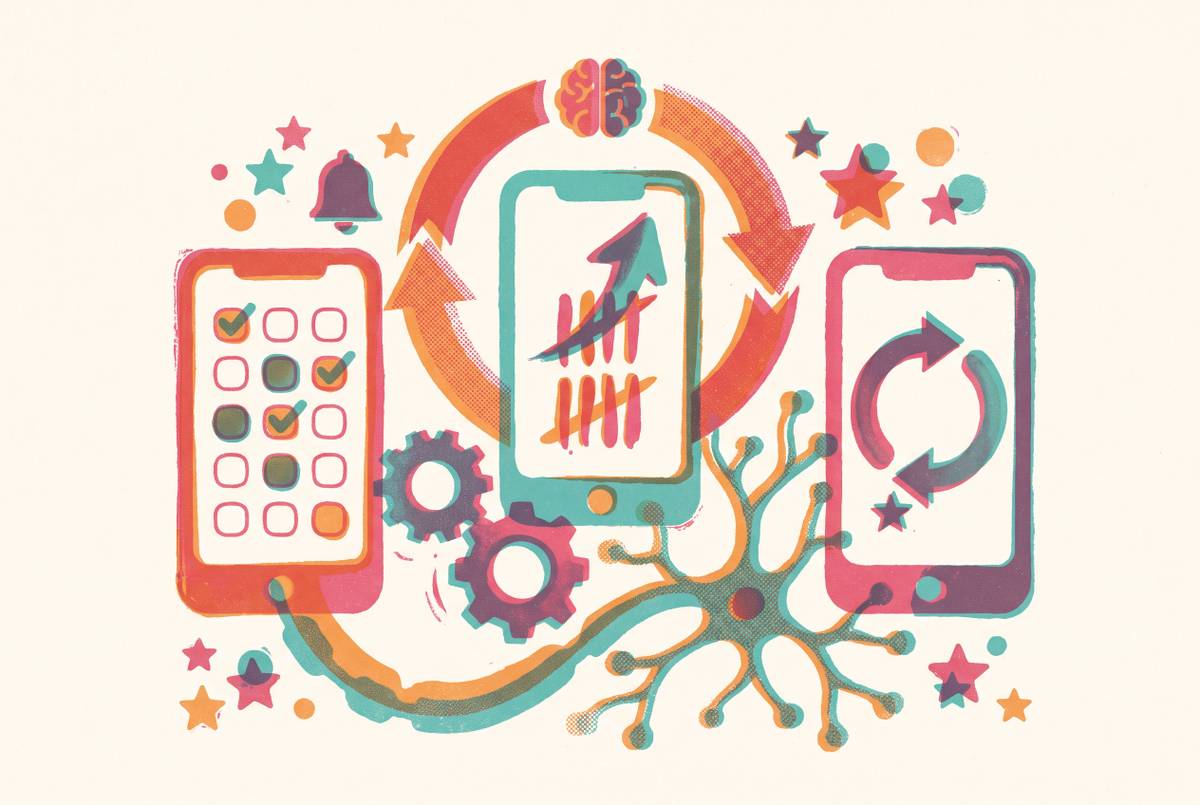
What It Actually Means for a Habit App to Be Built Around Executive Function Research
Real research-based design asks less of users whose executive function is already strained.
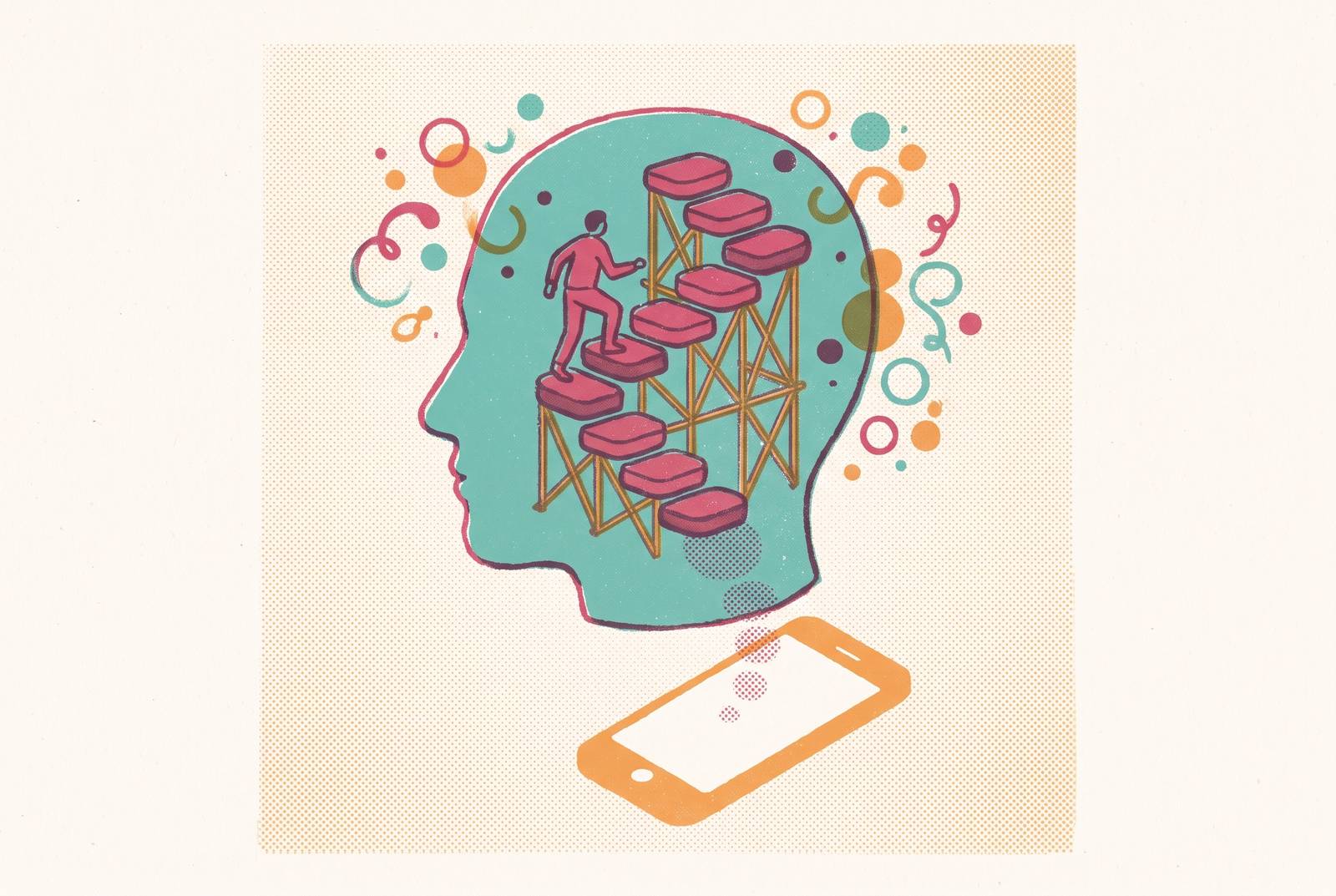
A habit app built on ADHD executive function research must make it easier to start, give immediate and non-punitive feedback, and work with differences in cognitive profiles and daily timing. Research-grounded design is a set of decisions about what the app asks of someone whose working memory, motivation, and ability to begin may already be strained.
Why habit apps keep failing ADHD users despite claiming to support executive function
The app abandoned after day three and the checklist that became a source of dread pose the same question. What if the tool demands the very abilities it promises to support? A standard habit tracker assumes that users can begin on demand, hold several steps in mind, and respond productively to streak-based pressure. Those assumptions make reliable executive function a condition of using a tool supposedly designed to support it.
Amiri et al., 2026 argue that ADHD involves disturbances in fronto-striatal and fronto-limbic networks that affect self-monitoring and top-down cognitive control, extending beyond simple inattention. An app therefore cannot assume that a reminder will solve the difficulty it points out. Knowing that a task needs doing is different from being able to organize and initiate it. Yet when the tool fails, the user may take responsibility for that failure.
What executive function actually is — and why it is not one thing
Executive function is an umbrella term for working memory, inhibitory control, cognitive flexibility, and planning. These abilities help a person keep information in mind, resist a competing response, try a different approach, and plan what to do. They do not always weaken together. An app that treats executive dysfunction as one uniform problem can therefore offer the wrong kind of help, even when its chosen intervention has a scientific rationale.
Cucu Ciuhan, 2026 describes three distinct cognitive executive profiles across ADHD presentations, namely globally reduced executive functioning, verbal-mnestic executive vulnerability, and selective executive control deficit. In plain terms, a person may struggle across these abilities, mostly with verbal information and memory, or with controlling certain responses. Only a subset of people with ADHD show objectively measurable executive function deficits. Others have difficulties driven primarily by motivational or emotional dysregulation. Inhibitory control training cannot be the right response to every one of these patterns.
Su et al., 2025 reviews EEG research showing deficiencies in Pe, P3, and N2 components during inhibition tasks in adults with ADHD. These are measurable differences in brain responses, distinct from judgments about insufficient effort. Distinguishing group-level findings from individual deficits is central to design. Supporting executive function means accommodating a range of difficulties rather than assigning every user the same cognitive exercise.
The fronto-striatal circuit and dopamine — why rewards and motivation work differently in ADHD brains
Motivation is not separate from the ability to act. Amiri and colleagues identify the dorsolateral prefrontal cortex, anterior cingulate cortex, amygdala, and ventral striatum as interconnected structures involved in cognitive control, reward processing, and emotion regulation. Their account links altered function in these circuits to abnormalities in dopaminergic signaling. Reward anticipation and task initiation are therefore part of the same design problem. An app cannot assume that knowing how a task will help in the future is enough to get someone started.
Reduced prefrontal regulation of limbic structures increases emotional reactivity and impulsive responses, allowing frustration to overwhelm the signals supporting continued work. This difficulty with persistence is a reason to examine what feedback is available while the user is struggling.
XP, progress markers, and milestone acknowledgment can show people that they are making progress when they cannot rely on internal reward signaling. Frequency is part of that logic. A completion badge comes too late to help someone who cannot get started, while feedback during effort helps at an earlier point where things can go wrong. Whether a given reward system helps people still needs to be tested.
What the gamification evidence actually shows — and where its limits are
A randomized controlled trial published in Frontiers in Education in December 2025 found that gamification significantly improved sustained attention in children with ADHD over eight weeks. Both groups did the same learning tasks, but only the intervention group got immediate feedback, rewards, and level-based challenges. That comparison supports a role for the reward structure itself. It does not establish that a consumer habit app produces lasting routines in adults, or that any collection of points and badges will work equally well.
A 2025 systematic review of reviews on digital interventions for ADHD concluded that effectiveness remained inconclusive because of low evidence quality. Most studies focused on children and adolescents, and the interventions included video games, computerized cognitive training, virtual reality, and apps. The scope of the evidence is important. Findings about attention during a learning task do not by themselves show how people build lasting habits in daily life.
Reward design also has a recognizable failure mode. When a missed day resets a long streak, the loss can feel greater than the accumulated reward ever did, turning feedback into a reason to quit. Resetting a streak after a missed day is a design choice. The evidence-informed response is frequent, non-punitive acknowledgment of effort and initiation, rather than rewards reserved for uninterrupted completion.
Why task initiation — not task completion — is the stage where ADHD executive dysfunction strikes hardest
Task paralysis describes the inability to begin even a well-understood and valued task. The intention may already be present. What fails is the transition into action, which makes a system centered entirely on recording completions poorly matched to the problem. Before asking how well an app tracks success, it helps to ask whether it makes it easier to act.
That question begins at the point of capture. If adding a task takes a lot of effort, it may never get into the system at all. For someone already struggling with initiation, the interface has introduced another task that must itself be initiated.
Goblin Tools’ Magic ToDo illustrates a different approach by using AI to break a large task into tiny, ordered subtasks, with an adjustable “spiciness” slider. The relevant comparison is decomposition versus documentation. One approach supplies a sequence that can help make starting manageable, while the other records an intention and leaves the initiation problem intact. This is an example of a design principle, leaving open whether a named tool is a clinical intervention or the best choice for every user.
Why voice-first and low-friction design address something structural, not cosmetic
Su and colleagues describe working memory difficulties that make it especially hard to use an app when it takes several steps. Opening an app, navigating, typing, categorizing, setting a date, and saving all add load before the actual task begins. Each step asks for more cognitive work. An interface that reduces these demands is addressing a known difficulty.
Voice-first capture can collapse that sequence into speaking, removing the need to remember navigation steps, type, or make formatting decisions. Its value lies in accommodating individual needs. A voice feature earns its place through the work it eliminates.
The 2026 qualitative study’s proposed “Adaptive Planning Undo Button” applies a related principle by allowing tasks to be withdrawn from a schedule without penalty. Flexibility reduces the shame-and-quit spiral associated with rigid planning systems. Behavior chaining research supplies another part of the rationale, showing how routines reduce executive load by turning effortful decisions into sequences in which one completed step signals the next. Structure can do some of the memory work.
How chronobiology and sleep interact with executive function — and why apps that ignore timing work against ADHD users
Even an accessible interface can ask for action at the wrong time. A meta-analysis finds that sleep loss impairs working memory, inhibitory control, and cognitive flexibility, the abilities needed to plan, initiate, and sustain routines. An app’s schedule can either accommodate fluctuations in capacity or add demands when that capacity is already reduced.
Research published in the Journal of Attention Disorders estimates that delayed sleep phase syndrome affects a large majority of adults with ADHD. The syndrome involves sleep timing running two or more hours later than typical. That finding challenges the standard 7 a.m. productivity assumption. A morning prompt sent to everyone assumes that people are ready to act at the same time on the clock.
The design response is flexible scheduling, chronotype-aware prompting, and non-punitive handling of variable start times. A system that penalizes late starts or requires everyone to maintain morning streaks can compound the difficulty it claims to address.
How shame accumulates when tools are built for neurotypical consistency — and what design can do about it
Missing a prompt or breaking a streak can bring up feelings too. Modesto-Lowe’s 2026 account in Academic Psychiatry describes ADHD shame as episodic and linked to moments of correction, including missed assignments, reprimands, and careless mistakes. Each incident may be small. Over time, however, repeated correction can harden into identity, so that a missed deadline feels less like a symptom and more like confirmation of a personal verdict.
The qualitative study found that formalized planning systems can become sources of shame and paralysis. This makes the tool part of the problem. Greater ADHD symptomatology is positively correlated with more internalized stigma, which is in turn linked to functional impairment, worse self-esteem, and poorer quality of life. These associations warrant attention to shame reduction as a functional goal, while leaving the causal role of any particular app unestablished.
Carr-Fanning, Lynam, Nicholson, and McGuckin, 2025 describe adult ADHD diagnosis as a meaning-making process involving both relief and grief. An explanation can bring relief while showing that years of self-blame were needless. Meldrum et al., 2026 identifies reconfiguring the self, finding the self through others, and emotional integration of the self as themes in what neurodivergent adults go through after a late diagnosis. The design implication extends beyond softer wording. Non-punitive feedback, validation, and community connection can support an interpretation of difficulty that does not turn inconsistency into personal failure.
What makes a habit app work for ADHD and executive dysfunction — and how can its research claims be evaluated?
Does it adapt to different executive function profiles, or does it treat every user as having the same deficit? Reward timing also needs checking, including whether the app acknowledges initiation and effort as they happen or waits until completion. An appealing game layer is not enough if its feedback arrives after the point where action breaks down.
Does adding an intention to the app leave less to think through, or add more steps before the task can begin? Does the app help decompose the task, and can its timing follow the user? Recovery is equally revealing. The response to a missed day shows whether flexibility is built into the system or offered only until consistency falters.
These questions support comparison by need, but they do not justify a scientifically ranked shortlist of consumer apps. The randomized trial literature remains thin and primarily pediatric, and the evidence does not establish consumer habit apps as clinical treatments. Research-grounded design is a reasoned standard for judging how a tool responds to known difficulties. The strongest claim an app can make is therefore one its actual interactions sustain, including at the moment a user struggles to start, needs to change plans, or returns after an absence.