How Dopamine Forecasting Replaces Willpower When Building ADHD Habits
Anticipating rewards before you start builds motivation that willpower alone cannot replace.
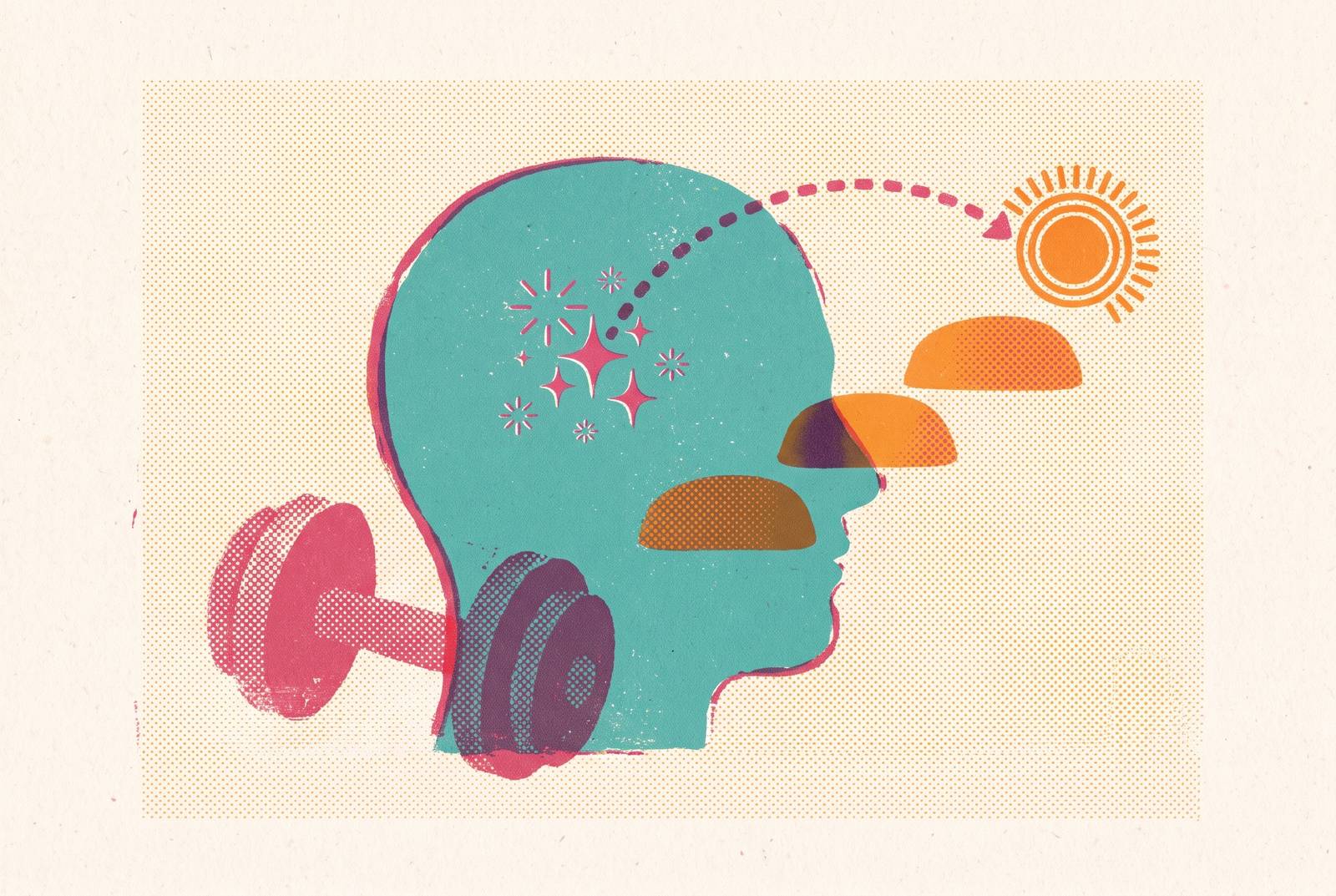
ADHD habit building often depends less on willpower than on making a reward feel available before effort begins. Dopamine forecasting is a nonclinical name for designing that anticipation through immediate, concrete, varied rewards. For habits and habit apps, the useful question is not just whether they record completion, but whether they give the brain a reason to start.
Why the ADHD brain fails to anticipate reward, and what that means for willpower
A task can feel important and still go unstarted. You may care about exercising, understand the value of reading, and know exactly what the morning routine involves. How can commitment and inaction exist together? The distinction lies partly between valuing an outcome and anticipating its reward strongly enough to begin.
Dopamine helps connect that prediction to action. Its role is not simply to deliver pleasure when something good happens. Dopamine signaling also responds to rewards that are expected, helping build the drive to act before the work starts. Plichta and Scheres’s 2014 research in Neuroscience and Biobehavioral Reviews examined reduced ventral-striatal responsiveness during reward anticipation in ADHD. This places the emphasis on the approach to reward, rather than treating difficulty starting as evidence that the outcome is unwanted.
The popular description of ADHD as “low dopamine” is therefore too simple. The more precise picture involves differences in dopamine transport, receptor distribution, and signaling in particular brain regions. Tonic signaling refers to background activity, while phasic signaling refers to brief changes. Where the tonic baseline is reduced, a larger phasic spike may be needed to reach a signaling threshold, making high-stimulation input more engaging than an ordinary routine. ADHD also involves norepinephrine dysregulation, so dopamine is one part of a more complex picture.
Why willpower cannot substitute for a missing anticipatory signal
Willpower is not an independent supply of motivation. Effort and self-control depend on prefrontal dopamine circuits that also function differently in ADHD. Asking someone to rely on willpower alone asks those same circuits to work through the very conditions that make effort hard. A person can care deeply and still lack a strong enough internal signal to act.
The comparison with telling someone with insufficient insulin to “just process glucose” illustrates the category error. It is not a claim that the conditions are identical. Rather, it separates a biological process from a moral judgment about whether someone wants that process to work. “Try harder” offers no explanation for how the missing support will appear. It asks for more effort when the ability to make that effort is already under strain.
Guilt, consequences, and deadline stress add urgency or importance, but they do not necessarily make a task interesting, achievable, or freely chosen. Self-determination theory offers another way to look at this through autonomy, competence, and relatedness. These are needs for genuine choice, a sense of capability, and connection to others. From that perspective, conditions around a task can supply engagement that another reminder of its importance cannot.
How the ADHD reward system makes standard habit loops collapse over time
Starting a new routine is only one challenge. A new tracker or a format someone has not tried may bring enough novelty to make them want to act at first. As that novelty fades, however, the same routine can stop producing the engagement that helped launch it. A successful beginning may depend on conditions that the habit system does not maintain.
Standard habit advice often assumes that repetition gradually reduces the need for conscious effort. This involves a transfer from reward-related processing in the ventral striatum toward habit-related processing in the dorsal striatum. A 2025 study published in Neuropsychology Review reported that the ADHD prefrontal cortex maintained significantly more involvement in behaviors treated as automatic than it did in controls. A routine may therefore continue to demand deliberate attention even after months of repetition.
Reward timing adds another difficulty to that continuing effort. The same study reported significantly less activation in reward-anticipation regions when rewards were delayed. A system built around future benefits may thus do little to help when it is time to act. Nine-day streaks and abandoned trackers can fit this pattern without proving that a person does not care. Renewing immediate engagement requires more than assuming that repetition will eventually make rewards unnecessary.
What dopamine forecasting is and how it reconstructs the anticipatory signal artificially
Dopamine forecasting means deliberately making a reward vivid and near enough to anticipate before starting a task. It is not a clinical term. Here, it names a design approach drawn from the neuroscience of reward anticipation, rather than an established treatment or a measurement of dopamine release. Its central proposal is that changing what a person can predict about a task can change their readiness to begin.
The timing distinguishes forecasting from a reward added afterward. A vague promise of feeling satisfied someday leaves the person with work to do now and a benefit to wait for. A concrete reward available during the activity gives the brain something more immediate to predict. The reward itself need not arrive before the task. What must arrive first is a credible expectation of something engaging, pleasant, or achievable.
Three design principles follow, namely immediacy, concreteness, and variability. Immediacy brings the expected benefit out of the distant future and into what the person is doing now. Concreteness makes that benefit specific enough to imagine, such as a sensory experience or contact with another person. Variability introduces detectable change as familiarity reduces engagement. Together, these principles work with the need for stimulation instead of treating that need as an obstacle to discipline.
Self-determination theory gives this approach a broader foundation. A forecast can promise genuine choice, an achievable success, or connection as rewards in their own right. That distinction is important because engagement need not depend on making every routine more elaborate. Sometimes a smaller task or a more autonomous way of doing it changes what the task seems to offer. The proposed accommodation is structural, although its usefulness for an individual habit should not be confused with proof of a particular dopamine response.
Practical techniques for building a dopamine forecast before a task begins
In practice, the approach means designing anticipation before attempting the habit. One option is to plan a small “system refresh” at day three, when the early novelty may already be fading. The goal stays the same, while the location, playlist, or format changes. The refresh can be tiny. Its purpose is to make the execution detectably different.
Sensory pairings can make the expected reward more concrete. A specific tea reserved for the morning routine or a particular podcast available only during exercise gives the activity a recognizable attraction. Immediate progress visualization works in a similar way, with physical objects that are moved or app animations that play when a task is done. Although that feedback follows an action, expecting it can help make the next completion feel rewarding and close.
A minimum viable habit changes the forecast of success. The exercise habit can begin with putting on workout clothes, while the reading habit can begin with opening the book. These versions are deliberately smaller than the ideal routine. Their usefulness lies in presenting a clear, achievable action.
A three-item morning list is another compact format, though the number alone does not create anticipation. Its entries still need to offer something concrete and achievable. Body doubling offers connection by having someone do a task alongside another person. Where genuine choice is possible, autonomy-supportive framing can also change engagement without changing the task itself. These are options for altering the conditions of action.
Which ADHD habit apps use gamification to make routines stick?
Gamification turns these individual techniques into a designed system. Feedback that comes right away, rewards a person can see, and challenges that change give them progress to look forward to again and again. In this sense, the game layer is not merely decoration. It can supply the structure missing from a tracker that only records whether a task happened. That mechanism is relevant to ADHD, although evidence for gamification does not establish that every gamified app works equally well.
A randomized trial in Frontiers in Education assigned eighty children aged 6–12 with clinically diagnosed ADHD to a gamified intervention or a control group. Both groups did the same learning tasks over eight weeks. Only the intervention group received immediate feedback, rewards, and level-based challenges. The gamified group showed significantly better attention and academic performance. This supports those design elements in that setting, but it does not establish which commercial app is best for adult habit building.
Habitica is the clearest fit among these options for people seeking role-playing rewards and social accountability. Users create and customize characters, complete tasks to earn experience points and rewards, and team up with friends. Its visible rewards make completion something to anticipate, while its social features add connection. The fit is specific. It provides a game-shaped reason to engage rather than relying solely on the importance of the underlying task.
Todoist’s Karma system is a better fit for someone who wants light gamification in a standard task manager. It gives points for finishing tasks and keeping streaks, so people can see feedback without role-playing taking center stage. Motion addresses a different bottleneck by automatically scheduling entered tasks and removing the decision about when to work on them. That is planning support.
Why shame and identity damage compound the anticipation gap — and how forecasting addresses both
When advice treats consistency as proof of character, each abandoned routine can seem to confirm an identity of unreliability. The neurological distinction gets lost. A person is judged by the outcome without accounting for the conditions required to produce it. Understanding anticipation offers a more accurate explanation for those experiences than indifference or laziness.
A 2026 systematic review in Frontiers in Psychiatry found that greater ADHD symptomatology correlated with higher internalized stigma. Higher internalized stigma was, in turn, linked to poorer self-esteem, functional impairment, and poorer quality of life. These associations give reason to treat shame as a potentially harmful incentive, while leaving the causal relationships unresolved. The review also looked at perceived, public, and structural stigma, showing how self-blame fits into a wider social setting.
Mylett et al.’s 2026 research found that a large majority of adults with ADHD reported camouflaging behaviors, with costs including exhaustion, anxiety, depression, and identity disturbance. Carr-Fanning, Lynam, Nicholson, and McGuckin’s 2025 research described adult diagnosis as a meaning-making process involving both relief and grief. An explanation can be welcome and painful. Relief at understanding can coexist with grief for years interpreted through unnecessary self-blame.
A randomized feasibility study of the ADAPT framework offers a related change in emphasis. It centered autonomy support and the needs for competence and relatedness. The study evaluated feasibility and preliminary effects involving motivation, self-regulation, and quality of life. The study reflects clinical interest in approaches that work with ADHD needs, while leaving dopamine forecasting unproven as a treatment.
Changing the conditions offers practical support. A small action with an immediate, credible reward offers a different experience from another demand to demonstrate discipline. Forecasting cannot promise to undo years of shame, but it drops the idea that trouble starting proves a character flaw. Over time, achievable wins can support a different identity. The person is no longer the problem the habit system is trying to correct.