Rated by ADHD Adults Who Freeze Not Productivity Reviewers Who Do Not
Task freeze needs apps that lower the cost of starting.

An ADHD app for task paralysis and executive dysfunction needs to make starting easier as well as make task management faster. The strongest design criteria are low-friction entry, immediate reward, visible or audible time, and support that does not turn difficulty into shame. Those criteria explain why a tool that productivity reviewers praise can still fail an adult who knows what needs doing but cannot start.
Why productivity tools keep failing ADHD adults — and why it is not random
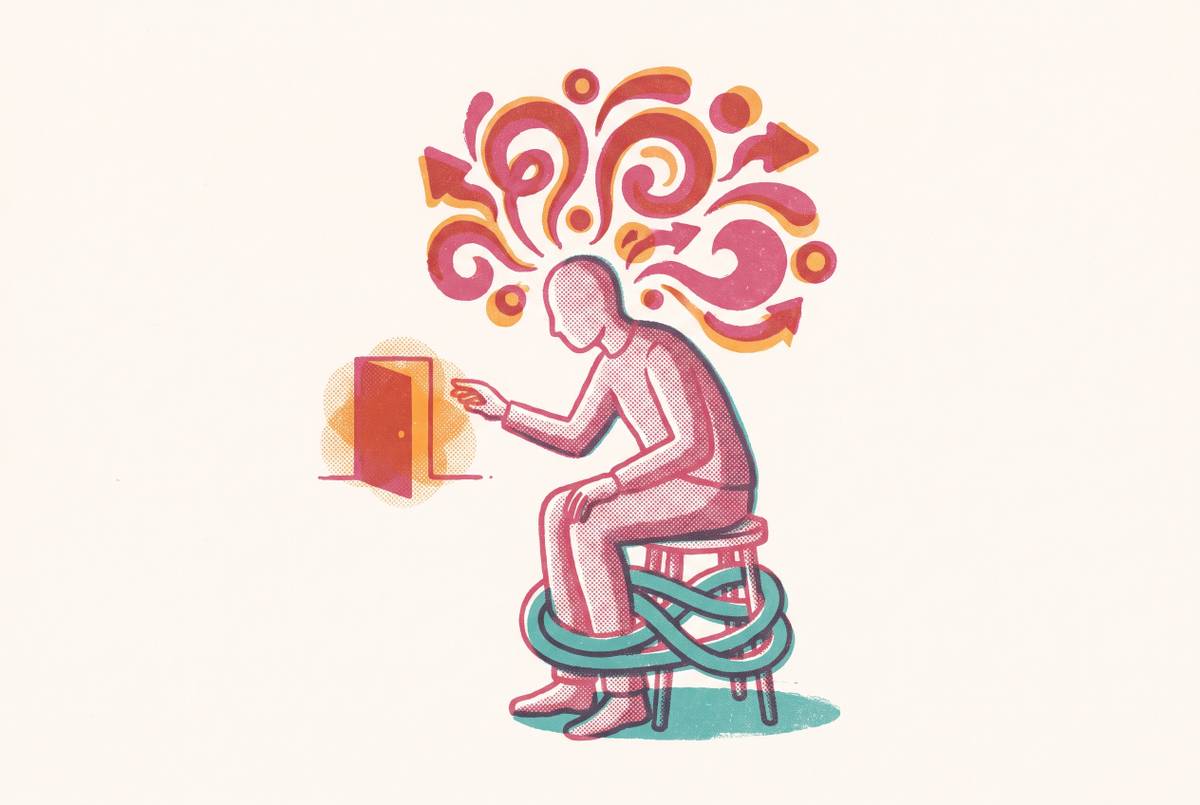
Productivity reviews commonly reward speed, flexibility, and feature depth. Those measures describe how efficiently someone can organize and move work once they are already able to act. But what do they reveal about a tool’s usefulness before that point, when the user cannot initiate the first task? Throughput measures start on the wrong side of that barrier. What feels like a small bother to a reviewer who does not have task freeze may be what keeps an ADHD adult from starting at all.
Deshmukh’s 2025 framework argues that conventional productivity tools fall short of supporting the cognitive variability and overload patterns of neurodivergent professionals. It contrasts compliance and control with co-regulation, meaning support that responds to the user’s changing cognitive state. That distinction changes what counts as a successful design. A tool’s usefulness depends on both how much it can do and how much it requires from someone before it helps.
What is actually happening in the ADHD brain when it freezes
Executive function includes planning, starting tasks, working memory, and inhibitory control, the ability to restrain an impulse or response. These skills depend largely on the prefrontal cortex, which operates less efficiently in ADHD. That reduced efficiency is called prefrontal hypofunctioning. Task freeze belongs in this account of brain function. Knowing the next step and being able to activate it are different capacities.
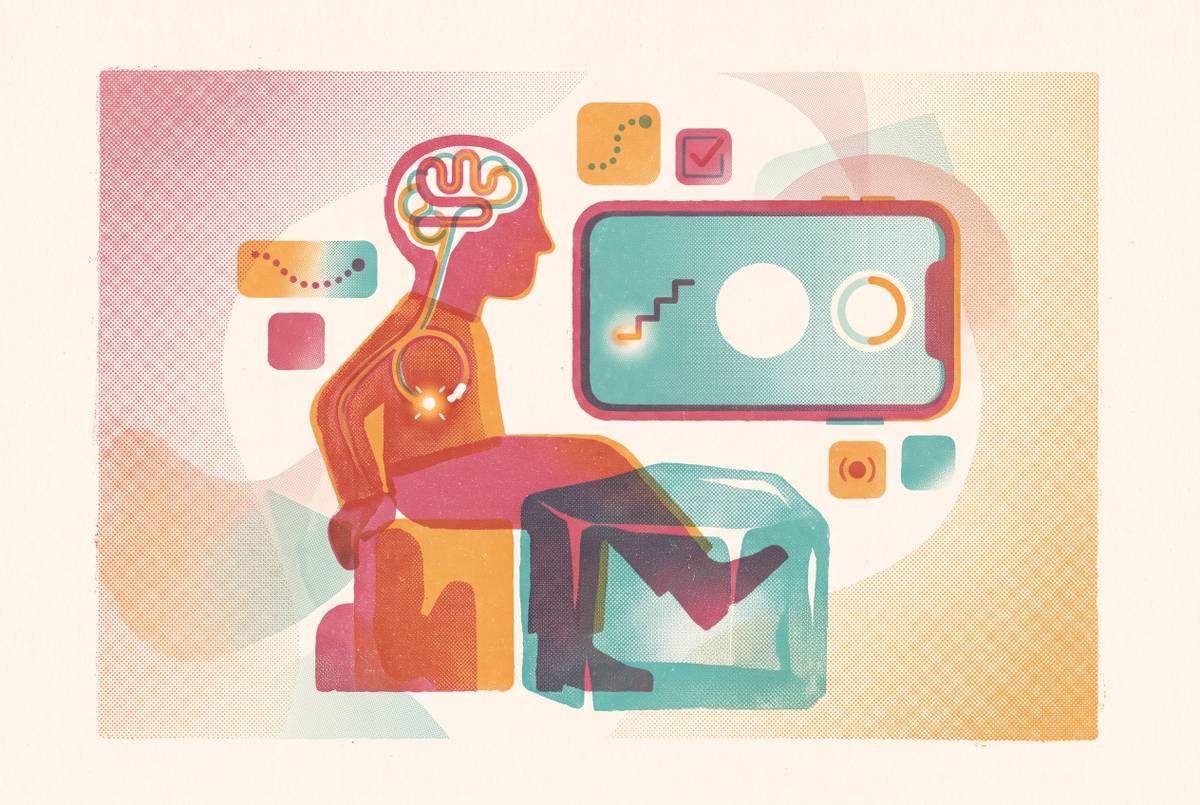
A 2025 systematic review of EEG studies in Frontiers in Neuroscience reports elevated resting theta power, a pattern of electrical brain activity consistent with an under-aroused nervous system. It also reports reduced strength in neural signals associated with inhibitory control and sustained attention. These are group-level findings. They still help explain why knowing that something matters may not be enough to act. Dopamine regulation also shapes whether the reward someone expects makes a task feel worth starting, so an interesting project can draw them in while a necessary but unstimulating task does not.
The difficulty can be hard to see from outside. Tan et al.’s 2025 scoping review notes that adult hyperactivity often becomes internal restlessness or mental activity, while distractibility, poor task management, and forgetfulness remain prominent. An outwardly still person may therefore be struggling. Russell Barkley’s foundational framing locates ADHD in self-regulation and behavioral inhibition as well as attention. Seen this way, external cues and deadlines can give people the help they need without showing that they lack independence.
How widespread task freeze actually is among ADHD adults
If initiation problems recur across work and personal life, a design that ignores them is missing a central use case. Decision paralysis makes the problem broader still, because choosing what to do can become a barrier before the task itself begins.
A 2025 peer-reviewed study in European Psychiatry found that 82% of ADHD participants reported frequent difficulties with decision-making. More than half said decision paralysis significantly affected their work performance, and a substantial share experienced it daily. Most participants also attributed tangible missed opportunities to paralysis, with resulting regret and frustration. Those findings describe the study’s participants rather than establish a prevalence estimate for every ADHD adult.
The cost extends beyond unfinished work. Visible failures can attract criticism, which can harden into the belief that the person is fundamentally unreliable. Anxiety then worsens the executive functions needed to recover, leaving more room for further failures. Shame becomes part of the obstacle itself. A tool that responds to this cycle with escalating pressure may therefore intensify the condition it promises to relieve.
Why pressure-based and discipline-based tools backfire specifically for ADHD
Discipline-based tools often assume that the user can begin but needs a stronger reason to do so. Task paralysis challenges that assumption. When activation is missing, more demands can add cognitive overload without helping the person act. Boston Neurobehavioral’s 2026 overview describes ADHD procrastination as a neurobiological response in which insufficient reward or urgency fails to generate an activation signal. The useful distinction is between choosing to postpone and being unable to mobilize, rather than treating every delay as evidence of the same problem.
Yet pressure sometimes helps people with ADHD. Does that contradict the argument? A timer or deadline can create urgency, one of the signals that supports activation when importance alone does not. Shame-based external pressure, by contrast, makes difficulty feel like failure and adds emotional strain. The objection is therefore not to all structure or consequences, but to designs that confuse a helpful cue with a demand to prove commitment.
Morning routines expose this mismatch especially clearly. Low stimulation and low urgency can coincide with limited executive-function reserves, leaving little support for getting started. ADHD also co-occurs at high rates with Delayed Sleep Phase Syndrome, in which sleep timing is shifted later. Early rising can consequently be a neurological challenge. Advice or tools built around an early-riser ideal can place the user at a disadvantage before the first task even appears.
What app helps when you cannot start a task — and what does ADHD-specific design require?
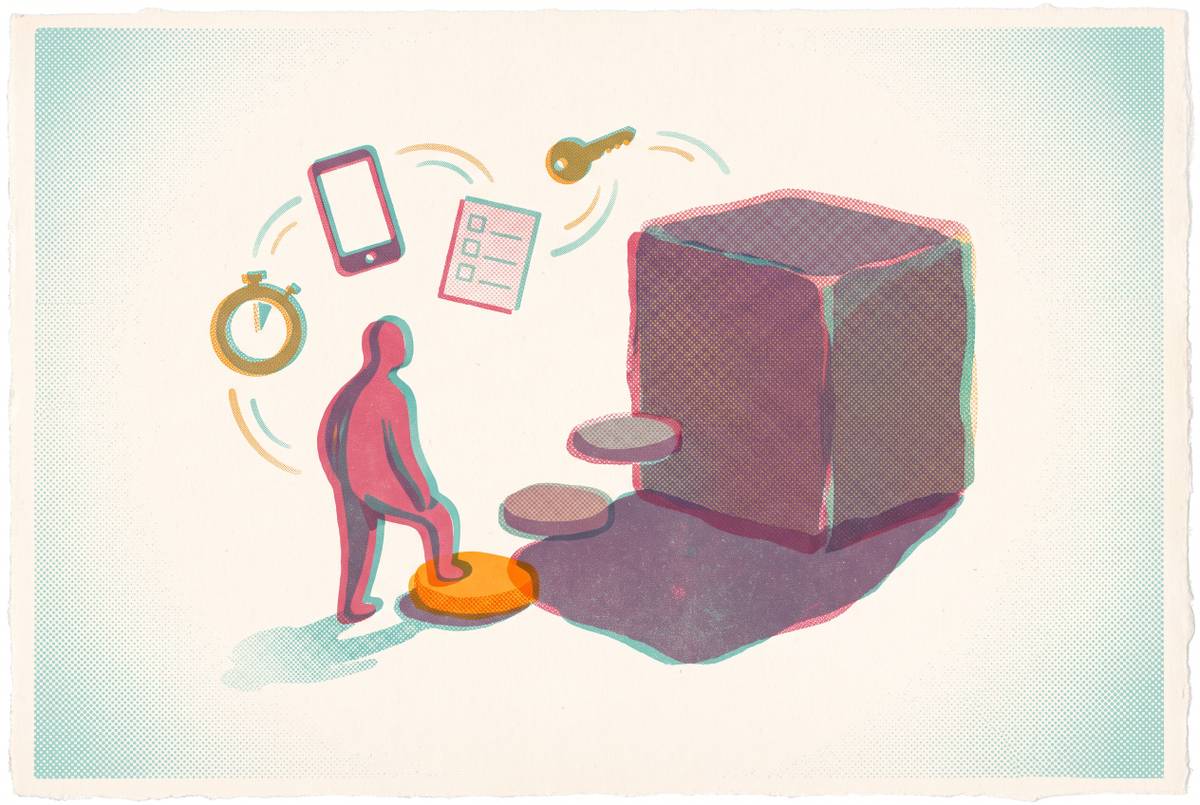
Low-friction entry is the first design requirement. An app that demands navigation, configuration, or extended typing before offering help consumes the same initiation capacity the user needs it to support. Entry needs to take seconds. This follows directly from the distinction between intention and activation.
Time also needs to become external and concrete. Time blindness, including chronic underestimation of duration, makes an internal sense of passing time an unreliable guide. Visible or audible timers reduce dependence on that sense, while structured planning connects a task to when it will happen. A to-do list names work without necessarily locating it in time. Time blocking sets that missing appointment so the person has one less thing to decide later.
The system also needs a version that people can use when activation is low. A reduced-demand routine treats a difficult day as an expected condition. Laying out clothes, a bag, and keys the night before is one example of moving friction away from a morning with limited reserves. Dopamine-first sequencing addresses a different obstacle by alternating high-interest and low-interest tasks rather than demanding an uninterrupted grind through the least engaging work.
Why gamification is a clinical intervention, not a novelty feature
Gamification addresses the reward side of that design problem. Points, rewards, and progress bars can make evidence of progress immediate. The timing is the central design choice. Feedback that arrives at the moment of action targets a different need from a promise that sustained discipline will eventually pay off.
Brain imaging research has found reduced dopamine receptor availability in adults with ADHD in reward-related regions, including the midbrain and nucleus accumbens. The notes link those findings to lower motivation, providing a rationale for designs that make reward concrete. But a plausible mechanism is not proof of every app’s effectiveness. The clinical claim needs that boundary. Gamification can be designed as an intervention on reward and engagement without every points system becoming a validated treatment.
ClinicalTrials.gov lists a registered trial of Recollect the Game, a gamified intervention targeting executive functioning deficits in adults with ADHD. That registration shows that the approach is being investigated in formal clinical research. It does not, by itself, establish benefit. What, then, of the objection that adult responsibilities should not need badges? It confuses the importance of a task with the signal needed to start it. Immediate feedback addresses the latter, without suggesting that the responsibility itself is a game.
What the evidence says about voice interaction and body doubling as low-friction supports
Opening an app, finding the right form, and typing can each introduce a point where initiation breaks down. Voice-first entry removes those steps from the interaction. A voice timer can also announce remaining time at customizable intervals, giving external cues for starting, switching, and stopping. A voice timer helps less through the novelty of conversation than by giving the user less to keep in mind and track on their own.
Body doubling means working while another person is there. Eagle et al.’s 2024 survey of 220 mostly neurodivergent adults found that the large majority reported being more likely to finish a task with someone present. That is meaningful reported experience, but it is not the same as a controlled measure of performance. The distinction is worth preserving.
A 2025 controlled reading-task study of a small group of adults found no statistically significant performance difference between a silent body double and working alone. Yet roughly three in five participants preferred working with the double. Preference does not establish improved performance, just as the performance result does not explain away preference. The benefit may involve emotional regulation or feeling supported enough to engage. That possibility calls for a broader account of usefulness.
Deshmukh’s framework proposes a voice-enabled assistant that runs fully on-device and responds to patterns such as tab use, inactivity, and application focus. The non-intrusive cues it proposes include digital body doubling to help with emotional overwhelm and action initiation. This is still a proposal, with no proof that the product works. Evidence that having another person there helps does not by itself show that a digital double would help in the same way. The shared design aim is clear, however, which is to supply support without making access to that support another source of overload.
How shame and identity interact with tool failure — and why it matters for which tools you choose
For many ADHD adults, the inner critic repeats what they heard after they forgot appointments, missed deadlines, or got distracted in conversations. Repeated difficulty has been read as a personal failing rather than a difference in how action and attention are regulated. Another app promising transformation can inherit that burden. When it becomes unusable, abandonment may turn a question of fit into apparent evidence against the person.
As the earlier shame cycle shows, anxiety and self-criticism can weaken the very functions needed to try again. Tool choice therefore reaches beyond speed or organization into wellbeing.
Small, consistent wins can offer a different experience. A system that people can still use on difficult days can help them without asking them to become someone else first. Its design can acknowledge freeze without turning it into an identity, and progress without making discipline the measure of worth. That leaves room for a different relationship with productivity. The goal is not to perform the habits of someone who starts easily, but to have support built for how this brain actually begins.
Sources
- How to Improve Executive Function in ADHD Adults
- Preliminary Results of a Scoping Review on Assistive Technologies for Adults with ADHD
- A Systems and AI-Based Human-in-the-Loop Framework ...
- Frontiers
- Recollect the Game: A Novel Treatment for Executive Functioning Deficits in Adults With ADHD
- ADHD in Adulthood: Clinical Presentation, Comorbidities, and Treatment Perspectives