Why Standard Habit Advice Fails ADHD Brains
ADHD requires habit systems built on external cues and immediate rewards, not willpower alone.
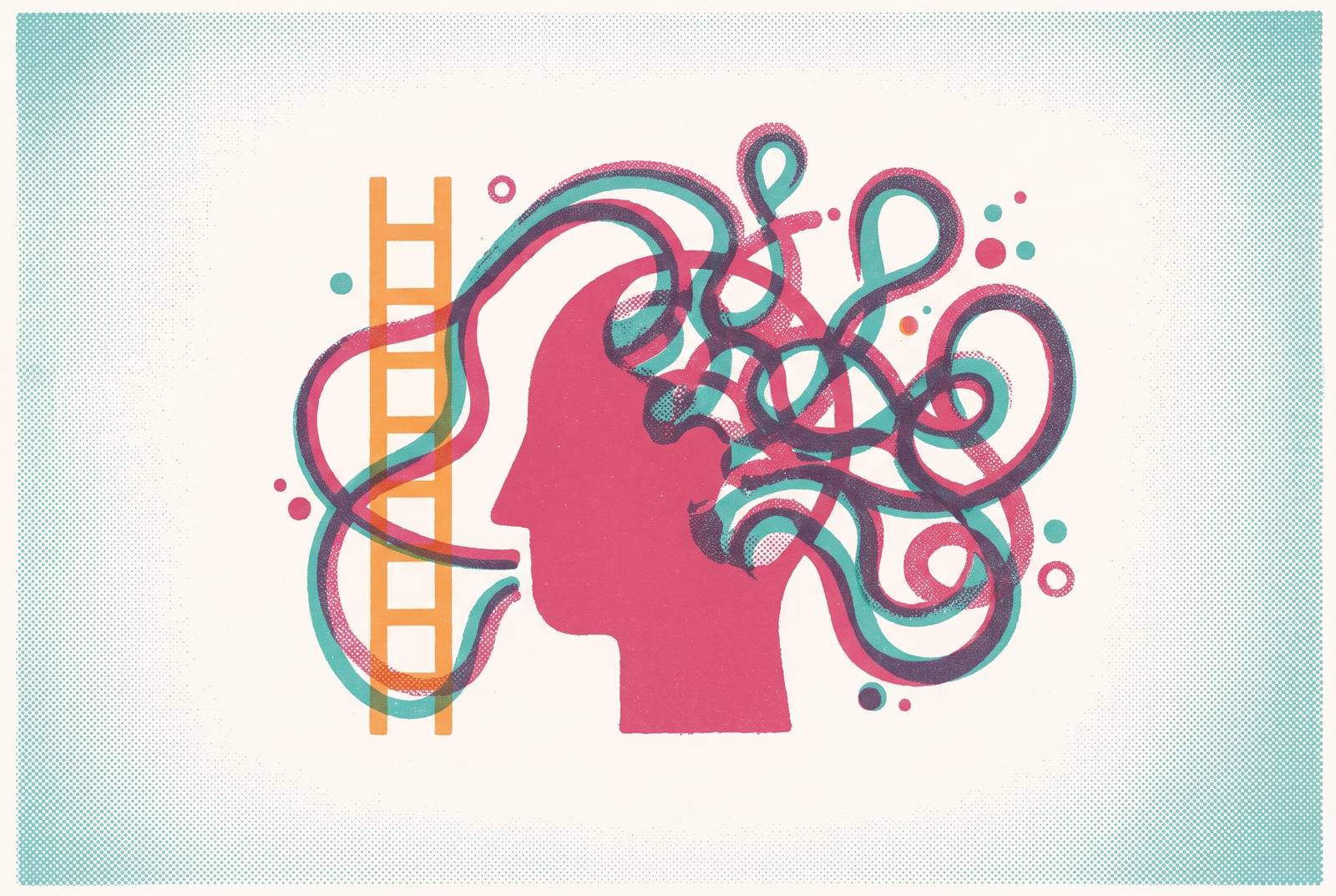
Standard habit advice fails ADHD brains when it assumes that working memory can be relied on, task initiation is easy, and future rewards have a steady pull. A better approach puts those supports in the world around the person, with clear cues, small steps to start with, and feedback that comes right away. For ADHD habit-building apps, the useful question is not how many habits they track, but which executive function barrier they help remove.
What executive function actually is, and why ADHD disrupts it structurally
Executive function is the umbrella term for the processes that hold a goal in mind and organise behaviour toward it. Adele Diamond’s model has three core parts, which are working memory, inhibition, and cognitive flexibility. Working memory holds and manipulates information, inhibition helps stop or override impulses, and cognitive flexibility allows a shift between tasks or perspectives. Task initiation, planning, time management, and emotional control build on these foundations.
ADHD involves a maturational lag in this system. Russell Barkley describes ADHD as fundamentally a disorder of executive function and self-regulation. A 2025 systematic review in Frontiers in Neuroscience found consistent EEG markers of impaired inhibitory control, working memory, and sustained attention in adults with ADHD. The difficulties therefore extend beyond people’s reports of struggling. These difficulties have measurable biological correlates, though they can still differ from person to person.
The distinction between “cool” and “hot” executive function helps connect these processes to daily habits. Cool executive function deals with neutral, abstract problems, while hot executive function deals with situations that involve feelings or rewards. ADHD disrupts both, but daily routines often expose the latter because action competes with boredom, frustration, or something more interesting. Knowing the plan is only part of executing it. Whether the brain finds enough reward in acting now brings dopamine into the explanation.
Why the ADHD brain's reward system makes routine feel impossible
Research published in Molecular Psychiatry found decreased dopamine receptor and transporter availability in motivation and reward regions in adults with ADHD. This points to a biological difference in the system that helps reinforce behaviour. A future benefit may be understood without generating enough motivation to begin the action that produces it. The gap between importance and activation helps explain why a routine can remain difficult even when its purpose is clear.
The phrase “interest-based nervous system” describes this uneven access to action. Executive resources are allocated partly through the expected reward of a task, so interest, novelty, urgency, and personal connection can change the calculation. Importance alone may not do so. Sensitivity to context helps explain how someone can struggle to begin a dull task yet work for hours on an interesting one.
“Boring task paralysis” is therefore better understood through reward and initiation than through accusations of laziness. That explanation keeps the task necessary while shifting attention from whether a person wants the outcome enough to whether the immediate conditions support action. If low stimulation is part of the barrier, an approach that supplies stimulation addresses something that an instruction to repeat the task leaves untouched.
What standard habit rules actually assume about the brain
“Just be consistent” assumes that the person can repeatedly access the processes needed to start. “Remember your why” assumes that a future payoff can be held in working memory and used to guide present behaviour. Rules such as “21 days to a habit” imply a predictable route from repetition to automaticity. Those assumptions are not dependable foundations for ADHD. Advice built on them predictably fails when it demands the very capacities that need support.
The mismatch becomes clearer when goal-directed behaviour is distinguished from cue-driven habit. ADHD brains may lean more heavily on the cue-driven system, where a fixed cue triggers an action, while struggling with the goal-directed system that updates or adapts behaviour. A routine can therefore work under familiar conditions and unravel when circumstances change. What looks like lost commitment may instead be the loss of a reliable trigger.
Repetition can still help, but it does not promise independence from external support. ADHD brains may require more repetitions to form habits and may continue to need reminders, timers, and visual cues. Focus and energy can also change from day to day. When advice treats wanting the outcome as sufficient, it mistakes a design problem for a character problem.
How repeated failure with generic systems compounds into shame
Many adults with ADHD approach a new system with years of internalized failure from earlier attempts. Children with ADHD are more frequently criticized by parents, excluded by peers, and corrected by teachers, creating a history in which difficulty is repeatedly interpreted as insufficient effort. Generic habit advice can reinforce that interpretation when it fails. Another abandoned routine becomes more than an unfinished task. It can seem to confirm an old judgment about the person attempting it.
Rejection Sensitive Dysphoria describes extreme sensitivity to perceived or actual criticism and is closely associated with ADHD. Rowney-Smith, Sutton, Quadt & Eccles’s 2026 qualitative study in PLOS ONE found that the undergraduate participants with ADHD all agreed that anticipated rejection elicited more dysphoria than rejection itself. That finding is consistent with a sensitization model in which earlier adverse experiences amplify later emotional reactions. Its scope is limited to the undergraduate participants with ADHD. Even so, it helps explain why the expectation of failing again can itself become distressing.
Shame also adds to cognitive load when executive resources are already stretched. The next attempt therefore begins with an additional burden. This is why validation alone is not enough. A different approach must reduce the demands that caused the breakdown.
What actually works: strategies built around executive function realities
Implementation intentions link a specific cue to a specific action before the moment of action arrives. Research on executive function tasks shows that this kind of “if-then” planning can bring ADHD performance to neurotypical levels. One example is “if it is 8am and I sit down, then I open my task list”. The cue does some of the initiating work. This reduces reliance on remembering a goal and deciding what to do while already managing other demands.
A single cue, though, can be missed when working memory has too much to hold. Two or three environmental anchors give the habit another route to activation if one is missed. Task chunking addresses the next barrier by shrinking what beginning requires. “Put three items away” is more approachable than “clean the house” and can take under two minutes. Its immediate sense of accomplishment also supplies feedback before the larger task is finished.
Other strategies change the reward conditions. Temptation bundling pairs a stimulating activity with a low-stimulation task, importing some of the reward the task lacks. A timer used as a race introduces urgency, with adrenaline helping drive action. Body doubling provides a social anchor through working with another person, in person or virtually.
Morning routines apply the same logic to planning and memory. The adaptation is ruthless simplification to three non-negotiable tasks, with a brief brain dump to clear working memory before the day begins. A meta-analysis of 658 participants across fifteen randomized controlled trials found that children and adolescents with ADHD who took part in long-term structured exercise had moderate gains in all three core domains. Open-skill activities requiring responses to changing situations were particularly beneficial, with the largest gains associated with sessions longer than an hour and sufficiently extended programs. Those findings are not direct evidence for an adult habit app.
Why gamification is a neurologically grounded tool, not a gimmick
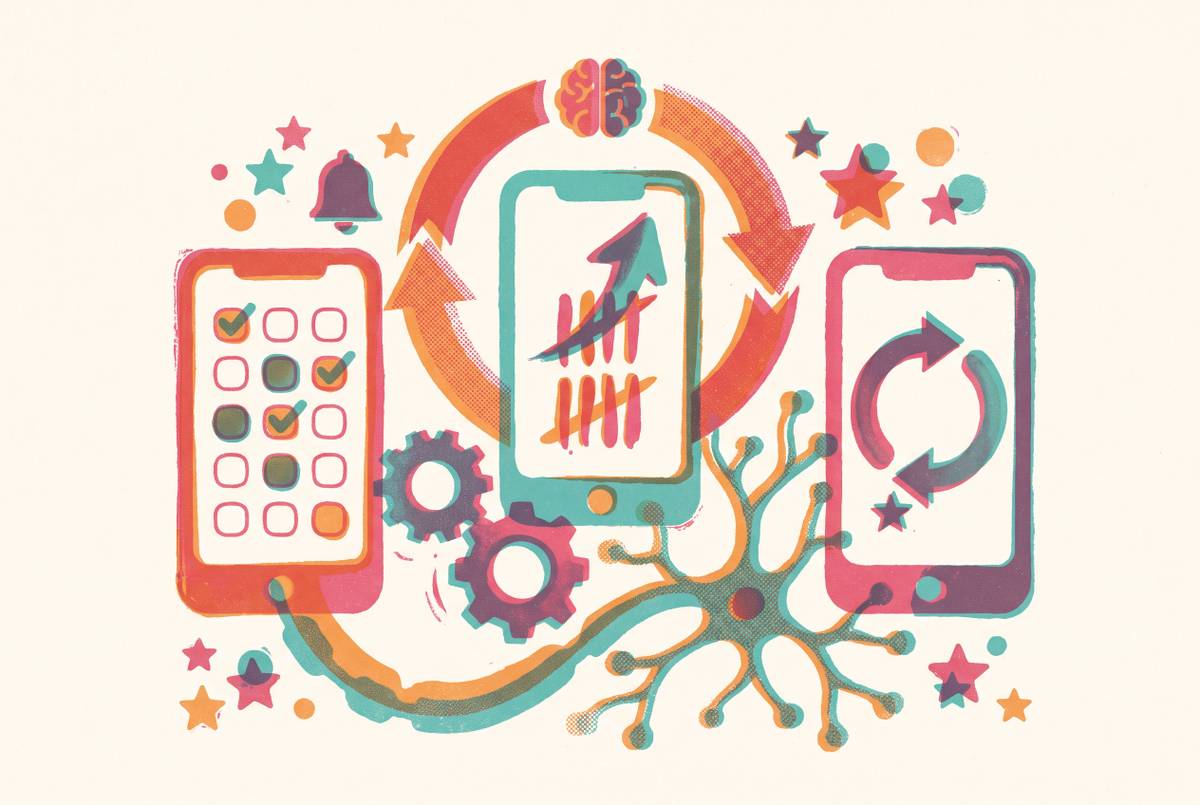
Gamification targets the timing of reinforcement, addressing the difficulty of acting on delayed rewards described earlier. XP, points, levels, and streaks make effort visible before the distant completion of a goal. The feedback arrives close to the action. For a person who struggles to act on delayed rewards, that is a functional change.
Novelty and variable reward schedules are well-documented activators of dopamine release. Gamified systems use these effects to make ordinary actions more engaging. This gives gamification a neurological rationale. It does not establish that every points system will help every user, or that adding game elements proves an app’s effectiveness.
Does it provide an immediate reward for effort that would otherwise receive little feedback? Or is the person still expected to sustain action mainly through a future payoff? Gamification earns its place when it supports the action.
What habit-building tools actually help with ADHD initiation?
A task list assumes that seeing a task is enough to start it, while a tool that asks people to set up a dashboard, tags, or templates gives them more decisions to make. The relevant design feature is an entry point that allows action without first demanding a separate planning exercise.
Voice input reduces the simultaneous load of typing and structuring thoughts. That can help capture an intention before working memory loses it. It addresses a different problem from task decomposition, which turns an intimidating task into smaller actions. The distinction is useful when comparing tools. “Easy to use” is too broad a description unless it identifies which part of use becomes easier.
Of the tools described here, Willow Voice is the best fit for system-wide voice capture. It offers AI voice dictation with high accuracy, automatic filler-word removal, and very low latency so the screen keeps pace with thinking. For task breakdown, a free, web-based task decomposition tool is the best fit because it breaks tasks down on its own. Todoist with Ramble fits the need for spoken input that becomes structured tasks through a built-in voice-to-tasks feature. These comparisons assess function.
None of those functions alone establishes a complete habit-building system. Dictation reduces capture friction, decomposition addresses task paralysis, and voice-to-tasks connects spoken thought to task structure. The best entry point gives people one way to start, whether through a text box, voice prompt, or button. Feature count is a weaker guide than access. A tool that takes a lot of work to set up before the first useful action can put back the demands on executive function it is meant to ease.
What to actually do next: building a habit system around how your brain works
To put these mechanisms into practice, start with initiation. Ask what the smallest first action is and which environmental cue will trigger it without relying on working memory. For a cleaning habit, the starting action can be putting three items away. Give that action two or three environmental anchors. The aim is to make the beginning available even when one cue fails.
Next, build reward into the action rather than expecting the eventual outcome to provide all the motivation. Choose the support that addresses the barrier.
Choose a tool by its entry point and the work it removes. Voice-first capture helps when you lose thoughts while trying to record them, while automatic task breakdown helps when you do not know how to begin. Reminders, timers, and visual cues can remain in place indefinitely. Removing them is not the required destination. A sustainable environment can keep supplying support rather than treating dependence on that support as failure.
When a routine collapses, treat the breakdown as data. Was the cue missed, the first action too large, the reward too distant, or the tool too demanding to open and use? That question directs attention toward an adjustable part of the system. It also makes the next attempt more specific. Instead of another promise to try harder, the change can address the point where intention stopped becoming action.